

Beyond social media demands: How Kerala Collectors decide on rain holidays
Mail This Article


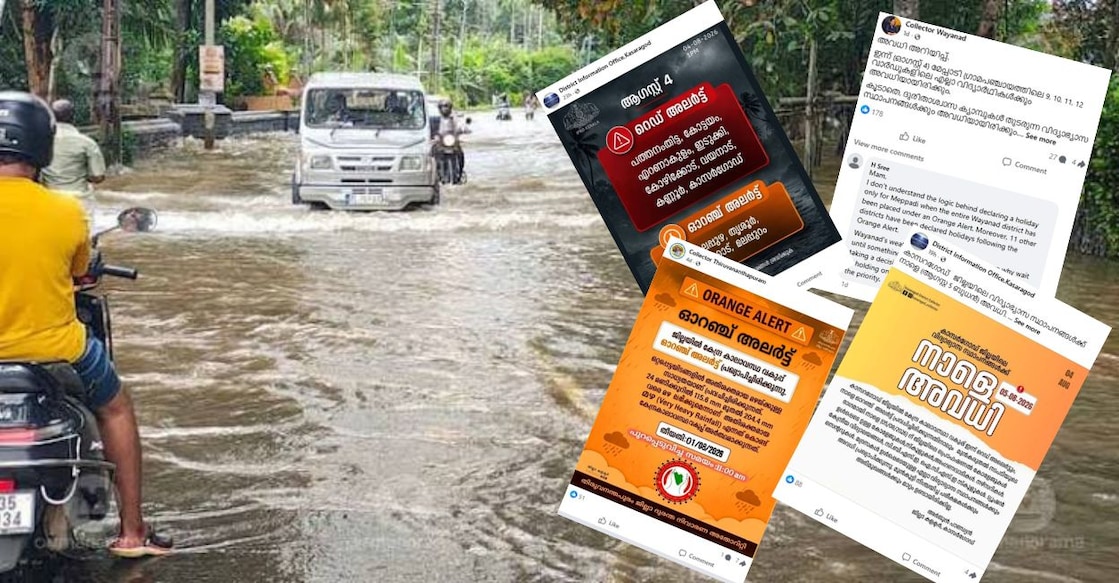
Thiruvananthapuram: The social media pages of District Collectors are flooded with requests from students and teachers whenever a holiday is declared for schools in other districts due to rains. However, fact is that Collectors can take a decision on the matter only based on certain specific guidelines, despite the magnitude of demands for a holiday.
In other words, a holiday will be declared based on the real rainfall situation in the area rather than the number of complaints on the Collector’s Facebook page.
Holiday almost certain during a red alert
Most often, Collectors declare a holiday for educational institutions soon after a red alert weather warning is issued for the district. However, the Collectors could also take a different decision, as weather forecasts are only an indicator and need not come true.
For this reason, when a red alert is issued, district authorities initially collect data regarding the actual amount of rainfall received in each taluk. The Collector will analyse this data and declare a holiday if heavy rainfall and winds are experienced throughout the district. However, there have been rare instances of Collectors deciding not to announce a holiday despite a red alert, considering the lack of rains.
“Looking at the weather in the morning, you may feel everything will be normal during that day. But the situation can change within hours. There are chances of flash floods too. Because of this uncertainty, we cannot declare a holiday based on weather forecasts alone,” said Kozhikode Collector M S Madhavikutty in a social media post.
“In fact, the data from the field also has to be considered. We try to take an accurate decision on the matter based on all the data received,” she added.
Situation during orange, yellow alerts
Factors that influence District Collectors while declaring a holiday during orange and yellow alerts include the actual amount of rain received, flooding, chances of landslides, water levels in rivers, road conditions, and reports submitted by tahsildars and village officers. This data will also be cross-checked with readings in automatic weather stations. Additionally, requests from people’s representatives and the public are also considered.
While decisions based on a red alert warning could be taken early, there could be a delay when the Collector examines reports from the field, which often attracts criticism.
