

Aviation sector to give Indian youth wings to fly high with 100 more airports, FTOs & aircraft manufacturing base: Ram Mohan Naidu
Mail This Article


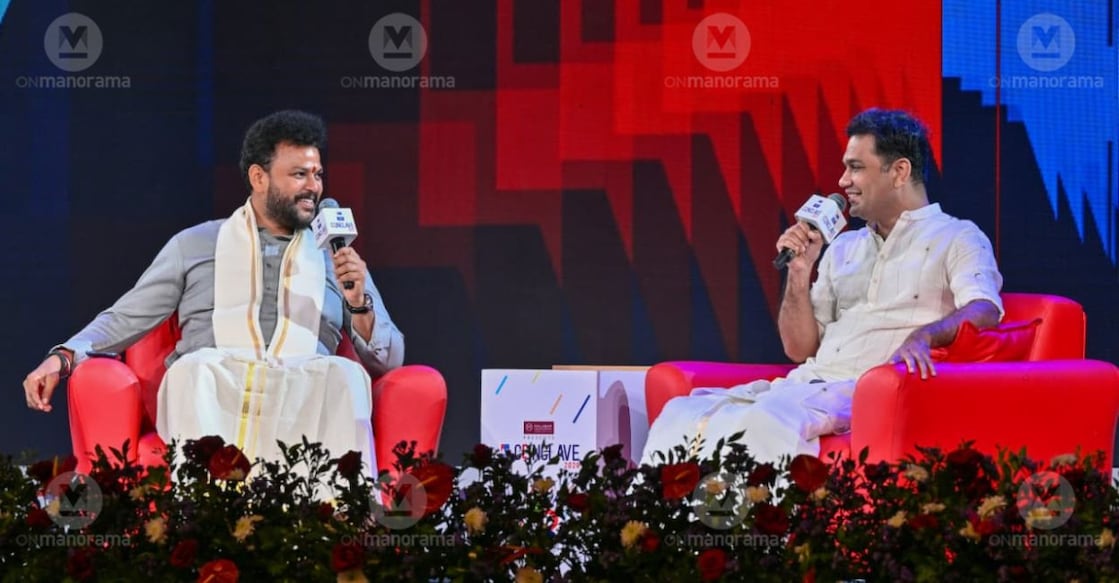
Union Minister for Civil Aviation Kinjarapu Ram Mohan Naidu on Saturday said that he wanted to transform civil aviation in such a way that it would channelise pent-up youth energy of the country.
At the Manorama News Conclave, the Union minister laid down three ways in which he would achieve this. One, increase the number of airports in the country from 166 to 350. Two, skill up Indian youth to tap into the huge possibilities thrown up by the aviation sector, essentially increase the number of Flying Training Organisations (FTOs) in the country. Three, Make in India.
Naidu said that flying is no more confined to an exclusive few. He said that the UDAN (Ude Desh ka Aam Naagrik) Yojana was started to "let the common man fly". "Through that scheme, Prime Minister Narendra Modi envisioned building airports in remote parts of the country, in tier-2 and 3 cities where people have the aspiration to fly," the minister said while delivering his inaugural speech at the Conclave on the theme Kerala@70 in Kochi on Saturday.
'Grand' dream for aviation
He said that viability gap funding was also being provided to airline companies so that they get connected to other domestic airports. In the last 10 years, he said that the Centre had invested around ₹10,000 crore in airport development and Viability Gap Funding for the airlines. Result: From 74 airports in 2014, we have 166 airports today. More than double. "Every 45 days we have opened a new airport. No other country has matched our speed," the minister.
Yet, he said, "we have only scratched the surface." "Now the aspiration level is so high that to achieve Viksit Bharat by 2047, we require 350 airports," Naidu said. For this, UDAN has been extended for 10 more years. "We are going to spend more than ₹28,000 crore. Never in the history of civil aviation has such a grand amount been spent for any scheme. So for the next 10 years, we are going to spend ₹28,840 crore to build 100 new airports in the country," the minister said.
He said that the Centre wanted an airport near all the places in the country that had such a soaring aspiration. "We have a lot of airstrips that were inherited from the pre-Independence era. We want to convert them into proper airports and then connect them not only to different destinations in the country but also to different destinations in various parts of the world," the minister said. He said that the youth would be powered by the speed that aviation was about to provide.


Inadequate planes and Indian youth
There are 843 aircraft in the country. But the number of orders the country receives is almost 1,700. "No other country in the world has so many orders," the minister said. Yet, he said the country was in its nascent stages of aviation growth.
Here is the opportunity that orders of 1,700 aircraft is creating. "When you have 1,700 planes coming in, imagine the number of pilots that we would need. Imagine how many maintenance engineers we would need. Ground handlers. Airport staff. Other technical and skilled staff we need to create in and out of the airports," he said.
“Now, how do we skill our Indian youth so that they can grab the opportunities this growth is unlocking. We don't want people from outside to come here and say they want to work in India. We want our own Indian youth to capture this opportunity," the minister said.
That is where the opening of more FTOs comes into play. The number of FTOs are not enough. For every narrow-body aircraft, we require 20 pilots, and for wide-bodied ones, 30. "So 1500-1700 planes in the next 10 years mean 30,000 pilots in the next decade," the minister said.
-

-
1 HOUR 56 MINUTES AGO
Is there a way to cut airfares during Onam holidays? Minister responds
Now, the country has 63 FTOs. Last year 1625 pilots passed out. The requirement is 2500. A gap of over 800. The government policy is to encourage investment in FTOs. "Last month we approved 11 new FPOs in the country. Six more are under the process of approval," the minister said. The idea, he said, was to allow the youth to tap the aviation potential of the country.
Quality control
More FTOs are not enough. Quality is also of paramount importance. The minister said that youth with job aspirations in the field of aviation fly abroad to study. "Why should we allow this to happen. If anyone has a dream of flying, let them study in India itself," he said.
The reason why an open grading system has been introduced for FTOs for the first time. The minister said that various metrics like services provided, planes used, number of instructors, hours of training provided and their accident rates were being employed for grading.
When the grading system began last October, the minister said that there were no FTOs in the A or A+ grade in the country. "This was a mirror for us on what their standards were. But we want every institution to be of A+ standard," the minister said.
After the grading system began six months ago, the country now has one A-grade FTO. "Ten FTOs have stepped up in the grade," he said.
Make in India
He said building airports was no more a challenge to India. "It is easy for us to build airports in the country. "Building airports is not a challenge for India today. You give me space, and we can build you one of the best airports you would have ever seen," he said, and added: "Challenge is connecting those airports. How do you do it? You need more aircraft."
The minister said that the 840 aircraft India possessed were nowhere close to the requirement. That is why we have so many orders (1700 aircraft)," the minister said. So he wants India to "leverage our order position" and ensure that more manufacturing happened in the country.
"We need more airlines in the country. Is the government happy with the duopoly? Definitely not. We want more competition in the industry. We want more people to operate airlines in the country. We want more investors to come into this business," he said.
But for investors to begin operations, there should be aircraft. Fact is, there is a massive demand-supply mismatch in the global aviation industry, particularly after the supply chain disruption during COVID. "The only way to tackle this problem is to establish a strong aircraft manufacturing base in the country," he said. "This is the time to make it happen in India," he added.
In two years, he said a Make in India aircraft would be a reality. "We are talking with Embraer (a Brazilian aerospace corporation and the world's third-largest civil aircraft producer) to bring their ecosystem here and the final assembly will be done in India itself," he said.
The objective is to manufacture a regional aircraft that is ideal for the Indian context. "The first step is to bring and assemble it here. As you learn the process of building the plane, assembling, then you can design the plane too," Naidu said.
As a first step, the C295 aircraft, the military version of an airbus, "a turbo prop that is very ideal for our shorter runways, has already been manufactured in Vadodara, Gujarat. "It is almost on the verge of getting certified. And now in the civil aviation version we are setting up the ecosystem and we want to get it done in two years," the minister said.
