

Wayanad stares at severe summer drought as monsoon deficit hits 37%
Mail This Article


Wayanad is facing a severe ecological and agricultural threat as the district records a staggering 37 per cent deficit in monsoon rainfall over the past three months. According to a seasonal analysis by the Hume Centre for Water and Environment, Wayanad received a mere 1,391 mm of average rainfall between June 1 and August 31. Data from the India Meteorological Department indicates that the normal expected rainfall for this period is 2,200 mm, leaving the district with a massive shortfall.
While moderate showers in August offered minor relief compared to the dry spells of June and July, it did little to cover the overall seasonal deficit. Climatologists attribute this sharp decline to global climate shifts and the lingering influence of the El Nino phenomenon, which has disrupted typical weather patterns across the Western Ghats.
The rainfall distribution across the district reveals extreme local variations. Rain-heavy zones like Kunhome (3,986 mm) and Mattilayam (3,435 mm) in Thondernad panchayat, alongside Lakkidi in Vythiri (3,730 mm), registered significant numbers. However, the picture turns bleak towards the eastern border plains. Marakkadavu in Mullankolli received a paltry 383 mm, Kallumukku in Noolpuzha recorded 404 mm, and the wildlife-dense Muthanga region saw the lowest rainfall at just 316 mm during this entire three-month window.
Beyond the shrinking volume of rain, the nature of the precipitation itself has undergone a worrying shift. The traditional pattern of persistent, gentle drizzle that easily recharges groundwater has been replaced by short, intense downpours concentrated in the afternoon hours. This high-intensity rainfall causes water to quickly run off the surface rather than percolating deep into the soil, leaving the landscape dry soon after the clouds clear.
The lack of rain has caused daytime temperatures to climb steadily. While the wet month of July kept the average maximum temperature at a cool 26°C, drier months like June and August saw temperatures rising to 27.9°C and 27.3°C respectively. This unusual warming, combined with minimal groundwater replenishment, has triggered fears of acute drinking water shortages and agricultural distress in the coming summer months.
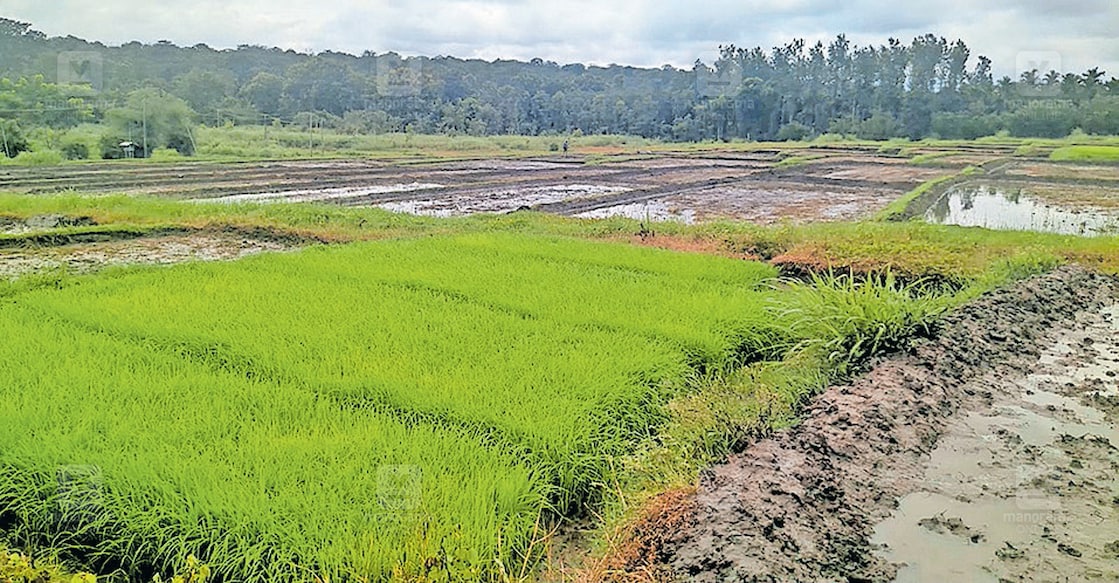
The drought-like conditions have hit the farming heartlands of Pulpally, Mullankolli, Poothadi, and Thirunelly particularly hard. Hundreds of acres of agricultural land intended for paddy cultivation have been left barren this season. In several border villages, water scarcity delayed sowing until well after the Onam season. Production of tubers, commercial cash crops, and vegetables has dropped significantly. With natural streams, farm ponds, and domestic wells already drying up, the local community is pinning its hopes entirely on a strong North-East monsoon to avert a complete crisis.
