

Burst of girder in Kollam: NH works hit by mishaps, safety concerns mount
Mail This Article


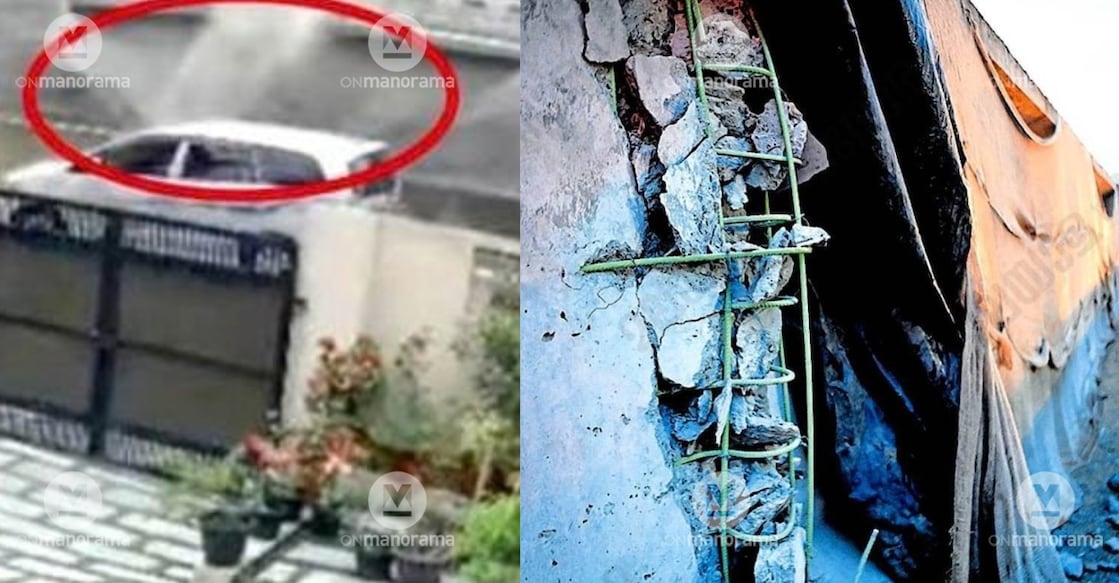
A series of mishaps during National Highway construction has raised fresh safety concerns as a girder built for the Mylakkad flyover burst during post-tensioning, just before it was to be installed.
The incident occurred while high-strength steel cables were being tightened through ducts inside the girder to strengthen it. It has also brought renewed attention to construction-related concerns reported at other locations along the highway.
At Parippally, a slight bend was detected in a girder of a completed flyover, following which the girders were linked using steel structures. Concerns have also been raised over alleged lapses in the construction of elevated sections. At locations such as Parippally, Chathannoor, Kottiyam and Kureepuzha, soil nailing has had to be carried out to strengthen sections of the elevated highway. The process involves opening concrete panels, inserting steel rods and reinforcing them with concrete.
How does post-tensioning work?
Post-tensioning is a method of strengthening concrete in which high-strength steel cables are pulled tight through ducts inside a girder after the concrete has hardened. The cables are then anchored, putting the concrete under compression. Each girder has five ducts for the cables.
What can cause a girder to fail?
Engineering errors, substandard materials and improper construction practices can lead to cracks or structural failure.
Every girder is designed to withstand a specified load. During post-tensioning, the cables are tightened using hydraulic jacks. Applying force beyond the prescribed limit can cause the concrete to burst or the girder to fail.
The concrete must also attain the required compressive strength before tensioning. If the process is carried out prematurely, the girder may not be able to withstand the resulting stress.
The anchorage zone at either end of a girder is particularly critical as it bears high levels of stress when the cables are tightened and anchored. Inadequate reinforcement or improper placement of the anchorage plate can cause the concrete to fail.
The ducts carrying the cables must also follow the exact curvature and position specified in the design. Any deviation can transfer stress to unintended parts of the structure during tensioning, potentially causing the girder to bend or fail.
Honeycombing, or voids formed inside concrete due to trapped air, can also weaken the girder.
How can such failures be prevented?
The strength of the concrete must be verified before post-tensioning. The process should be carried out only with calibrated equipment and hydraulic jacks and under the direct supervision of experienced engineers.
