

Megalithic tomb and ancient petroglyphs uncovered in Kasaragod
Mail This Article


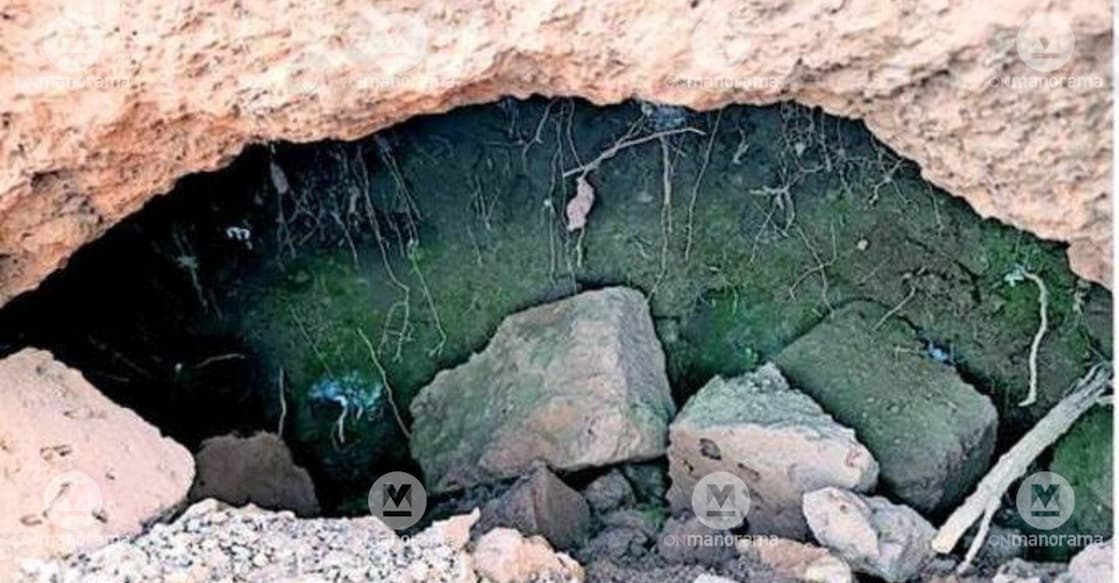
Nileshwaram: A rock-cut laterite tomb and petroglyphs, identified as remains from the Megalithic period, have been discovered in Kanamkulampala and Theerthankara within Madikai Panchayat. The petroglyph was found in Kanamkulampala, while the rock-cut laterite tomb was unearthed in Theerthankara.
The rock-cut laterite tomb was discovered during laterite quarrying, with its edges already damaged. The upper opening and interior of the laterite tomb in Theerthankara are currently filled with topsoil. These discoveries were made during observations by local archaeologist Satheesan Kaliyanam. Dr Nandakumar Koroth, Head of the History Department at Padannakad Nehru College, examined the site and confirmed that the laterite tomb belongs to the Megalithic period and the petroglyph is man-made. Similar to petroglyphs previously found in Ariyittapara, Kakkat, Munnad Molothumkavu Ammakulam, Erikkulam Valiyapara, Kanjirappoyil, Ettukkudukka, and Ambalathara, the petroglyph at Kanamkulampala is also situated on the bank of a water-rich stream. Two footprints, 10 inches long and 6 inches wide, are carved onto the laterite rock here.

Researchers stated that these carvings have remained preserved for centuries because the laterite rocks on the stream banks are submerged during the monsoon, and the rain does not fall directly on the petroglyphs. Dr Nandakumar Koroth, President of the Sasthravedi District Committee, submitted a memorandum to Minister O J Janeesh, urging the establishment of an Archaeology-Heritage Museum in Nileshwaram to protect and display the archaeological artifacts and historical remains discovered in the district.
Among significant historical items, a Neolithic-era polished axe discovered from Thimiri is housed in the Pazhassi Raja Museum in Kozhikode, and A C Kannan Nair's diary entries are preserved in New Delhi. Of the four available copies of the Ramacharithamanasam, described as the oldest text written in Malayalam, two were obtained from Nileshwaram Kovilakam and Kalyott Kazhakam.
Historical remains recovered from excavations conducted by the Archaeology Department at Megalithic cultural sites and forts in the district are also currently preserved outside the district. The memorandum further includes a demand that a list of these items be prepared and, wherever feasible, they should be protected by establishing a heritage museum in Nileshwaram.
