

Chinese automakers surpass Japanese rivals in historic European sales milestone
Mail This Article


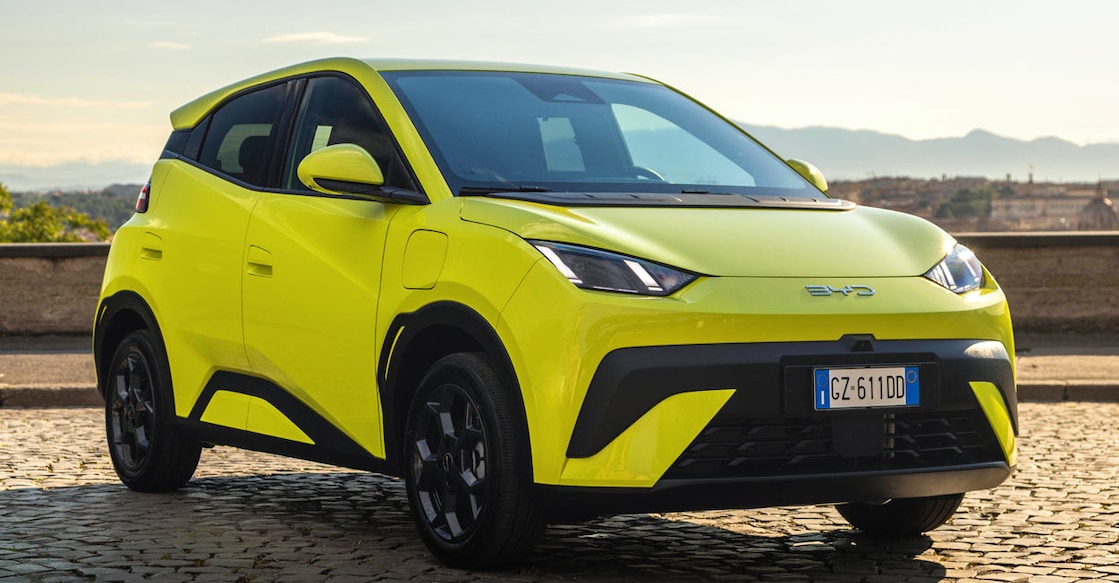
In a historic shift for the European automotive industry, Chinese carmakers have officially overtaken their Japanese rivals in sales for the first time. While established European giants such as Volkswagen and Renault continue to lead overall market share, the rapid rise of Chinese brands like BYD and Chery is dramatically reshaping the continent's car market.
According to figures from market research firm Dataforce, Chinese vehicles accounted for 12.7% of total European car sales in September, nearly doubling their market share compared to the previous year. This surge was primarily driven by strong consumer demand for Chinese plug-in hybrid models. By contrast, Japanese manufacturers including Toyota, which captured an 11.9% quarterly market share, fell behind Chinese competitors despite having spent decades establishing a stronghold in Europe.
Rapid rise over established heritage
Just five years ago, Chinese carmakers held barely a 1% share of the European market. Their swift ascension stands in sharp contrast to established Japanese brands that have built their presence over decades. Toyota, for instance, has been selling vehicles in Europe since 1963 and operates multiple factories across the continent, while Nissan has manufactured cars at its Sunderland plant in the UK since 1986. However, Chinese brands are effectively challenging this legacy by offering feature-packed, competitively priced alternatives across diverse vehicle segments. Notably, Chery's Jaecoo 7 SUV emerged as one of the top-selling models in the UK in both March and September.
Surging demand amid economic pressures
As domestic competition in China intensifies, auto manufacturers are turning their focus towards international expansion in Europe. At the Paris Motor Show in early October, brands like Chery, BYD, and Geely's premium arm Zeekr unveiled several new models tailored specifically for European drivers. Vehicles such as the BYD Dolphin DM-i plug-in hybrid are entering the market at attractive price points, offering an appealing option for cost-conscious consumers navigating record-high fuel prices and transitioning towards electrified mobility.
Regulatory pushback and trade tensions
Despite their rapid growth, the aggressive expansion of Chinese automakers has drawn heavy criticism from European industry leaders and regulators. Analysts warn that state subsidies from Beijing give Chinese manufacturers an unfair advantage, raising fears of market dominance. In response, the European Union has already enacted tariffs on Chinese-built electric vehicles and reached an agreement in principle to restrict hybrid car imports from China. European policymakers are also considering new legislation that would limit government subsidies and incentives exclusively to locally manufactured vehicles.
