

This quaint house reflects Kerala heritage
Mail This Article
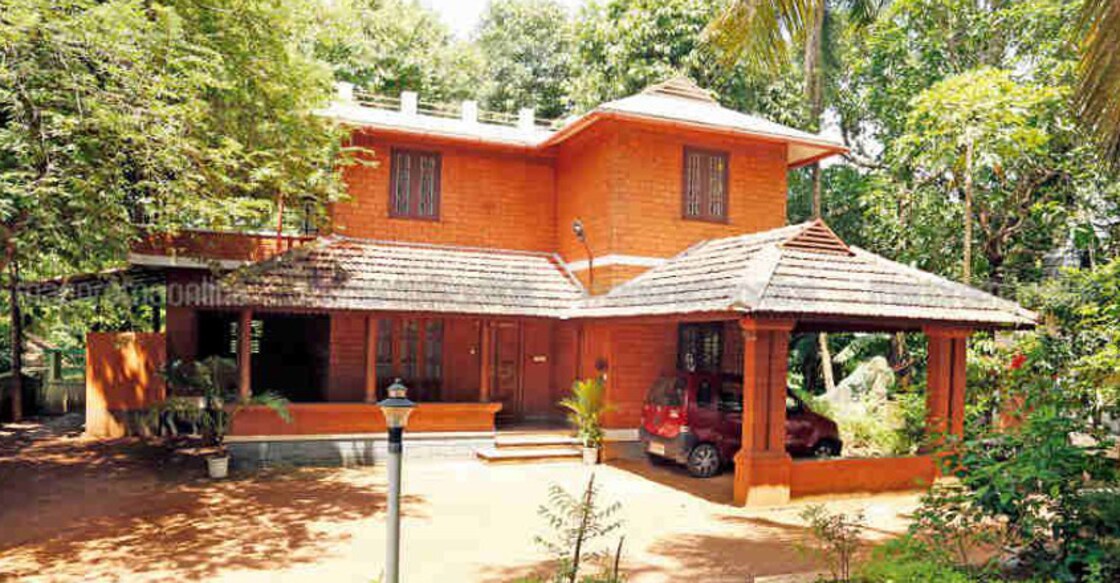
The little village of Desamangalam in Shoranur, Palakkad, exudes a unique bucolic charm. The owner has planned for a house which has the unique qualities of a dwelling built in the traditional style, yet with all the modern facilities. They, however, were particular that their special abode shouldn’t harm the environment as well.
This house was built just behind the house in which the family had stayed previously. The space was cleared by cutting only a few trees and leveling the plot. It also had to be raised a bit by sourcing sand from a nearby plot. The cost of the sand and transportation is comparatively less in this area.
It was engineer Manoj, who is based in Mundoor, Palakkad, who drew the plan of the house. The house was built on labour contract as efficient workers for construction, painting and woodwork were available in the area itself.

The colour of earth
The house is built using interlocking bricks as the family wished to significantly reduce the usage of concrete. Besides, it is cheaper and appeals to the aesthetic sensibilities as well. The bricks were bought from Valanchery in Malappuram. A single piece of brick cost Rs 40 including the transportation charges. Those who supplied the bricks provided laborers as well, who are skilled to work with the interlocking bricks.
The family zeroed in on interlocking bricks after visiting many such houses and realising its amazing effects. These bricks are interlocked without using concrete. Besides, such structures do not require cement plastering as well. A few walls in the indoors are plastered and painted to receive ample sunshine into the house.
Wood from plot
The family didn’t have to purchase wood from outside as it was sourced from the trees which stood on their plot. The pillars around the courtyard, the handrails of the stairway, and the steps are made using black palmyra. The wood of coconut trees and black palmyra are extremely strong and durable, and less expensive as well.
However, the wood-working charges and the cost to get it sawed would be comparatively higher than other woods. The main door at the entrance is built with acacia wood. The leftover black palmyra wood was used to make the dining table and chairs. The furniture in the formal living area is made with the wood of the neem tree which stood in their plot.
Granite and mud tiles are paved on the floor. However, the owner says that they had to replace the mud tiles which were paved initially as it began to break. Old roofing tiles were washed and reused.
Unique interiors
The elegant ‘L’ shaped sit out is the perfect place in the house to enjoy the soothing village breeze. There is a courtyard between the formal living space and the dining area which are situated on both the ends of a huge hall. This courtyard plays a significant role in lighting up the entire house by letting in lots of natural light. There are two bath-attached bedrooms on the ground floor. Instead of windows, long railings are attached on the wall in the work area which is adjacent to the kitchen.
There is a family living space on the upper landing of the stair way. There are two more bath-attached bedrooms on the first storey as well. The formal living area, done in double height, makes the house look more spacious. The area where truss work is done has been turned into an excellent utility space.
The family wishes to retain the natural beauty of the front courtyard and strongly opposes the idea of paving tiles here. They have followed the olden method of leveling the ground by pounding on it. Besides, the family, which grows paddy, required space in their courtyard to store the grains and hay as well. They have successfully set up an enchanting house which truly reflects the rural charm.
 Add as a preferred source on Google