

How to wash your hands right? Doctor explains
Mail This Article


Personal hygiene is the primary solution to stay healthy by keeping away diseases. Washing the hands properly can effectively prevent diseases like dysentery, gut worms and many respiratory issues. It was Hungarian doctor Ignaz Semmelweis who discovered that handwashing can prevent diseases and even save lives, in 1846. He proved that postpartum infections and deaths could be prevented if the doctors and midwives washed their hands using mild bleaching solution. Handwashing has been scientifically proven to be an effective method to prevent diseases.
When should you wash hands?
1) Before and after cooking
2) Before and after eating
3) After using the toilet
4) Before and after caring for the patient and also before serving them food
5) After getting back home from outside, especially from hospitals
6) Before breastfeeding
7) Before taking medicines or giving medicines to others
8) Before and after entering clinics and hospitals
9) Before and after using public transport
10) Before and after feeding children
11) Before and after applying medicines in eyes and nose
12) Before and after handling fruits and vegetables
13) After handling mobile phones or things brought from outside
14) Do not touch your mouth, nose or eyes using unclean hands
15) After touching door knobs, lift buttons, ATM machines, pet animals and their feed, manure, diapers, cleaning objects and currency notes
16) After touching another person’s hand or body
17) Before and after wearing a mask; do not forget to wash hands or use sanitizer if you touch the outer layer of a used mask
Soap – the real hero!
The soap molecule at one end is hydrophilic or attracted to water, and the other end is hydrophobic or repelled by water. When soap gets mixed with water, the hydrophilic molecules on the top layer attract the virus, only to melt its fat–protein layer and destroy the virus. Soap and water should be in contact for at least 20 seconds to effectively destroy virus and bacteria. Hands should be adequately washed without any hurry by properly following the instructions. Soaps are more effective than sanitisers to destroy the coronavirus.
For this, you need not buy expensive soaps or ones with special antibacterial properties. The virus could be destroyed even by using a regular washing soap bar. Soap and water are the most effective and inexpensive combination to clean not only your hands or clothes, but also door knobs, vessels, coins, floor and walls. However, you need to repeat this process a few times daily to ensure your hands and surroundings are clean. You could use sanitizers with at least 70 percent alcohol content to clean your hands while travelling or at places where there is a shortage of water.
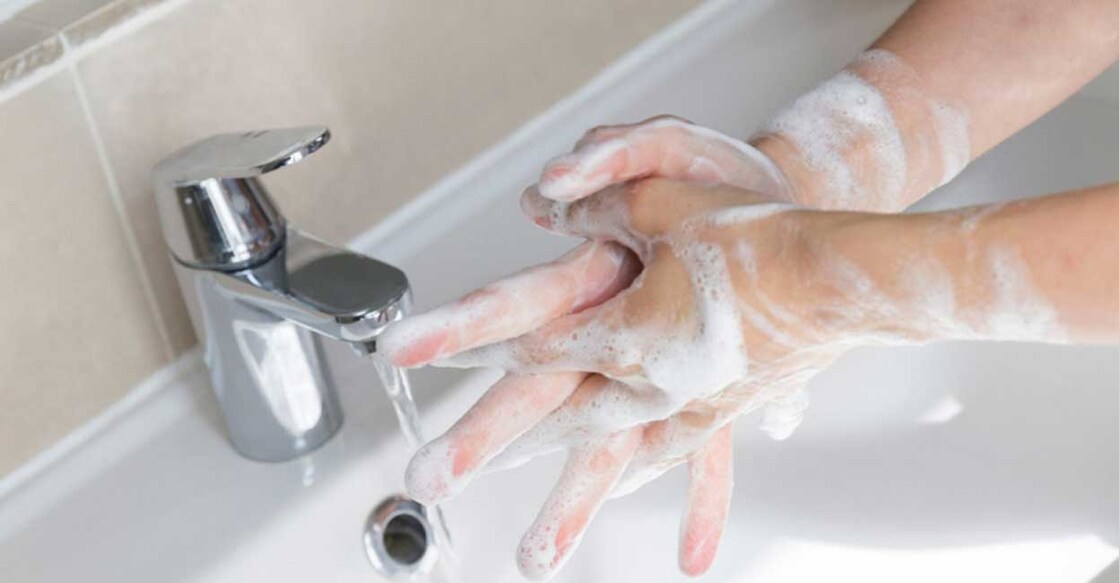
Steps of hand washing
1) Wet your hands under running water
2) Apply soap bar or liquid soap on the palm
3) Lather and rub your hands together briskly and thoroughly
4) Make sure to scrub all the surfaces of your hands, right palm over left dorsum with interlaced fingers and vice versa
5) The outer surface of your hands should be scrubbed
6) Scrub the back of fingers to opposing palms with fingers interlocked
7) Rotational rubbing of left thumb clasped in right palm and vice versa
8) Rotational rubbing of left wrist using right palm and vice versa
9) Wash off the lather under running water
10) Hold your hands at chest level; do not touch your clothes or body parts
11) Dry your hands thoroughly using a clean towel or a disinfected tissue
12) If the lever of the tap is long, then use your elbows to turn off the tap
Information courtesy: Dr. Santhosh Babu, MR Senior Medical Consultant, National Institute of Physical Medicine and Rehabilitation, Irinjalakkuda, Thrissur.
 Add as a preferred source on Google