

Remembering the Roerich family’s Kerala connection

Mail This Article


When one thinks of the mystical Roerich family, it’s often the extraordinary paintings of the Himalayas produced by Nicholas Roerich that comes to one's mind.
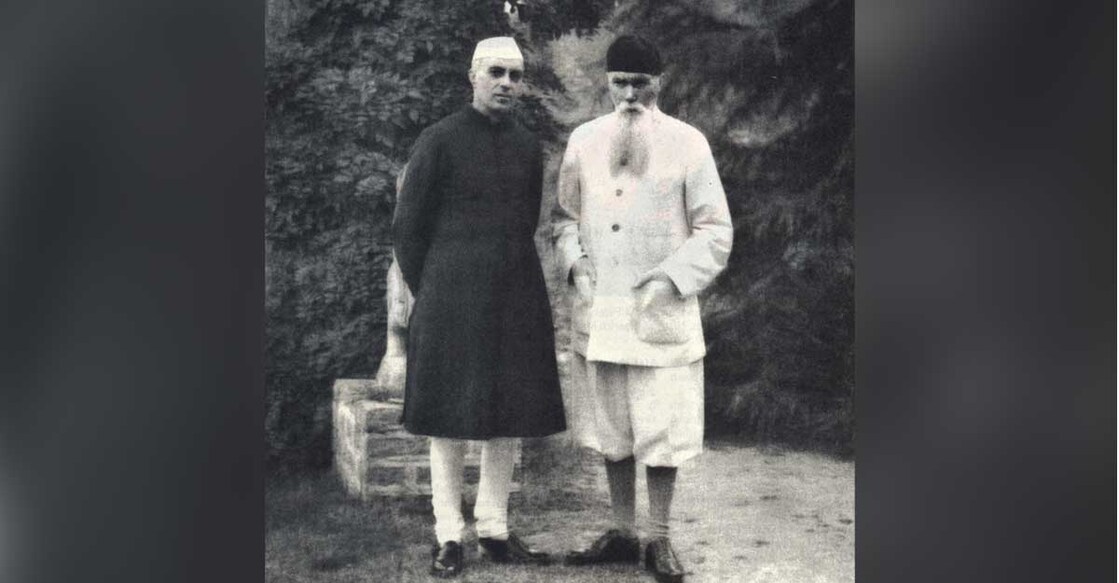
The Roerichs, considered the greatest cultural and spiritual bridge between India and Russia, spent decades in India. Both Nicholas and Helena Roerich passed away in the country, and their younger son Svetoslav - best known for his large portraits - became a naturalised Indian citizen and lived out the rest of his long life on an estate near Bengaluru.
Before my recent visit to Thiruvananthapuram, I could only find vague information online about the friendship between the Roerichs and the Travancore Royal Family and the Russian family’s strong Kerala connections. Since Nicholas Roerich’s writings mainly focused on the Himalayas and the mountain ranges in Central Asia, I haven’t come across any firsthand information about his time in Thiruvananthapuram.
However, I was fortunate enough to see a Svetoslav Roerich portrait of Amma Maharani (Moolam Thirunal Sethu Parvathi Bayi), which is a part of the private collection of the Travancore Royal Family. The family confirmed to me that the Roerichs indeed had a special friendship with Sri Chithira Thirunal Balarama Varma, the progressive ruler who is best remembered for the Temple Entry Proclamation of 1936.
The friendship blossomed in the early to mid-1930s, when Travancore was in the midst of major social and cultural reforms.
KP Padamanabhan Tampy’s ‘Nicholas Roerich: A Monograph,’ which was published in 1935 by the Travancore Humanitarian Cooperative Society, reveals the sheer reverence that the Royal Family had for the great Russian artist at that time.
“Nicholas Roerich needs no introduction to the cultured and intelligentsia of the world,” Tampy wrote. “Artist, Archaeologist, Pacifist, Educationist and Leader of Culture, he is one of the greatest Master Minds of our century.”
Writing about the Russian artist’s unique oeuvre, Tampy added, “Nature becomes self-conscious in Roerich’s paintings of the Himalayas, the quiet beauty of which is suffused with mystery.”
Among the Nicholas Roerich paintings in the Sri Chitra Art Gallery (Sri Chitralayam), which was opened in 1935 to stimulate interest and activity in the arts among the common people of Travancore, is ‘Santana- The Stream of Life.’
“This picture of the Himalayas can ‘raise a mortal to the skies’ and it is surcharged with rich symbolism,’ Tampy wrote. “The river of life winds its way from a maze of mountains. The painting dexterously conveys the impression that the river is full and is rushing down with great fury and speed. A fragment of a rainbow, symbolising evanescence, is seen across the river. The snow-capped peaks in which the river rises stand silhouetted against the flaming sky. In the right foreground is the figure of a Yogi wrapt in meditation.”
While the yogi sits absolutely still, the gushing river dashes past the rock where he meditates. “The picture bespeaks the assertion of the will over nature,” Tampy added.
One can only imagine what a visitor of the gallery would have thought of these images of the Himalayas, Tibet and the Kangra Valley at a time when going from Kerala to the northern extremes of India and beyond seemed like an impossible dream for the vast majority of people.
Thiruvananthapuram is also home to one of Svetoslav Roerich’s greatest masterpieces, which is popularly known as the “illusion portrait” of Sri Chithira Thirunal Balarama Varma.
The portrait, on display at the Kuthiramalika Palace, has an illusory effect, making the viewer feel as though they are facing the king’s shoes from wherever they stand in the room. The painting is the pièce de résistance of the museum, which has an incredible collection of antiques, including rare Chinese vases and other artwork from different eras. Given its strong Russian connection, this museum should consider forming a partnership with the Hermitage in St. Petersburg.
Svetoslav Roerich was also enamoured by Kerala’s landscapes and its people. Historian and civil servant Mohinder Singh Randhawa, who met the Russian-origin Indian artist in 1958, was particularly impressed with his portrayal of South India. In an article for Rooplekha in 1961, Randhawa described how Roerich depicted the “mellow beauty of the women of Kerala against the background of graceful coconut palms with their feather-like leaves swaying in the humid air.”
When it comes to the Roerich family’s Kerala connection, there is a lot that is waiting to be discovered. Their special relationship with the state is something that needs to be more widely celebrated.
 Add as a preferred source on Google