

How Western critics reacted to the first major Malayalam novel

Mail This Article


The decades immediately after Indian independence saw the growth of Malayalam literature, with novels in the language gaining acceptance around the world. It is not uncommon to hear those who genuinely appreciate good writing talk about the works of legends like OV Vijayan, MT Vasudevan Nair and Vaikom Muhammad Bashir, as well as contemporary writers such as KR Meera.
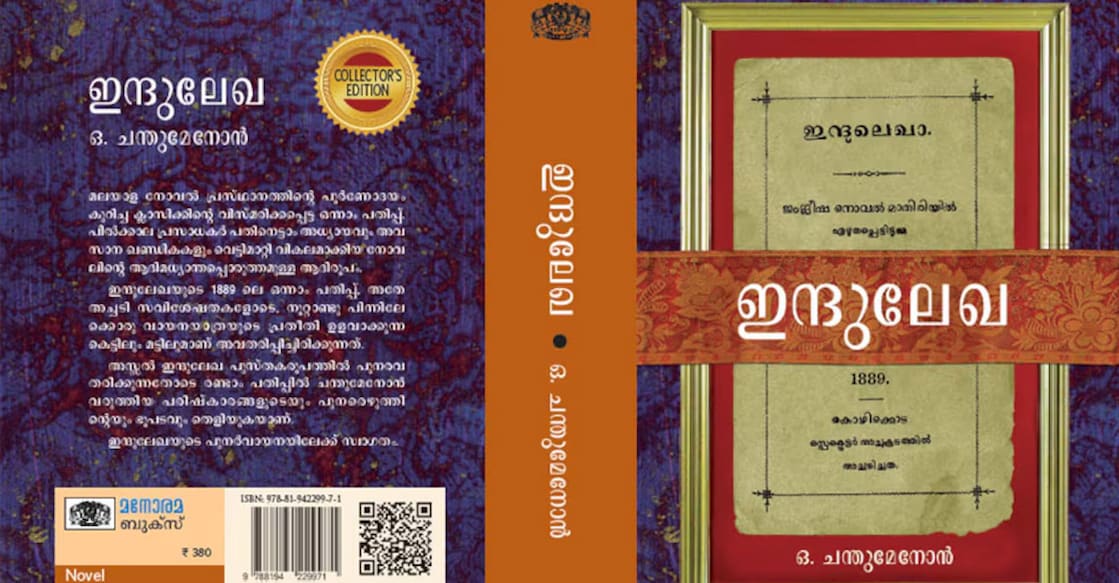
In the late 19th century, though, few outside India had even heard of the language, let alone come across any works of fiction in Malayalam. O Chandu Menon’s 1889 novel 'Indulekha' was a path-breaker for Malayalam literature.
The novel, about a beautiful and well-educated Nair woman named Indulekha, received a major boost when his Anglo-Indian friend John Willoughby Francis Dumergue decided to translate it into English, catching the eye and attention of a couple of critics in Britain.
Dumergue liked the original so much that he claimed that “modern Malabar was depicted” in Menon’s book.
The London newspaper Pall Mall Gazette erroneously called Indulekha the first Indian novel ever written in a review published in July 1891. The reviewer did not seem too thrilled about its existence, almost displaying what we refer to in this day and age as gatekeeping.
“A reviewer cannot help feeling that a new terror is added to life,” the non-bylined article said. “If the 250 millions of people who live in Hindoostan take to writing novels, what will become of us?”
Menon apparently left his job to concentrate on reading books and then tried to explain their gist to his friends in Malayalam. Apparently, none of the novels that he read even remotely impressed him until he came across Benjamin Disraeli’s 'Henrietta Temple'.
“This developed a positive passion for the English novel, which our author has now sought to gratify by producing one of his own,” the Pall Mall Gazette reviewer wrote. “Of Malayalee fiction, there is, it seems, abundance; but it is of the romantic kind - the tale of actual life is yet to be naturalised.”
The review actually carried comments from Menon, who tried to portray his protagonist as a paragon of loveliness, virtue, and cleverness. “My Indulekha is not an ordinary Malayalee woman,” Menon was quoted by the paper as saying.
The novelist also seemed to want more Malayalis to become proficient in English. “Some of you have studied Sanskrit, and some music and harmony, but these attainments are not enough,” Menon said. “If you really wish to enlighten your minds, you must learn English.”
The reviewer said some things in the book were strange and even “ludicrous,” calling out the translator, Dumergue, for adding English colloquialisms, but said it was worth reading. The translator actually was of the opinion that the English version of the book depicted the colloquial and idiomatic language of India.
“It is a picture of native life, undoubtedly genuine, and well drawn, while the views on the religious thought and the political aspirations of the educated Hindoo, as given in the ‘Conversation’, are of great interest,” the reviewer wrote.
The London Globe also published a review in 1891 and in this case, the reviewer had a more positive attitude towards the book. “Not often is it one’s luck to come across a real novelty in imaginative literature, but a friend of mine who is extremely well up in Indian literature provided me such a treat the other day,” the journalist wrote in the review that was also republished by the New York Tribune.
The reviewer called it a very unique book that fit into the mold of fiction of the day, while recommending it to readers. “Here you have, exactly as in the English novel, problems of love discussed and rules of morality laid down, with a long discussion of atheism, and all other stock themes, treated, however, with the oddest and most fantastic intermixture of Indian and English habits of thought and superstition,” the reviewer wrote. “Indulekha herself is the type of a modern intellectual, cultured woman, who still is a Malayalee.”
Hundred-and-thirty-six years after its first publication, Chandu Menon’s novel remains a timeless classic and a treasure of Malayalam literature.
 Add as a preferred source on Google