

Will two-rate GST pauperise states? Balagopal says social spending will be hit
Mail This Article


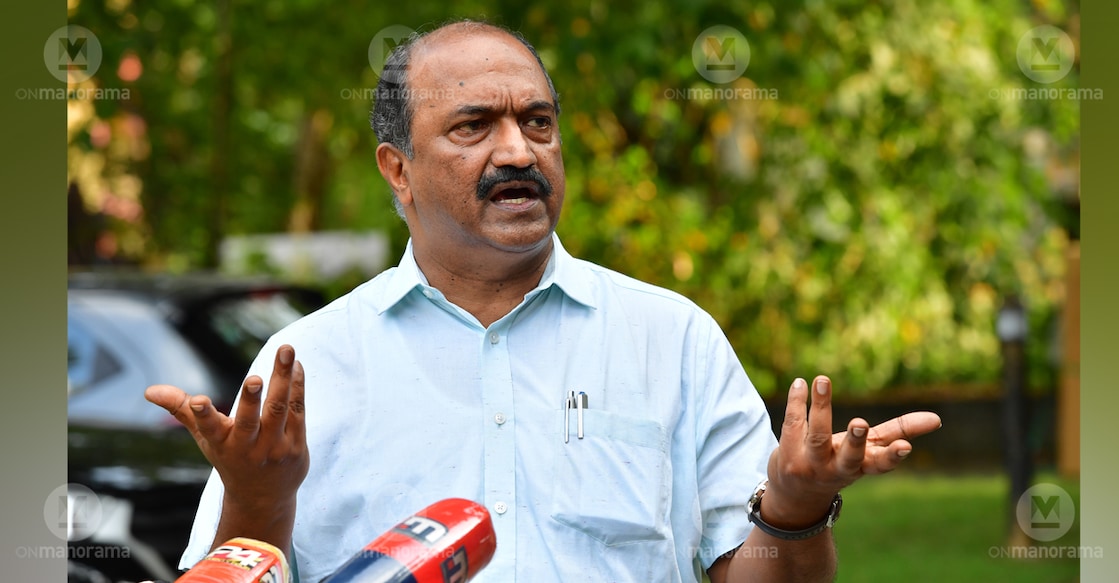
Will Prime Minister Narendra Modi's 'Diwali Gift', a two-rate GST system, drain Kerala's coffers and leave nothing for social welfare spending? Finance Minister K N Balagopal on Tuesday said that the proposed GST rationalisation could deplete Kerala's annual revenue by ₹8,000-10,000 crore.
"There is no doubt that taxes should be reduced for the common man but while doing that, the revenues of states should also be protected. How this is to be achieved should be discussed," Balagopal said.
"If our concerns are ignored while GST rates are lowered, then there will be no money for the Karunya Health Insurance Scheme, no money for the LIFE housing project, we cannot construct roads, cannot pay salaries to teachers, we can do nothing," Balagopal said.
Except for liquor and fuel, GST is the only source of income for states. "When there is a fall in GST revenues, how will the states be compensated," he said.
"Under the earlier VAT regime, there was a 12-13 per cent annual increase in tax revenue. It was to compensate for this loss in revenue under the GST regime that compensation was given for the first five years," Balagopal said.
The initial argument of the Centre was that revenues would pick up over time, but the minister said that GST revenues had consistently fallen over the years. "In the first two fiscals, the protected revenue (granted to the states to guarantee a 14 per cent annual growth in tax revenues) was in the range of ₹3,000 crore annually. When more items were included in the lower tax bracket after two years, the protected revenue shot up to over ₹8,000 crore," he said.
Balagopal said that in the two years after the compensation ended, the revenue gap (the notional tax revenue based on the earlier VAT growth rate of 12 per cent minus the real tax revenue) was ₹17,250 crore (2023-24) and ₹21,955 crore (2024-25). He said the revenue-neutral rate of 15.5 per cent (the share the states get when a sale of ₹100 is made) during the VAT regime fell to 11 per cent under GST. Now, with further reduction proposed in GST rates, Balagopal expects a further decline.
He anticipates the biggest decline in revenue from the automobile sector (₹1,200 crore), and then in the insurance, electronics and cement sectors (₹500 crore each). In total, he said the losses could go up to ₹10,000 crore.
"This is in addition to the ₹21,955 crore the state had lost last fiscal as a result of the falling revenues under the GST regime," Balagopal said. (According to Balagopal, ₹21,955 crore is the amount Kerala would have gained had the tax growth remained at the 12-13 per cent range like in the earlier VAT regime.)
The minister flagged yet another issue. "It is not just enough to reduce the tax, but it should also be ensured that the lower prices are passed on to the consumers," Balagopal said. He said the state had earlier examined the price behaviour of 25 items after the GST came into force and found that the benefits were not handed down. "Fridge was one of the items. Companies used the lower rates to increase their profits," Balagopal said.
Close on the heels of the PM's announcement, Balagopal said cement manufacturers had announced an increase in product prices so that when the new rates come into force they would stand to gain even if prices are reduced to reflect the lower tax.
Under the new proposal, GST will have only two slabs: 5 and 18 per cent, 'merit' and 'standard' goods and services. A prohibitive rate of 40 per cent will be levied on ultra-luxury cars and sin goods like tobacco and liquor. Lottery, too, will fall under this exorbitant tax bracket.
As it stands, GST has four slabs: 5, 12, 18 and 28 per cent.
 Add as a preferred source on Google