

From diapers & coffee to hotel rooms & two-wheelers: What gets cheaper & costlier in GST 2.0
Mail This Article


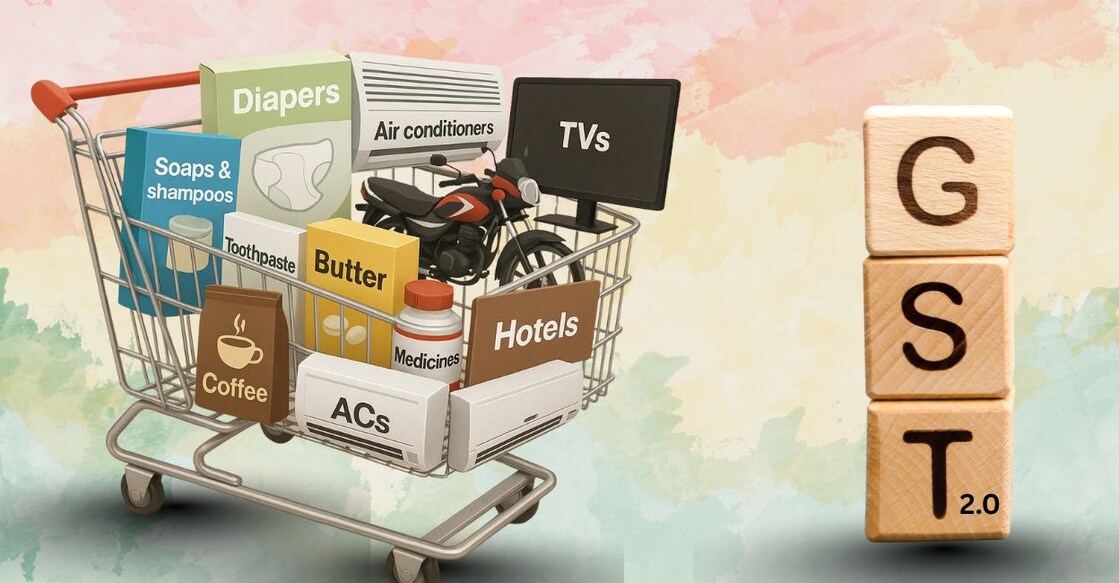
With GST 2.0 taking effect on September 22, the four-tier tax system has been rationalised into just two slabs of 5% and 18%. Finance Minister Nirmala Sitharaman said this move will put ₹2 lakh crore back into people’s hands, boosting consumption ahead of the festive season. Here’s a look at what gets cheaper and what will still pinch your pocket.
1. Daily essentials and FMCG products – cheaper
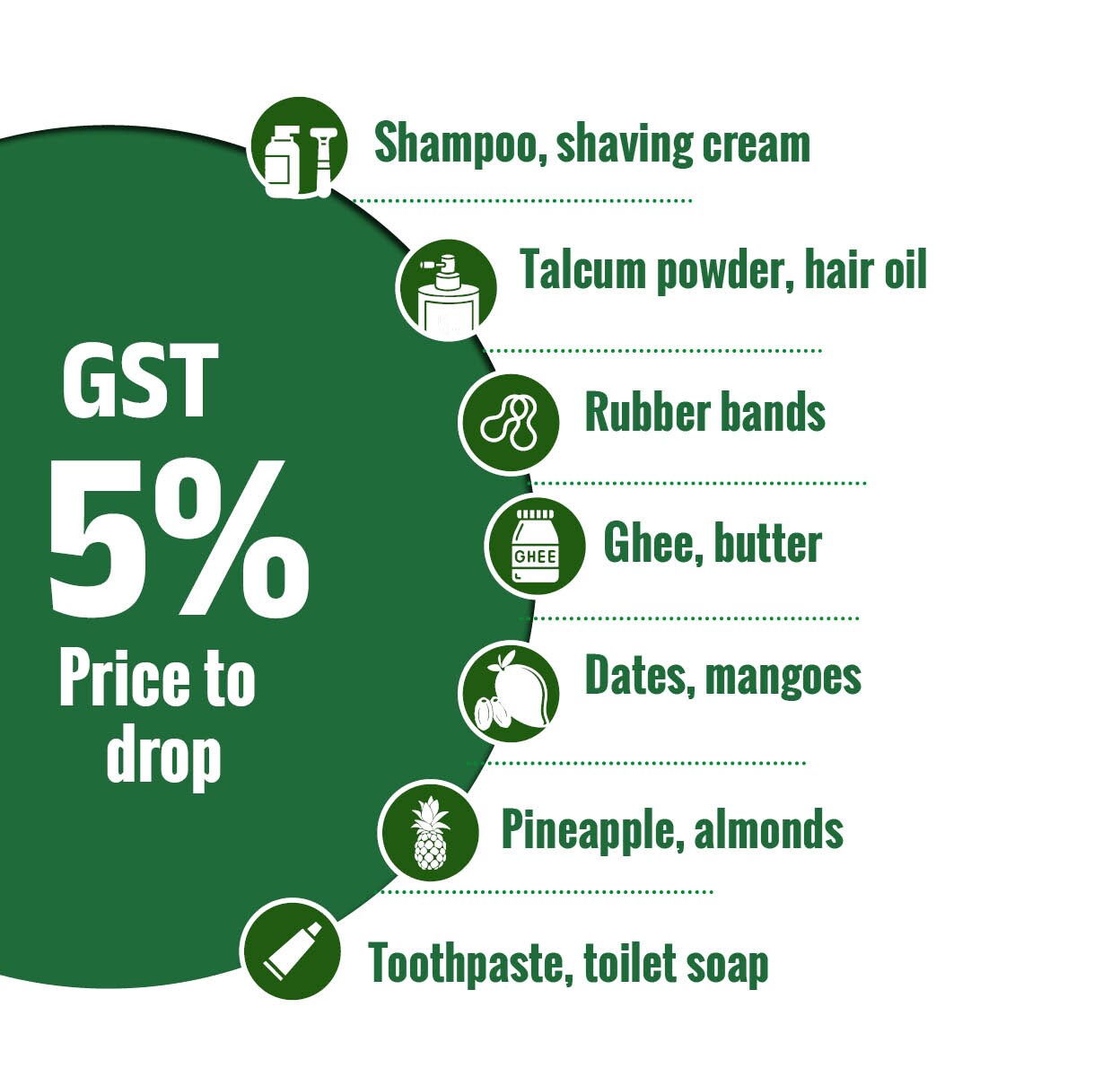
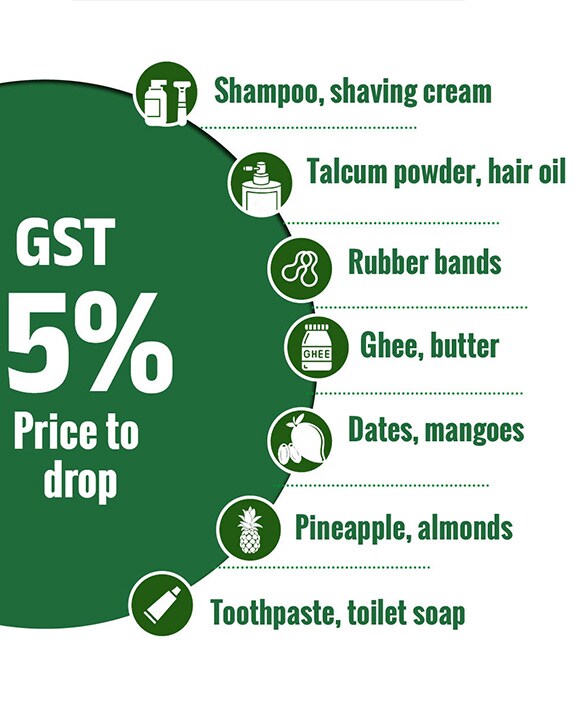
Most household items have moved from 12–18% GST to 5%. Leading FMCG companies have already slashed prices.
- Soaps & shampoos: HUL cut Lifebuoy (4x75 gm) from ₹68 to ₹60; Dove shampoo (340 ml) from ₹490 to ₹435.
- Toothpaste & oral care: Dabur Red (200 gm) reduced to ₹135 from ₹153; P&G’s Oral-B toothbrush down to ₹30 from ₹35.
- Baby care: Pampers diapers now attract 5% GST.
- Food & beverages: Amul butter (100 gm) down to ₹58 from ₹62; ITC’s Sunfeast Marie Light pack (956 gm) reduced to ₹150 from ₹170; Nestle Nescafe Gold cut to ₹755 from ₹850.
- Other cuts: Dabur Hajmola (120 tabs) reduced from ₹70 to ₹65; Emami Navratna Oil (180 ml) from ₹155 to ₹145.
- Companies extending benefits: HUL, ITC, Dabur, P&G, Emami, Nestle, RCPL, Amul, PepsiCo (Varun Beverages), Ferrero.
2. Medicines and healthcare – cheaper
Healthcare is one of the biggest winners under GST 2.0.
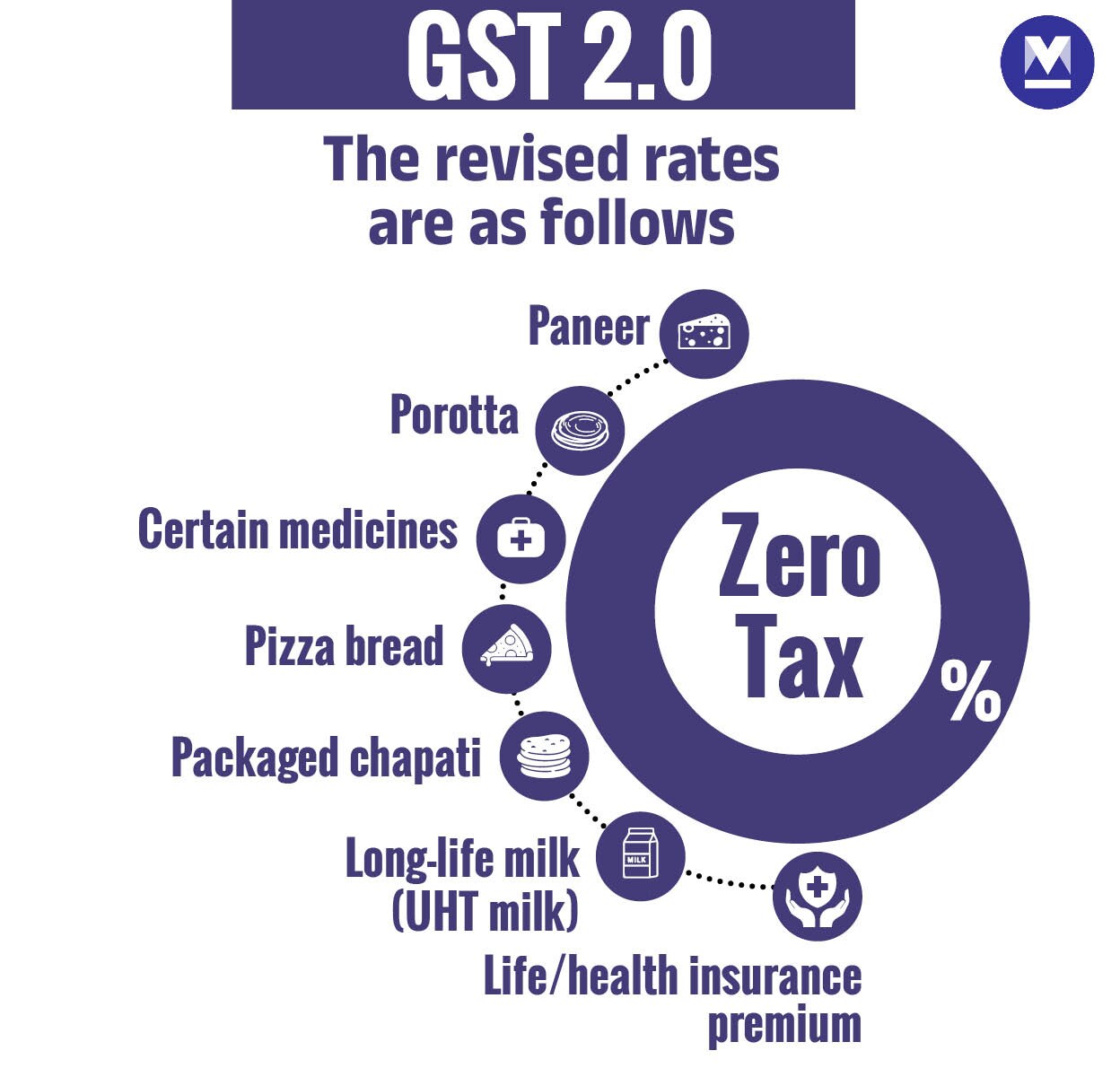
- Most medicines move from 12% to 5%.
- 36 critical life-saving drugs for cancer, rare and genetic diseases, and cardiovascular conditions are now fully exempt.
- Medical devices like glucometers and corrective spectacles also see tax rationalisation.
- Industry bodies like the Indian Pharmaceutical Alliance and OPPI said this will significantly reduce the financial burden on patients and families.
3. Hotels and travel – cheaper
- Hotel stays priced up to ₹7,500 per night will now attract 5% GST (down from 12%), saving guests up to ₹525 per night.
- Food and beverages consumed at these hotels will also reflect the revised rate.
- Hospitality players like Radisson and Wyndham expect stronger demand, especially in Tier-2 and Tier-3 cities.
4. Home appliances and electronics – cheaper
Appliances earlier taxed at 28% are now at 18%.
- ACs: Daikin cut its 1.5 ton 5-star inverter AC to ₹68,020 from ₹73,800. LG reduced a 1.5 ton inverter AC by ₹3,600 to ₹42,390.
- Dishwashers: BSH slashed up to ₹8,000; entry model now at ₹45,000 from ₹49,000. Voltas Beko cut entry model to ₹23,390 from ₹25,990.
- TVs above 32 inches also move into the 18% slab.
- Brands passing benefits: Voltas, Daikin, LG, Panasonic, Haier, Godrej, BSH Home Appliances.

5. Automobiles and two-wheelers – cheaper
- Automobiles now fall in 18% (small cars, two-wheelers) and 28% (big cars, SUVs) slabs, down from higher earlier rates.
- Suzuki Motorcycle India cut prices by up to ₹18,024 across models.
- Royal Enfield said its 350 cc range will be available with GST benefits on Flipkart from September 22.
- Carmakers are expected to announce similar cuts across models.
6. Real estate and cement – cheaper
GST on cement has been reduced to 18% from 28%, offering relief to builders and homebuyers. This is expected to push housing demand and cut construction costs.
7. Beauty, fitness and wellness services – cheaper
GST on services like salons, spas, yoga, gyms and health clubs has dropped from 18% to 5% without input tax credit. Expect lower bills at your neighbourhood salon and fitness centre.
8. What still stays costlier
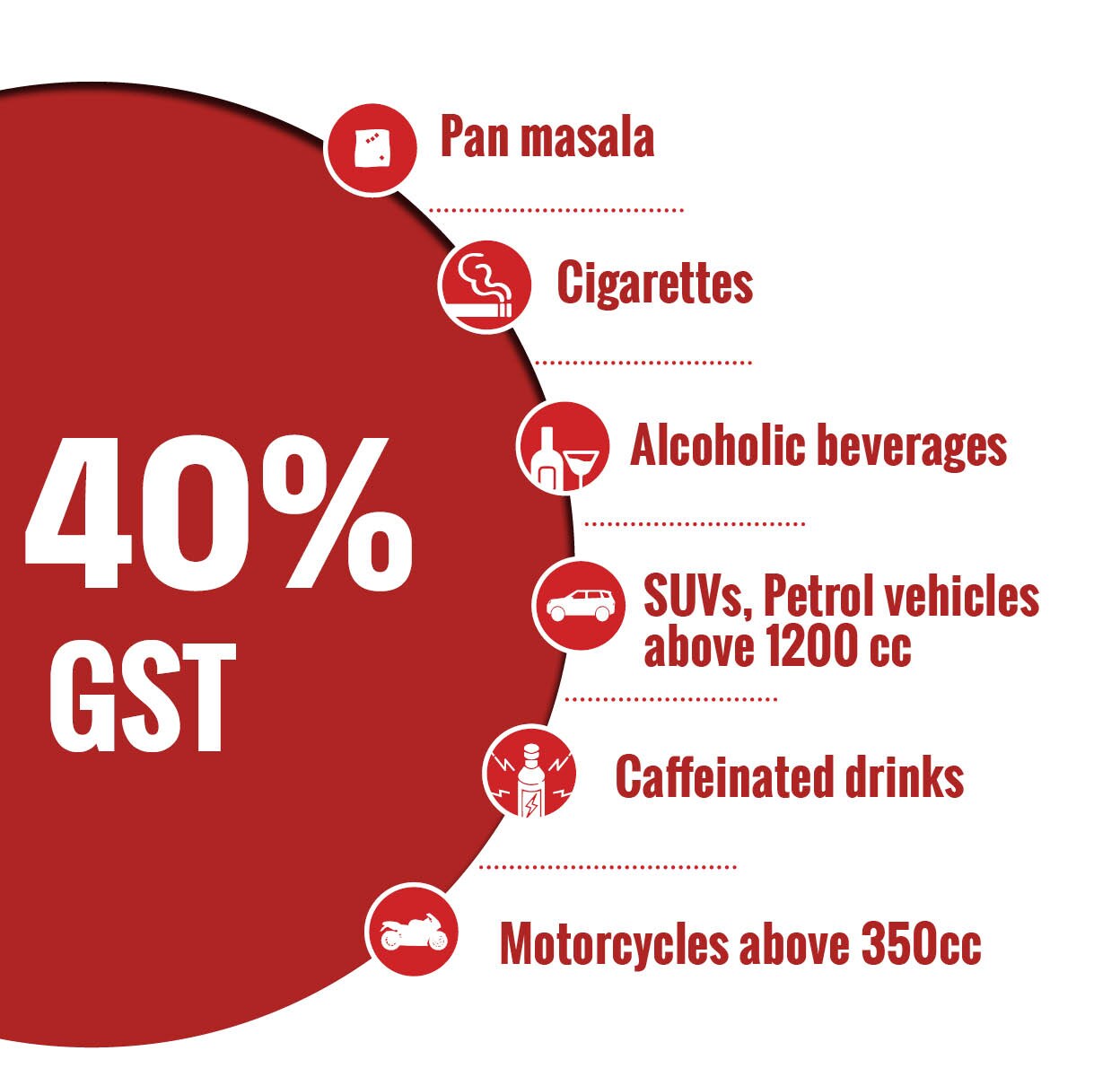
- Aerated soft drinks continue to attract 40% GST. PepsiCo’s Varun Beverages confirmed no reduction in cola prices.
- Luxury goods and tobacco remain under the 28% plus cess category.
- Cosmetics and detergents largely continue at 18%.
From soaps and shampoos to ACs and two-wheelers, GST 2.0 has made a wide range of products cheaper. But sin goods and luxury categories will remain untouched. With companies swiftly revising MRPs and hotels passing on lower tariffs, consumers are set to save more this festive season.
 Add as a preferred source on Google