

Mail This Article


Simple Energy is shifting gears with the launch of the Wave, moving beyond the sporty, aggressive styling of the Simple One to target buyers looking for a practical electric scooter for everyday use. Developed with lessons from its earlier models and a close eye on the competition, the Wave promises a mix of performance, comfort and convenience.
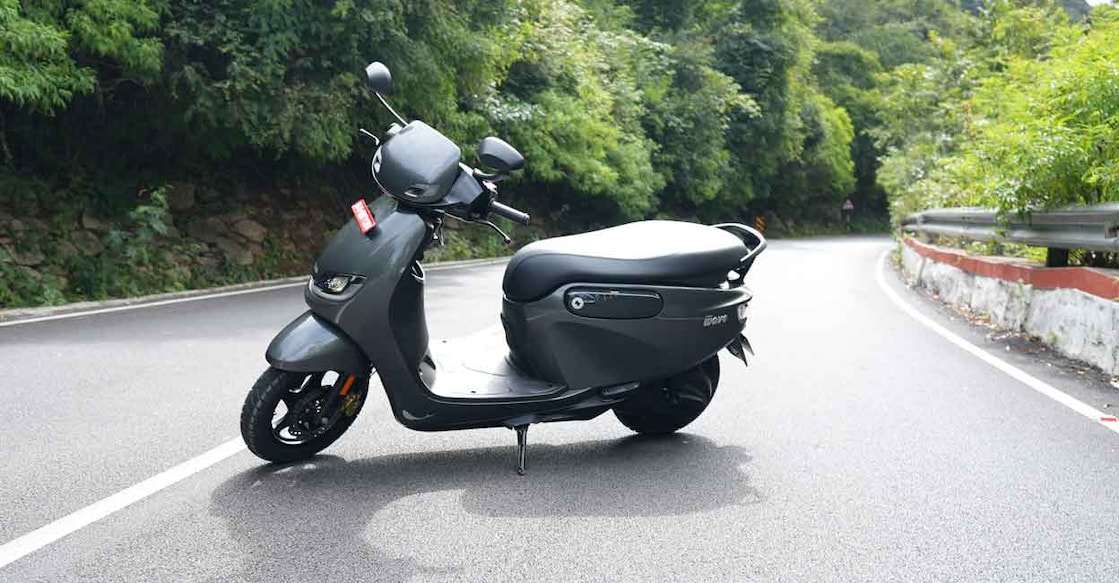
Unlike the sharp, angular Simple One, the Wave adopts a more rounded look, which the company calls its ‘Dolphin Design’ philosophy. Dolphin-themed decals add character to the bodywork, while the overall styling is aimed at a broader, family-oriented audience.
The changes go beyond appearance. The Wave gets a redesigned chassis with a reworked rear subframe to accommodate its large underseat storage compartment. It also uses twin rear shock absorbers instead of the Simple One’s monoshock setup. A simpler tubular swingarm replaces the cast unit, helping keep costs in check.

At the front, twin LED headlights with integrated daytime running lights (DRLs) sit on the body apron, while the turn indicators are mounted on the handlebar shroud. The scooter also gets an LED tail lamp and diamond-cut alloy wheels.
The 920 mm-long seat should offer ample room for both rider and pillion. A T-shaped pillion grab rail adds to the practical design. The inward-curving rear-view mirrors look neat, although their styling comes at the cost of some rear visibility.
A digital dashboard with plenty of feature
The Wave gets a 7-inch non-touch TFT display on the higher variants, while the base model uses a 5-inch colour screen. Bluetooth connectivity brings smartphone functions to the dashboard.
Features include turn-by-turn navigation, music and call controls, WhatsApp message previews, geo-fencing, live location sharing and over-the-air (OTA) software updates. Riders also get traction control, Super Hold, roadside assistance and a Do Not Disturb mode to silence notifications while on the move.
The connected features extend to real-time vehicle health and battery monitoring, along with AI-assisted route cost analysis. While the range of features is impressive, their usefulness in everyday riding will depend on how seamlessly they work in practice.
The Wave's biggest selling point? Storage
If there is one area where the Wave makes a strong case for itself, it is storage. Simple Energy claims a total storage capacity of 70 litres, including a massive 63-litre underseat boot — a standout figure in the electric scooter segment.
There is also an open front pocket with a USB charging port for smaller essentials. Lockable storage cubbies are integrated into the side panels, too. The left-side compartment can be opened by turning the ignition key to the left, making it handy for keeping documents, a wallet or other small items. The right-side cubby is offered as an optional accessory.
For family buyers, or anyone who regularly carries groceries, a helmet or work essentials, this emphasis on practicality could be a major draw.
Battery options, range and performance
Simple Energy offers the Wave in three variants — Wave S, Wave and Wave Plus — with four battery capacities: 2.2 kWh, 2.7 kWh, 3.7 kWh and 5 kWh.
The 2.2 kWh and 2.7 kWh batteries use lithium iron phosphate (LFP) chemistry, while the larger 3.7 kWh and 5 kWh packs use nickel cobalt aluminium (NCA) chemistry.
The company's claimed ranges are:
- 5 kWh: 243 km
- 3.7 kWh: 171 km
- 2.7 kWh: 132 km
- 2.2 kWh: 110 km
These are claimed figures, so real-world range will vary with riding style, traffic, road conditions and load.
All variants come with a 750W charger. According to the company, the larger battery packs can reach 80% charge in two hours and 15 minutes, while the Wave S variants can do so in around 70 minutes.
Power comes from a 6.4 kW permanent magnet synchronous motor (PMSM), producing 52 Nm of motor torque and 179 Nm of wheel torque through a chain drive. Simple Energy claims a 0–40 km/h time of 3.3 seconds and a top speed of 90 km/h.
The Wave also gets a HushDrive system, which the company says helps improve stability and reduce wheel vibrations, alongside traction control.
There are four riding modes: Eco X, Eco, Ride and Sport. Eco is designed for stop-and-go city traffic, while Ride and Sport offer a more responsive throttle. The range of modes gives riders some flexibility to balance performance and efficiency, depending on their daily commute.
Pricing and warranty
The Wave range starts at ₹1,09,999 (ex-showroom) for the 2.2 kWh version. Prices vary by battery capacity and display configuration.
Variant Ex-showroom price
- 2.2 kWh- ₹1,09,999
- 2.7 kWh EBN- ₹1,39,999
- 2.7 kWh TFT- ₹1,49,999
- 3.7 kWh EBN- ₹1,59,999
- 3.7 kWh TFT- ₹1,74,999
- 5 kWh TFT- ₹1,89,999
The standard warranty covers three years or 30,000 km. Buyers can also explore extended coverage under the company's Simple Super Protect programme, including a lifetime warranty option of up to 15 years or 2,00,000 km, subject to the applicable terms.
Simple Energy also plans to roll out its Simple Super Lab service network from November across key markets, including Bengaluru, Kochi, Pune, Goa, Kolkata, Odisha, Chennai and Delhi, with further expansion planned. The effectiveness and reach of this network will be important factors for buyers considering a relatively new EV brand.
Practicality takes centre stage
The Simple Energy Wave marks a clear shift in the company's approach. Instead of focusing primarily on sporty styling and performance, it puts everyday usability at the centre of the package.
Its biggest advantage is the 70-litre claimed storage capacity, backed by a spacious seat, multiple battery options and a useful set of connected features. The motor's claimed performance figures also suggest that practicality does not come at the expense of pace.
Pricing, however, needs a closer look. While the entry-level version starts at ₹1.10 lakh, the top-end 5 kWh model costs ₹1.90 lakh, placing it firmly in the premium electric scooter bracket. Buyers will also need to weigh the company's claimed range against real-world usage and consider the availability of service support in their area.
The Wave looks promising for those who want an electric scooter that can handle the demands of daily family life. Whether it delivers on that promise over the long term will depend on real-world efficiency, reliability and after-sales support.
