
How are rising household expenses changing borrowing patterns?
Mail This Article


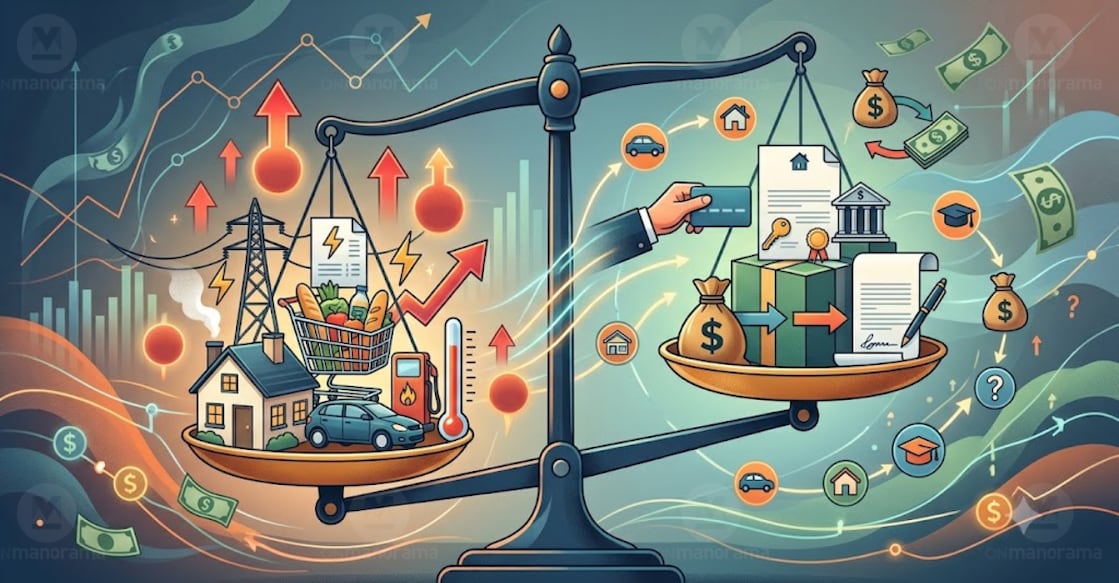
There has been a tremendous rise in household expenses in Indian families. Due to this, you can see there is also a change in the way people manage their finances and make borrowing decisions. Daily expenses on groceries, healthcare, transport, etc. have increased a lot, which has increased the monthly budget of families. It is becoming difficult for them to manage regular expenses along with the rising cost of living.
Due to this, borrowing has increased in India. Previously, loans were taken only for big purchases like a home, vehicle or property. But nowadays people are taking loans even for managing day-to-day expenses and temporary cash shortfalls. Moreover, the rise of digital lending has also made credit more accessible.
But this increased borrowing can create financial pressure if consumers do not assess repayment capacity carefully. Understanding the changing borrowing patterns is important for households who want to maintain financial stability.
1. Increasing Dependence on Personal Loans
People in India have now started taking unsecured loans to fulfil financial needs. As household expenses are increasing, many families are finding it difficult to manage expenses through regular income or savings.
A personal loan can be helpful in managing daily expenses as well as dealing with emergencies or unexpected expenses. Moreover, these loans don’t require any collateral. Its approval depends on the lender’s eligibility and credit assessment.
2. Digital Lending Is Making Credit More Accessible
The rise in digital lending has changed how consumers access credit. Due to online applications and digital verification, there is no need to visit a physical branch to apply for a loan. You can now easily apply for loans from anywhere by using the internet.
An online loan app can be used to submit an online application and track application status through a mobile device. This convenience can be very useful during times of emergencies or when sudden expenses arise.
However, one should be very careful while borrowing. People should check the lender’s identity, interest rate and repayment terms before accepting the offer. Moreover, never borrow from those who promise guaranteed loan approval without eligibility assessment.
3. Savings are Being Used to Meet Essential Expenses
With the rise in household expenses, families are now adjusting their savings before taking on any additional debt. Instead of investing their money for financial goals, they are using it to fulfil essential needs. Let me explain this with an example
There is a family who is finding it difficult to manage daily expenses. Hence, they have reduced their monthly savings so that they can continue with their existing lifestyle. But this reduction will also reduce their emergency funds, which they can use during emergency situations and unexpected crises.
Some households can eventually turn to credit when their savings are not sufficient. This will create a cycle in which rising expenses reduce savings, limited savings increase borrowing needs, and loan repayments further restrict the ability to save.
4. Borrowers Are Becoming More Conscious of Monthly Repayments
Borrowers are now not just thinking about the loan amount, but they are also being very cautious about the EMI amount. This is because the EMI determines how much money they have each month to spend on food, education and other daily expenses.
Due to this, some consumers opt for short-term loans or loans that have a longer tenure so that it becomes easy to pay the EMI. But extending tenure can increase the total interest. Hence, before accepting the loan offer, borrowers should calculate the EMI and consider existing obligations, which include credit card dues and other loan repayments.
The aim should be to select a repayment schedule that fits comfortably within the household budget rather than choosing a loan solely because its advertised EMI appears affordable.
5. Credit Cards and Short-term Borrowing is Increasing
People have increasingly started using credit cards and short-term loan facilities to deal with temporary cash flow shortages. Take, for example, someone may use a credit card for some necessary purchase and later on repay the outstanding amount after receiving the salary.
However, this approach is advisable only if the borrower can repay the credit dues on time. Carrying a balance beyond that period can lead to substantial interest charges. Cash advances and certain other transactions may attract interest or fees immediately.
Some consumers also use one credit card to repay another. This may delay the repayment problem on a temporary basis, but if this is done on a repeated basis, then it can create financial stress.
Borrowers should distinguish between short-term credit used for convenience and debt that is becoming difficult to repay. If repayments are getting tougher, then it's advisable to reduce expenses.
6. Borrowing Decisions Are Becoming More Selective
An increase in living expenses can make households more cautious about taking loans for discretionary purchases. Some consumers may postpone holidays, electronics purchases or home upgrades until their financial position improves.
At the same time, essential expenses may continue to justify borrowing when savings are not enough. This means borrowing decisions increasingly depend on the urgency of expenses, the stability of household income and the ability to repay.
Consumers are also comparing loan offers by various banks and NBFCs and not just grabbing the first option they get. Comparing interest rates, processing fees, and foreclosure conditions can help borrowers determine the actual cost of borrowing.
Conclusion
Rising household expenses are changing the borrowing pattern in India. More families have now started taking loans to manage daily expenses and unexpected financial needs. The rise in digital lending has made borrowing more convenient. But at the same time, due to increasing borrowing costs, people have started giving more attention to EMIs, repayment periods and interest rates.
But one should always remember that frequent borrowing can reduce savings and create financial stress if repayments become difficult to manage. Therefore, consumers should assess their financial situation before taking a loan. Maintaining an emergency fund, controlling unnecessary expenses and planning monthly budgets can help households manage rising expenses while maintaining long-term financial stability.
