

How River Mobility built a ₹450-cr EV business by betting on India’s blue-collar entrepreneurs
Mail This Article


Kochi: A skilled electrician earning ₹3 lakh to ₹4 lakh a month, a flower vendor relying on daily cash sales, and a home baker struggling to deliver cakes on metro trains may seem like unlikely customers for an electric vehicle startup. For Bengaluru-based River Mobility, however, they represent an underserved market that has helped the company emerge as a ₹450-cr business.
With a single flagship model, Indie, and around 100 retail outlets, River has entered India’s top seven electric two-wheeler brands, attracting Japanese automotive giant Yamaha, which invested in the company and licensed its vehicle platform.
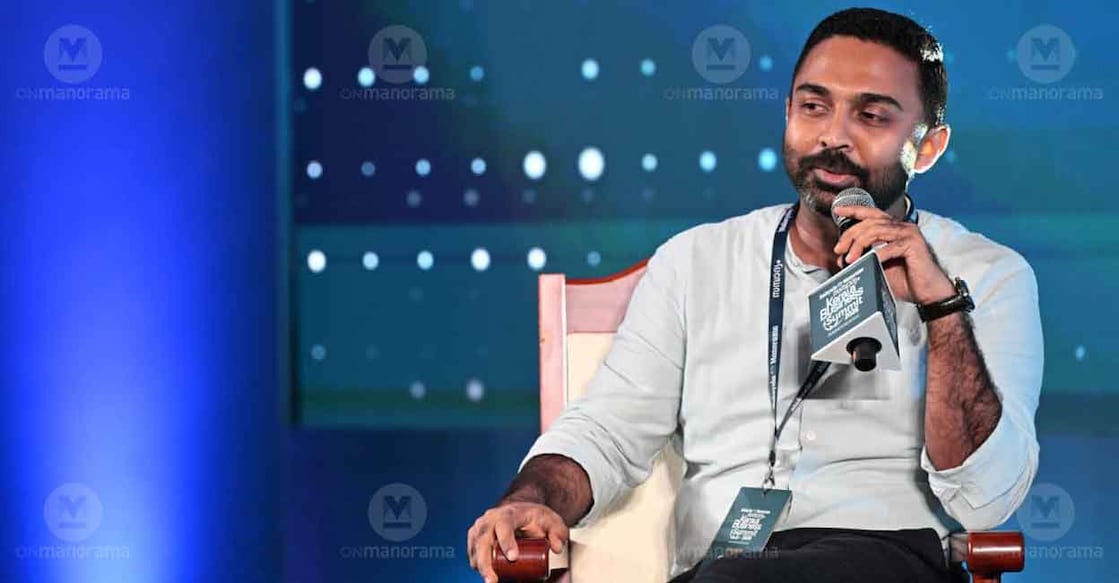
Speaking at the Malayala Manorama Sampadyam Kerala Business Summit 2026 in Kochi on Thursday, River co-founder and CEO Aravind Mani explained how the company built its business around India’s growing class of skilled workers and micro-entrepreneurs, earning its flagship scooter the moniker “SUV of Scooters”.
Betting on a different market
Founded in 2020 by Mani and Vipin George, an automotive designer who spent a decade at Honda Two-Wheelers in Japan and helped commercialise seven mass-market products, including the Activa 3G, River entered a market already populated by established players such as Ather Energy and Ola Electric.
“Both of us were around 35 years old and could have easily taken other jobs,” Mani recalled. “So I agreed to partner under two strict conditions: first, differentiation was non-negotiable and no ‘me-too’ products. Second, we had to raise a minimum seed capital of around $2 million. Without both, we couldn’t make progress.”
River secured its first $2 million in March 2021, overcoming the challenge of raising capital for manufacturing when Indian venture capital investors largely favoured asset-light software businesses. The founders pitched mobility-focused funds globally, drawing on George’s automotive experience and India's consumer economics.
“EV adoption in India isn’t about environmental altruism; it is pure economics,” Mani said. “Petrol costs ₹108 a litre, the same as California, where per-capita income is ten times higher. A commuter riding 1,000 km monthly spends ₹3,500 to ₹4,000 on fuel. Subsidised electricity cuts that to ₹400. That ₹3,600 difference is why people buy electric scooters.”
The ‘SUV of Scooters’
River’s strategy rests on the changing economic circumstances and aspirations of India’s blue-collar workforce.
“In 2007 when I started working, Infosys offered freshers ₹3.1 lakh per annum; today, starting IT salaries are still around ₹3.5 lakh. Meanwhile, skilled electricians make ₹3-4 lakh a month and carpenters comfortably earn ₹60,000,” Mani said.
Of India’s 80 cities with populations exceeding one million, 53 lack metro networks, leaving many workers and small entrepreneurs dependent on two-wheelers.
“Historically, utility vehicles were viewed as cheap mopeds. But today’s tradesmen have disposable income. Why shouldn't their ride reflect their lifestyle?” Mani asked, comparing the concept with American pickup trucks and Kerala’s plantation Jeeps.
River designed a heavy, planted scooter equipped with cargo racks and front foot pegs to carry goods and children, combining practical utility with lifestyle appeal.
“Rivers have always sustained human civilisation and livelihoods. Plus, rideatriver.com domain was available, rule number one for any startup!” Mani said of the company’s name.
Yamaha partnership and PLI challenge
River sells around 8,000 vehicles monthly, generating approximately ₹120 crore in monthly revenue, with a market share of about 3%. While competitors ranked among the top six typically have at least three product lines and more than 500 showrooms, River has achieved its position with one model and around 100 outlets.
The company has raised ₹1,700 cr in equity from investors including Toyota Ventures, Lowercarbon Capital and Dubai-based Al-Futtaim.
Its development speed attracted Yamaha, which invested in River and licensed its platform for the Yamaha EC-06.
“Japanese automakers typically take five years to develop a platform from scratch. We did it in 27 months,” Mani said. “Against giants like Bajaj with ₹20,000-crore treasuries, you have to win on speed, operations, and execution.”
However, River faces a cost disadvantage because it is excluded from the Centre's Production Linked Incentive (PLI) scheme. Although it sources mechanical components domestically and imports only battery cells from China, the eligibility criteria remain a hurdle.
“The PLI set a ₹10,000-cr group turnover threshold, excluding startups like Ather and us. This leaves us with a 10% to 12% cost disadvantage against legacy players, forcing us to remain in the premium segment,” Mani said.
River’s leased Hoskote plant is operating at 80% capacity. The company has acquired 55 acres from the Karnataka government for a new facility, with Phase 1 scheduled to open by July 2027.
It aims to expand to 200 stores by March 2027, 400 by 2028 and 1,000 by 2030. Mani said dealers would need to invest ₹2 cr, with the business potentially breaking even within 12 months. The company currently has a 45-day order backlog.
For the founders, building a lasting automotive brand takes precedence over retaining ownership.
“Neither of us came from family wealth. Building one of India’s few automotive brands is a privilege. If River becomes a $2-billion profitable company and we hold 20%, that’s fine; our priority is maximising River's scale,” Mani said. He also confirmed that an initial public offering is firmly on the horizon.
