

AI axe falls, 1.35 lakh tech jobs gone in 10 months

Mail This Article


As artificial intelligence (AI) and operational efficiency become corporate buzzwords, the global technology industry is witnessing a sweeping workforce shake-up. Tech giants such as Amazon, Microsoft, Oracle and Meta are cutting thousands of jobs, while others are offering voluntary exit packages as they restructure their operations.
The scale of the churn is staggering. More than 93,000 people have lost their jobs in the technology sector this year alone, according to layoffs.fyi, a portal that tracks job cuts across the industry. Of these, 93,217 cuts have been attributed to AI. What is driving this wave of layoffs? Is AI replacing human workers, or are companies also using the technology shift to rein in costs and streamline operations? A closer look.
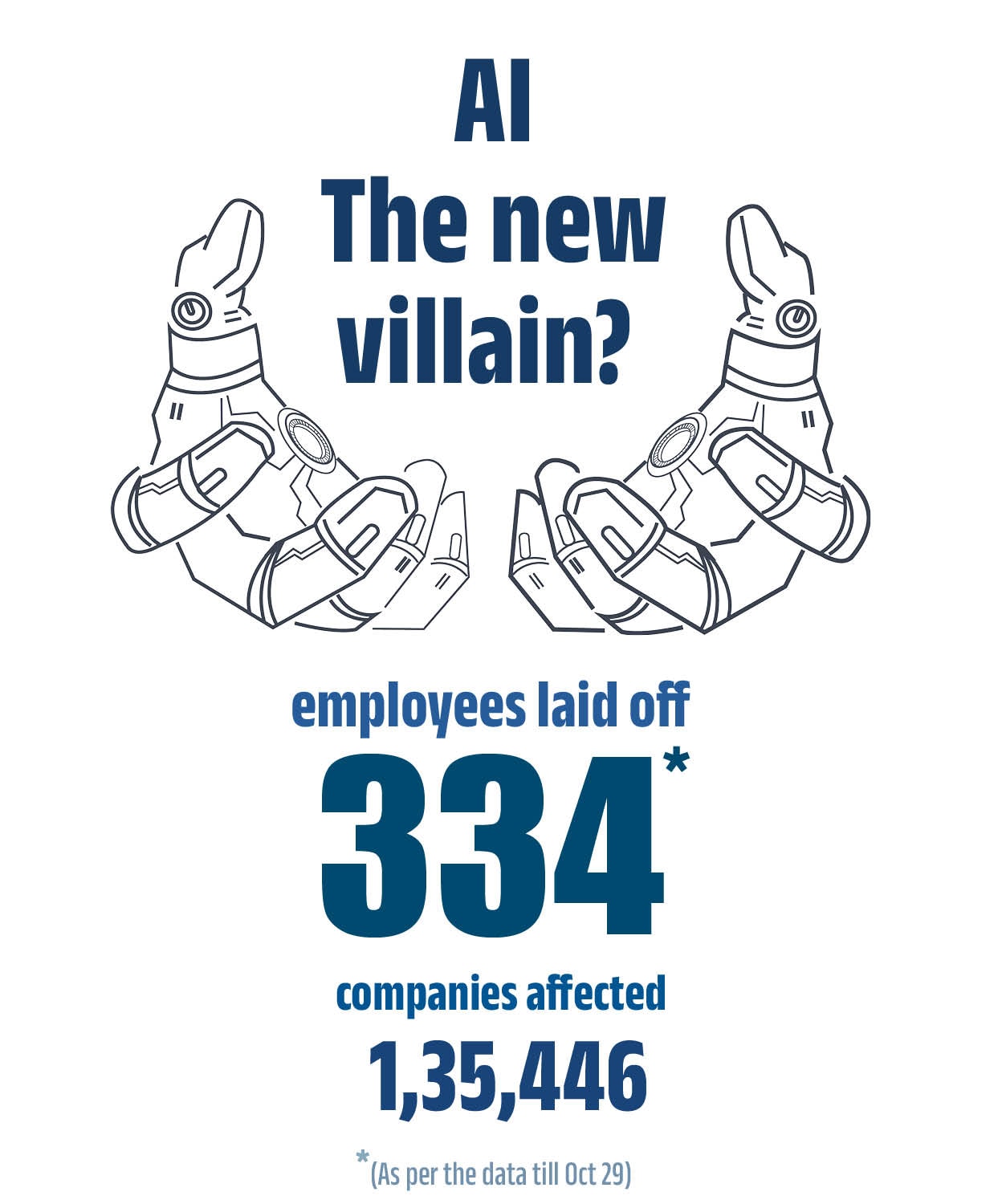
1.35 lakh jobs gone in 10 months!
The technology sector has witnessed 116 rounds of layoffs across companies this year, with an average of around 450 job losses every day. But it is not just the scale of the cuts that is worrying. In several companies, the layoffs account for a substantial share of the total workforce. According to layoffs.fyi data up to October 29, as many as 1,35,446 employees have been laid off across 334 companies this year. Of these, 93,217 job cuts have been attributed to AI. Last year, 278 companies laid off 1,22,606 employees.
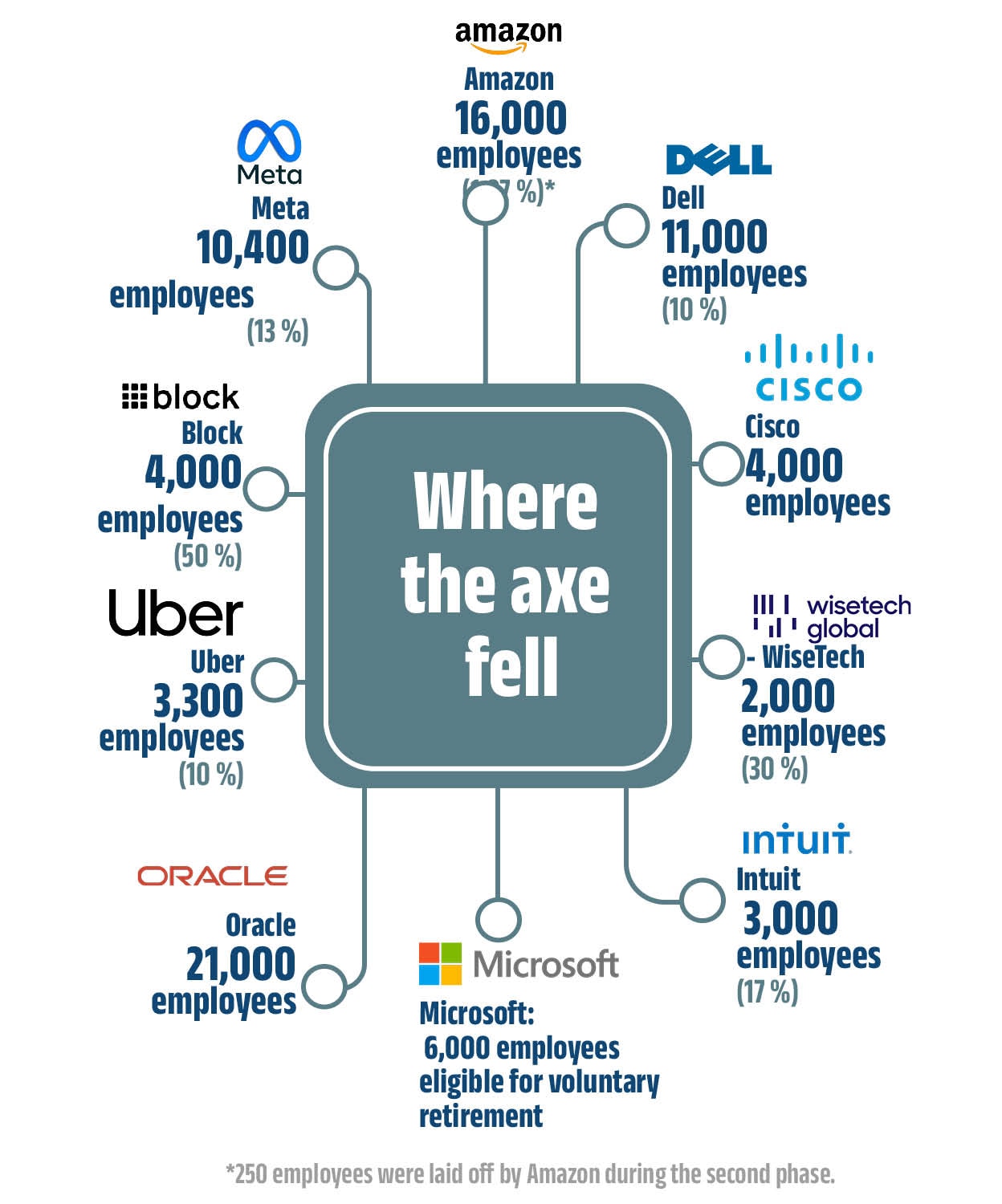
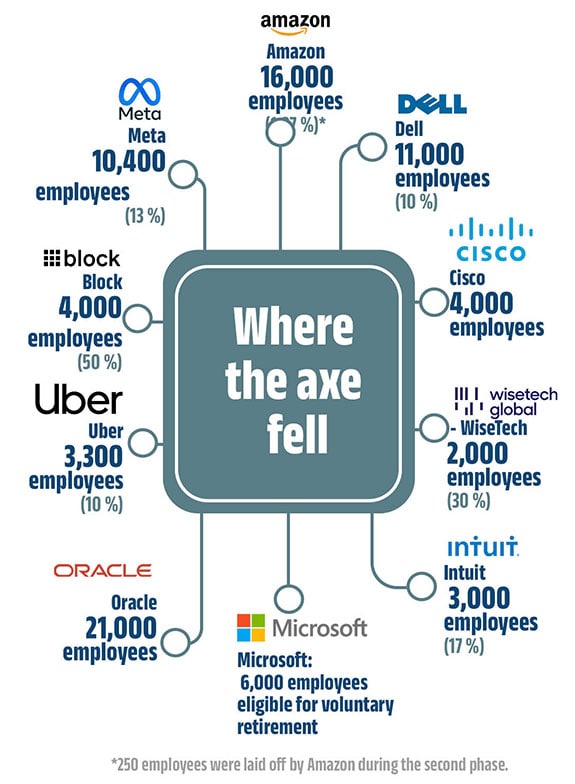
Amazon has cut 16,000 jobs so far this year, accounting for 1.07% of its workforce. Dell has shed 11,000 jobs (10%), while Meta has cut 10,400 (13%). Block and Cisco have each laid off 4,000 employees, representing 50% of their respective workforces. The list also includes Uber, which has cut 3,300 jobs (10%); Intuit, with 3,000 (17%); and WiseTech, with 2,000 (30%).
Oracle has laid off 21,000 employees, or 13% of its workforce. Salesforce, meanwhile, reduced its customer support team from 9,000 to 5,000 in September 2025 and is reportedly considering further cuts.
The downsizing is far from over. Amazon has carried out another round of layoffs, cutting 250 jobs, while Microsoft has announced voluntary retirement packages for 60,000 employees. The company is reportedly looking to reduce its workforce by 27%.
Layoff wave spreads to banking
The workforce shake-up is no longer confined to the technology sector. British multinational banking group Barclays is planning to cut around 5,000 jobs, or nearly 5% of its workforce. US financial services giant American Express is also looking to lay off 3,500 employees.
Why even profitable companies are cutting jobs
Layoffs are hardly surprising when companies are bleeding money. But why are cash-rich, highly profitable corporations also handing out pink slips by the thousands? Artificial intelligence is emerging as a key part of the answer. As automation gathers pace, companies are not just investing billions in the technology but also reassessing how many employees they need and which tasks still require human intervention.
The AI boom is reshaping corporate priorities. Companies are redirecting resources and investments towards AI infrastructure and development while trimming jobs in traditional roles. Amazon, for instance, has said its workforce cuts are part of an effort to make the organisation leaner and more efficient. The company is also stepping up investments in AI data centres and model development, with its planned investment in the technology reportedly touching $220 billion this year.
The shift is particularly evident at companies that are openly embracing AI as a means of doing more with fewer employees. Block, the financial technology firm founded by Twitter co-founder Jack Dorsey, has laid off 4,000 employees, with Dorsey explicitly citing AI as a reason. He argued that smaller teams equipped with AI tools could accomplish tasks that previously required much larger workforces. Salesforce, meanwhile, has reduced its customer support workforce from 9,000 to 5,000.
How AI is reshaping the workforce
The impact of AI on employment is unfolding in three broad ways. First, companies are cutting jobs to fund their AI ambitions. Firms such as Meta are trimming their workforce even as they channel massive investments into AI infrastructure and development. Second, AI is taking over tasks previously handled by employees. Companies such as Salesforce are deploying AI tools in customer support and other functions, reducing their dependence on human workers in certain roles.
Third, companies are restructuring in anticipation of wider automation. Firms are reorganising their operations and workforce to prepare for an AI-driven business environment. American Express, for instance, is among the companies reportedly reviewing its workforce requirements amid the shift. Apple, too, reportedly considered cutting 5,000 jobs in its customer care operations as AI increasingly takes over customer service functions. However, it later withdrew the proposal as the employees concerned were also deployed in other roles within the organisation.
Microsoft opts for voluntary exits to trim workforce
While mass layoffs often come as a rude shock to employees, Microsoft is taking a different approach by offering a voluntary retirement scheme (VRS) with financial incentives. The move is part of a major workforce restructuring exercise that could see nearly 27% of its employees in India and other countries being offered an exit package.
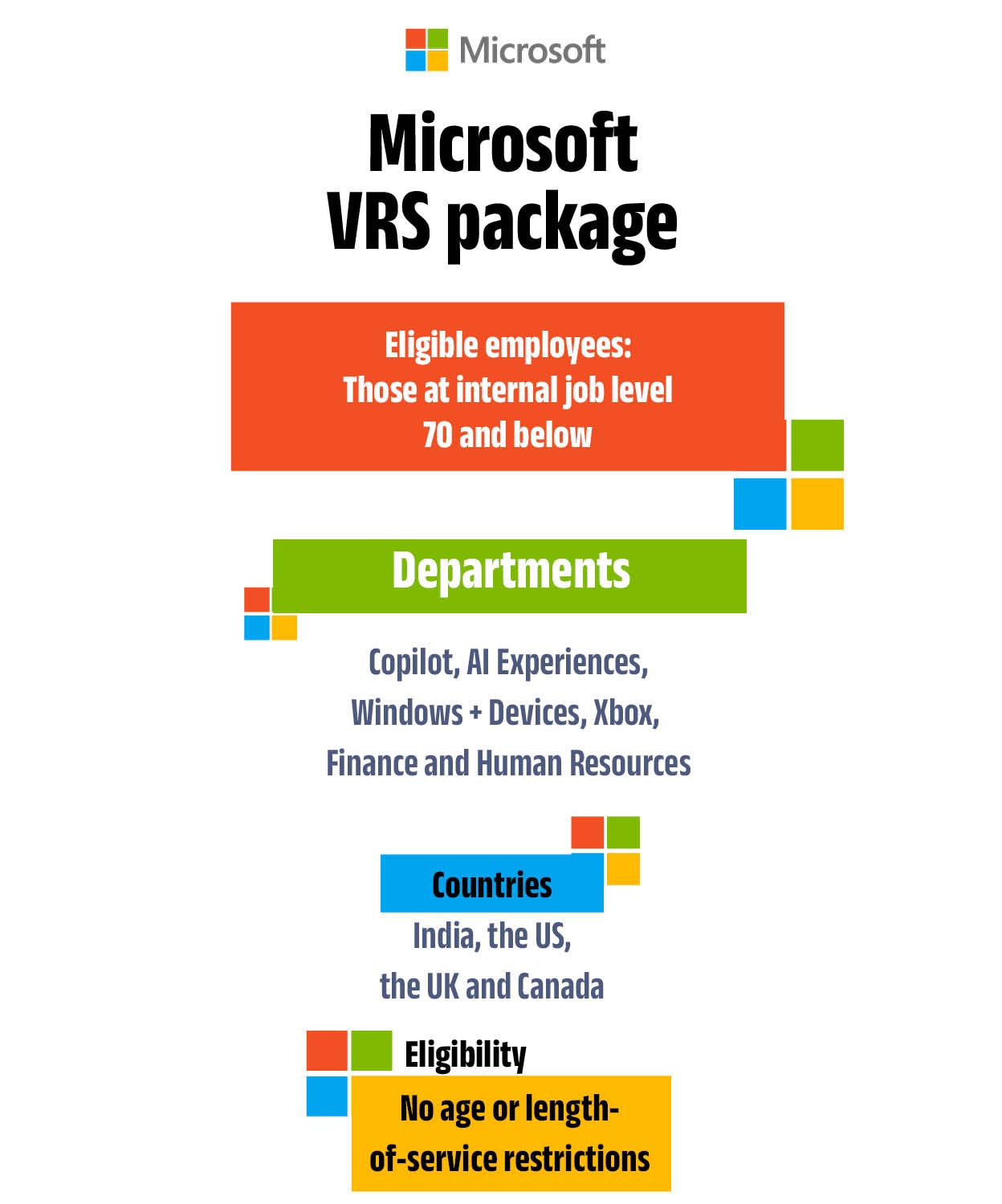
The scheme is open to employees at internal job level 70 and below in India, the US, the UK and Canada. Those working in Copilot, AI Experiences, Windows + Devices, Xbox, Finance and Human Resources can opt for voluntary retirement. Employees in Sales, Marketing, Business and Security, however, have been exempted. Unlike its earlier voluntary exit programmes, Microsoft's latest offer sets no age or length-of-service criteria. Nor is eligibility linked to an employee's performance or qualifications, underscoring that the exercise is aimed primarily at reducing headcount.
How much will Microsoft employees get?
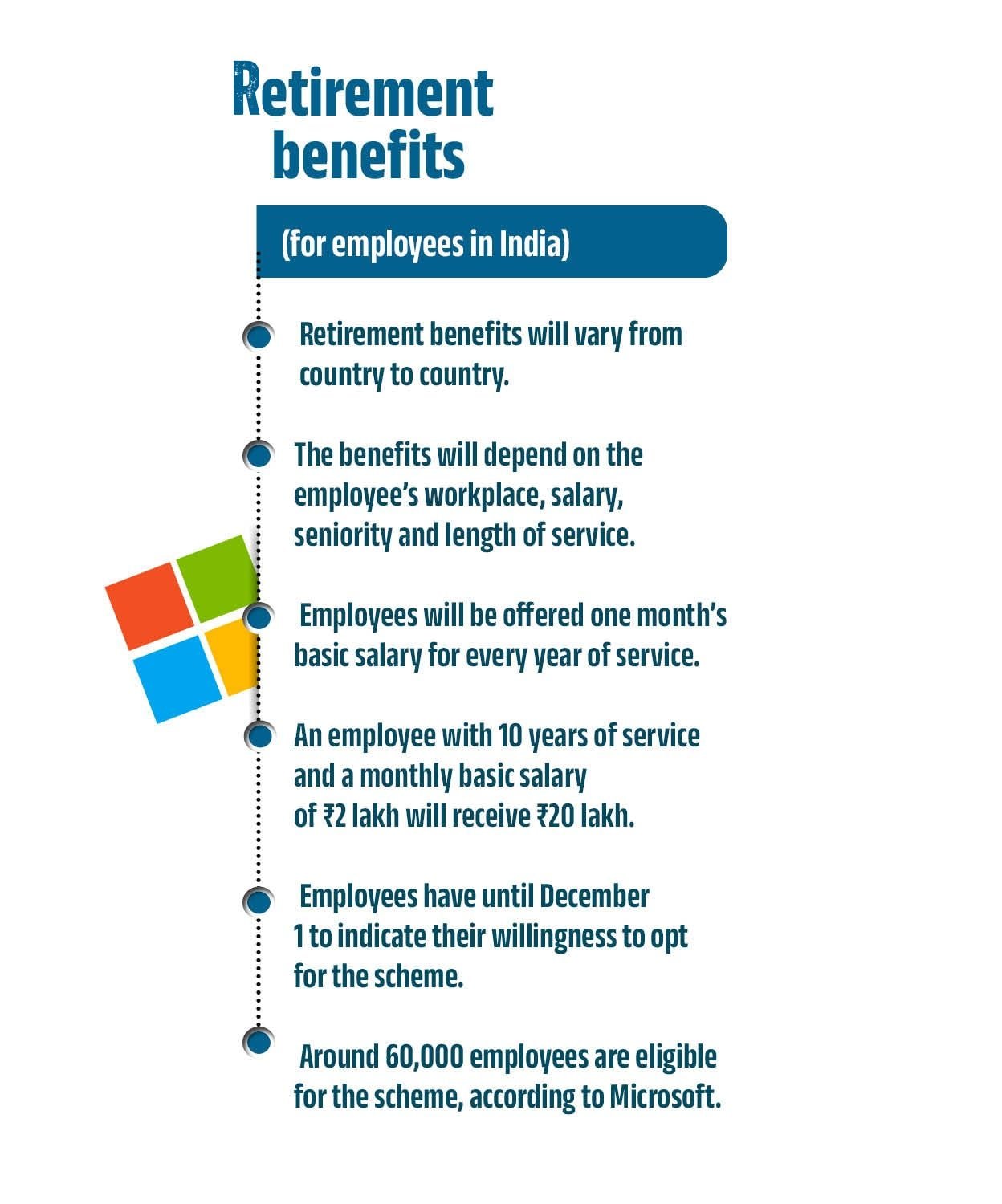
The severance package will vary depending on the employee's location, salary, job level and length of service. In India, employees will be offered one month's basic salary for every year of service. For instance, an employee with 10 years of service and a monthly basic salary of ₹2 lakh will receive around ₹20 lakh as severance pay. In the US, the payout will be linked to job level. Employees at level 64 and below will receive half a month's basic salary for every six months of service. Those in levels 65 to 67 will be entitled to two weeks' basic salary for every six months of service.
Eligible employees in India have until December 1 to indicate their willingness to opt for the scheme. Microsoft is expected to process the exits by the end of December. Details of the VRS benefits will be communicated to eligible employees through email. Around 60,000 employees are eligible for the scheme, according to the company. Microsoft has also indicated that further job cuts could follow, depending on business requirements.
India too feels the pinch
India's IT sector, too, is beginning to feel the impact of the global workforce reset, as leading technology companies have begun rethinking their hiring strategies and workforce needs. Employee numbers have been declining over successive quarters, reflecting a shift in the industry's approach to growth.
Fresh recruitment, particularly at the entry level, is being scaled back as companies focus on reskilling existing employees in AI, expanding automation and boosting productivity. Rather than adding to their workforce, IT firms are looking to make better use of existing talent to navigate global economic uncertainties and stay competitive.
The shift is also changing how IT companies measure growth. Headcount, once a key indicator of expansion, is losing ground to more productivity-driven metrics, particularly revenue per employee and the ability to deploy AI effectively. In the emerging business model, companies are increasingly looking to generate more output with fewer employees.
