

Keralam feels food price heat as retail inflation rises to 6.22%
Mail This Article


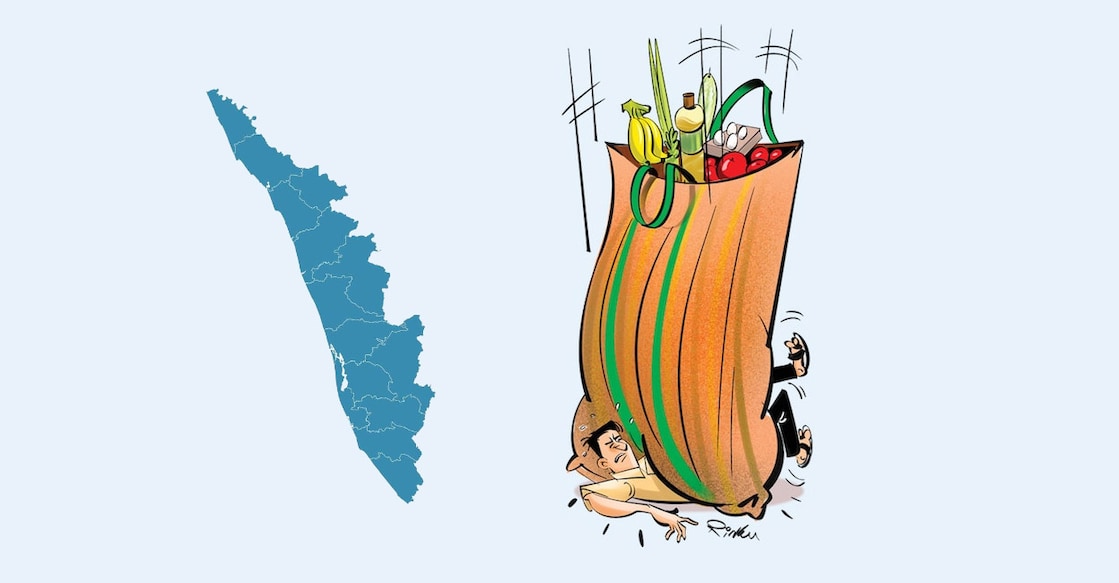
Retail inflation in Keralam climbed to 6.22 per cent in October from 5.26 per cent in September, with food prices remaining a major concern. The state also recorded the fifth-highest food inflation in the country at 10.92 per cent, according to data released by the Ministry of Statistics and Programme Implementation.
Keralam's inflation rate was higher in rural areas, at 7.01 per cent, compared with 5.58 per cent in urban areas.
Among the southern states, Tamil Nadu recorded the highest retail inflation at 7.29 per cent, followed by Telangana (7.26 per cent) and Andhra Pradesh (7.25 per cent). Madhya Pradesh (7.19 per cent) and Odisha (7.17 per cent) occupied the fourth and fifth positions nationally.
Andhra Pradesh topped the list of states with the highest food inflation at 13.23 per cent. Tamil Nadu followed at 12.37 per cent, Karnataka at 12.16 per cent and Telangana at 11.66 per cent, with Keralam in fifth place.
Meanwhile, at the national level, retail inflation surged to 6.09 per cent in October, breaching the Reserve Bank of India's (RBI) upper tolerance limit of 6 per cent for the first time in two years.
The Consumer Price Index (CPI)-based inflation stood at 5.54 per cent in September. A sustained increase in food and beverages, restaurant services and transport costs contributed to the rise in the headline inflation figure.
Food inflation jumped to 8.94 per cent in October from 7.74 per cent in the previous month. Of the 12 broad categories of goods and services, 11 recorded an increase in inflation.
Inflation in restaurant and accommodation services stood at 10.06 per cent, while food and beverages recorded 8.51 per cent. Personal care and miscellaneous goods and services saw inflation of 10.14 per cent.
Onion recorded the highest price rise among individual items at 116.22 per cent, followed by garlic (60.74 per cent), silver jewellery (52.39 per cent), ginger (48.32 per cent) and lemon (47.30 per cent).
Retail inflation last breached the RBI's upper tolerance limit in October 2024, when it stood at 6.25 per cent. The central bank is mandated to maintain inflation within a range of 2-6 per cent.
Economists expect the RBI to raise the benchmark interest rate by 0.25 percentage points each in its December and February policy reviews.
"We expect the next few readings to remain elevated above 6 per cent amid adverse base effect from GST, higher food prices and partial pass-through of higher commodity prices," said Upasna Bhardwaj, Chief Economist at Kotak Mahindra Bank.
Food inflation is expected to remain elevated in the coming months, with experts citing weather-related risks to crop production and supplies. "Domestically, weather-related risks remain significant, with rabi sowing off to a weak start. Low reservoir storage, depleted soil moisture, and drought conditions across several states pose further risks. The food inflation trajectory will therefore hinge on the progress of the kharif harvest and the pace of rabi sowing in the coming months," said Rajani Sinha, Chief Economist at CareEdge Ratings.
