Beyond Mustafa: What Singapore’s economic engine means for a rising India
Mail This Article


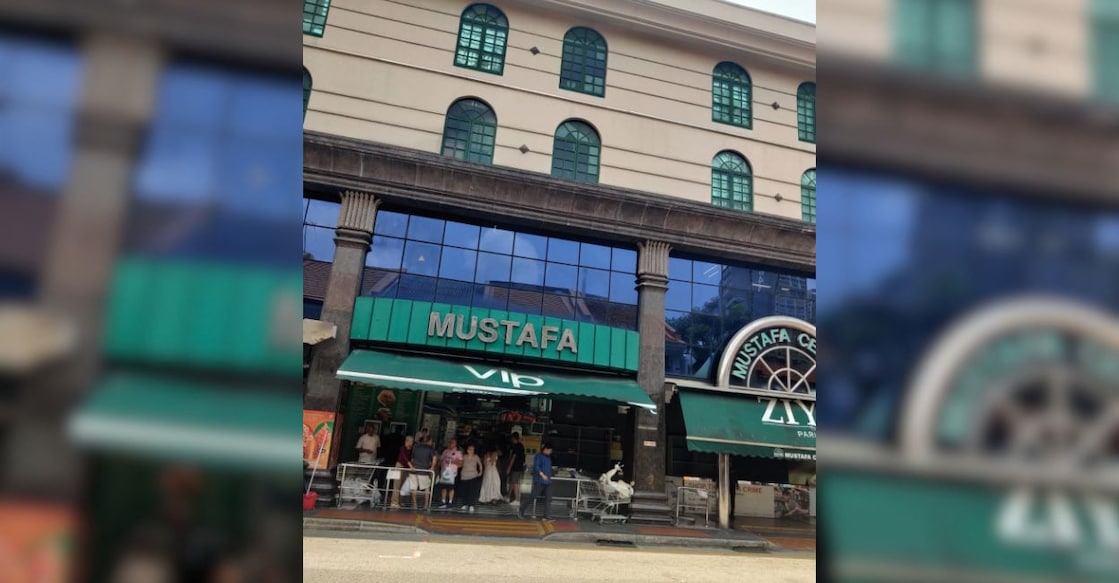
“Now, we all buy our stuff from India when we visit. Lulu, for instance, has almost everything you get in Singapore, plus some more, and at cheaper rates. Earlier, when we went to India, we used to buy only clothes.” My host during my three-day visit to Singapore last weekend was persuading me not to bother going to “Mustafa”.
Those who have travelled to Singapore will know Mustafa Centre in Little India. It is a “salt-to-camphor”, as we say in Malayalam, supermarket spread over several floors and annexes, open 24 hours, 365 days a year. It still attracts crowds, but the mad scramble by Indian tourists to buy things seems to have disappeared.
That itself was an indication of how much India has changed. But the most striking impression of my return was not Singapore. It was India.
I worked in Singapore for SBI from 2006 to 2010, a period of extraordinary turmoil in banking because of the Global Financial Crisis—a “Global” crisis whose epicentre was unmistakably in the West. My Singaporean colleagues in the CFO’s department and Trade Finance recently organised a dinner to relive those days. It was a pleasant reunion and a reminder of the Singapore I knew.
SBI, ICICI Bank, Bank of India and Bank of Baroda have active operations there. Trade finance is big business. Much of the commodities India imports from Indonesia, Malaysia and Australia pass through this great entrepôt.
Singapore remains a major financial centre of Asia. Trade and finance are at the heart of its economy. It imports virtually everything—food, fuel and essentials—yet remains remarkably clean. Even the common crow is unwelcome because its droppings spoil buildings and roads.

And then there was Goh, my 60-year-old taxi driver, who has been driving for 30 years.“Indians are all over the place—in banking, technology, software. They are very smart and adaptable. Of late, we are hearing a lot about India’s rising image. I have not travelled to India, though,” he said.
That compliment was satisfying. But Goh had another observation: prices have risen and inflation is a worry. Petrol, he said, had risen to around SGD 4 a litre from SGD 3 six months ago, with the increase feeding into other prices.
Singapore has instruments to manage such price pressures. One is land. Land is scarce in this island-state of roughly 750 sq km, and Government control over land-use and development gives it considerable influence over housing supply. Land can be released for development when additional housing is required, influencing house prices and rents. Since real estate feeds into so many other prices, managing land supply becomes an economic policy instrument.
The same mechanism can encourage growth. Redevelopment and reconstruction are actively encouraged. Buildings that might remain in use for decades in India can sometimes be replaced much earlier in Singapore. Construction creates demand, investment and jobs.
This is a distinctive feature of the Singapore model: the Government does not merely regulate the economy; it actively shapes its supply side.
Singapore’s physical size is tiny, but its economic footprint is enormous. In 35 years after independence in 1965, it moved from a developing economy to one of the world’s most prosperous nations. The transformation under Lee Kuan Yew was extraordinary.
Chinese, Malay and Indian communities live alongside one another in a carefully structured social framework. Public housing is one instrument through which this coexistence is encouraged, with ethnic proportions (same percentage) reflected in flat allocation. Integration begins in the neighbourhood itself.
Singapore’s handling of shocks, including Covid and recent energy-price pressures, also demonstrates the importance of fiscal and administrative instruments. Cash transfers and targeted assistance have been used to support households, senior citizens and domestic consumption.Its nominal per-capita income is around US$110,000, among the highest in the world.
Lee Kuan Yew, who died in 2015, would surely have had reason to be satisfied. He reportedly wanted his family residence demolished rather than turned into a memorial: “No memorials for me.”Singapore has largely respected that sentiment. The man who helped build modern Singapore did not want statues or monuments to himself. His monument is the country itself.
Is everything so hunky dory about Singapore? Not really. Crows are regularly culled in Singapore. A bird revered in Indian tradition as part of ancestral worship faces killing because Singapore does not want its squeaky cleanliness marred by bird droppings. So the common crow is anathema here.
And at the airport on my return, two Red-shirted “Ambassadors” called up Singapore police to report my two bags as unattended baggage. I had gone to the washroom, which was a brief walk and perhaps took about 10 minutes. So I waited but wanted to drink water from my bag. “You can't touch your bags. The police will have to clear it", the Ambassadors said. I requested the two youngsters to fetch me a glass of water. They said they can't. Goodwill for an entire nation can be undone by such wanton adherence to rules (not the inspection of bags but the unwillingness to offer even a glass of water when requested).
Nevertheless, after a three-day return to a city I once called home, I came back with a thought: some nations build monuments to their leaders. Singapore built a nation instead. Perhaps both the nation and the man who built it were, in their own very different ways, limited-edition issuances of humanity.