Demonetisation@10: The promise, pain and unintended digital dividend
Mail This Article


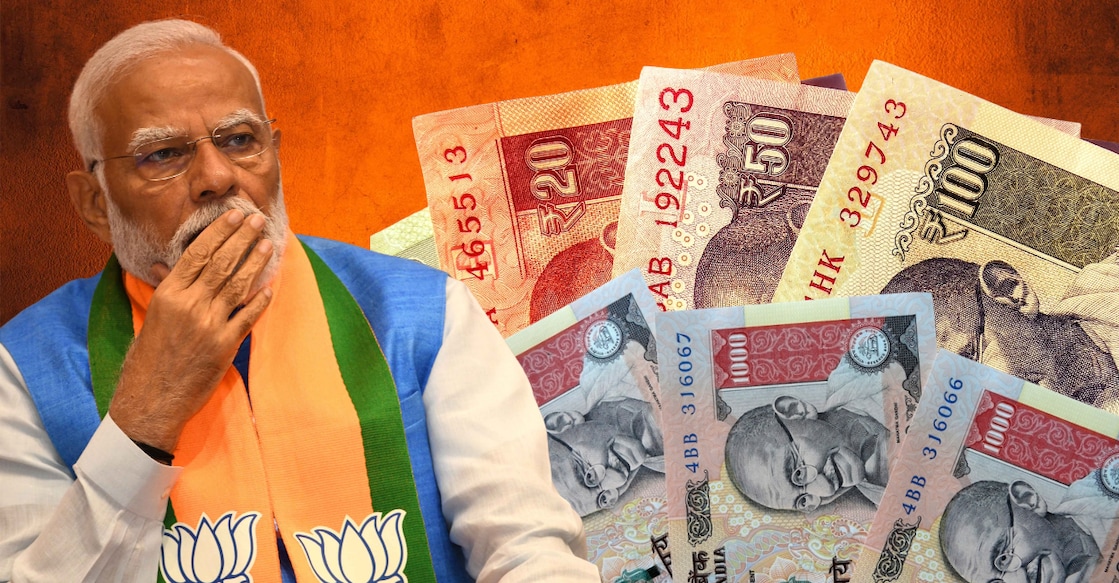
November 8 marked the tenth anniversary of the Union Government’s unprecedented decision to demonetise the ₹500 and ₹1,000 notes in circulation. The decision followed months of discussion among a closed circle of bureaucrats under a veil of secrecy.
In his book, “I Do What I Do”, former RBI Governor Raghuram Rajan, whose term ended on September 4, 2016, recalled that the government sought his views in February that year. He gave his comments orally first. Later, he was asked to prepare a note. The RBI’s note outlined the possible costs and benefits of demonetisation, as well as alternatives that could achieve similar objectives. It also warned of the consequences of inadequate preparation. The government subsequently set up a committee to examine the issues.
After Rajan left, Urjit Patel was appointed the Governor. Demonetisation was one of the most significant decisions effected during the initial months of his stewardship.

On November 8, 2016, the RBI Board met in Delhi at 5.30 pm. The minutes of its 561st meeting are in the public domain. The Board endorsed the Deputy Governor’s proposal to recommend to the Central Government the withdrawal of the legal-tender status of ₹500 and ₹1,000 notes. The Prime Minister went on air at 8 pm that day to announce the withdrawal of currency notes in these two denominations. He presented it as a move against corruption, black money, fake notes and terrorism funding. He framed it as a grand move in favour of the ordinary people against the high and mighty who hoarded illegal money and ran a parallel black monetary system. Very distinctly, his tone during the demonetisation days was something like the Garibi Hatao days of Indira Gandhi.
As we complete 10 years after that tumultuous decision, no one openly claims authorship of that move. In a television interview with News18, Hasmukh Adhia, Revenue Secretary in 2016, said that he was not the key person behind that move. Nripendra Misra, the then Principal Secretary to the Prime Minister, held meetings every Monday to discuss the plan, and he was one among a group comprising five officers, including Shaktikanta Das, then Economic Affairs Secretary and later, RBI Governor.
The minutes of the RBI Board meeting, however, recorded an important qualification. The Board noted that the GDP growth rate cited by the ministry for comparison with currency in circulation was the “real” rate, whereas the currency in circulation was “nominal”. “Adjusted for inflation, the difference (between the two, both in nominal terms) may not be so stark. Hence this argument (the ratio of currency to growth rate) does not adequately support the recommendation,” the minutes observed.
Finally, the Board concluded that, in the larger public interest, the balance of advantage lay in withdrawing the two denominations.
The stated objectives had therefore been discussed and examined in detail. The move was not straight out of somebody’s hat. For nearly 6 months, some of the best brains in Government had worked on the idea. Unearthing black money, tackling counterfeit currency, and cutting off funds for terrorist activities and corruption were among the principal reasons the Prime Minister cited in his address to the nation at 8 pm that evening.
What followed on the ground, however, was severe hardship for ordinary people and small businesses. The initial days exposed serious gaps in assessing the decision's practical consequences. New ₹500 and ₹2,000 notes had reached bank currency chests at least 2 days before the announcement.
Moving new notes without bank staff or the security apparatus, including the various State police, knowing the contents of consignments was a remarkable logistical achievement. In a large country like India, it would normally be difficult to keep the secrecy, especially when physical unloading and stacking inside currency chests was being done.
But the core group in Delhi appears to have underestimated the disruption that would follow. In a large and diverse country such as India, a sudden measure can trigger panic when communication is inadequate, and rumours are spread. In a situation like that, authenticity of communication became a casualty. Currency, the lifeblood of the national economy, had been almost entirely been delegitimised and people had no clue what to do, faced with marriages, social and religious functions and even death rites where cash is the medium of exchange.
Small businesses, roadside vendors, tiny restaurants, the mainstay for breakfast, lunch and dinner for millions of people, did not have a means of settlement as currency was not available. The development was something which the country had not experienced before in such a scale.
As for ATMs, the practical challenge of recalibrating more than two lakh ATMs seems also to have been overlooked. The new notes supplied by RBI had different dimensions, requiring changes to the machines’ cash cassettes. This was one aspect which the think-tank totally missed out.
Equally difficult to justify were the restrictions imposed on withdrawals from bank accounts, which were subject to change almost every day. Millions of people had legitimate money in their accounts but could not access it freely. Dr Manmohan Singh quoted these experiences of ordinary people and described the exercise as “monumental mismanagement”. Why were adequate contingency plans not in place? And why was at least a couple of chairmen or CEOs of commercial banks not consulted about steps to mitigate possible hardships in the initial discussions?
Short-term economic growth was a casualty. GDP growth fell from 8 per cent in 2015-16 to 7 per cent in 2016-17.No clearly measurable gain matched the disruption. Yet the promise of action against the wealthy found popular support. Before long, digital transactions using cards/other means became the norm. This was perhaps the most significant unintended consequence of the “note bandhi”.
There was a quantum leap from the third world of cash transactions to the first world of digital for ordinary Indians. Crores of Indians today use digital payments without ever having seen a chequebook. After 10 years, the overall sentiment is that demonetisation was well-meaning, but the think tank behind the decision did not think through all the consequences. The difficulties of the hoi polloi were definitely underestimated.