

DMK criticises Vice President Dhankhar over comments on judiciary
Mail This Article


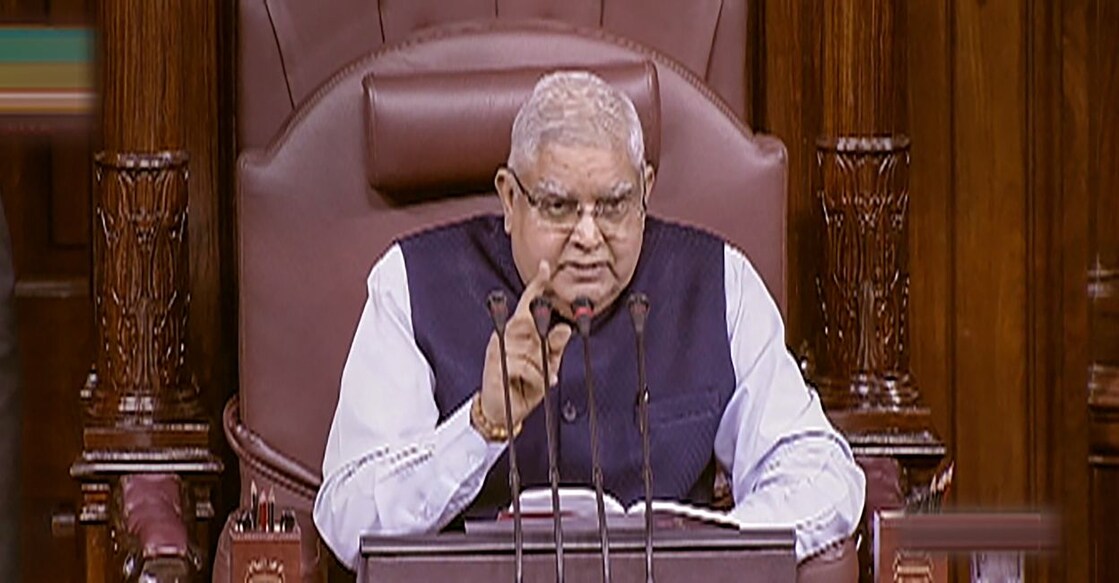
Chennai: The Dravida Munnetra Kazhagam (DMK) has taken a strong stance against Vice President Jagdeep Dhankhar for his recent criticism of the judiciary, following the Supreme Court’s directive setting a deadline for the President to assent to state bills. The party called his comments "unethical."
DMK deputy general secretary and Rajya Sabha MP Tiruchi Siva pointed out that the Constitution mandates a clear division of powers among the executive, legislature, and judiciary.
He remarked, "When all three act on their own spheres, one should not forget that the Constitution is supreme. The recent Supreme Court verdict on the role of Governors and President invoking Article 142 undoubtedly has established that no individual in the name of being a constitutional authority can sit over the bills passed by a legislature indefinitely undermining the constitutional provisions."
Siva went on to say, "The Vice President Mr Jagdeep Dhankar's observations on this SC verdict is unethical! Every citizen is and must be aware that 'the rule of law' prevails in the Union of India."
Vice President Dhankhar had recently questioned the judiciary’s authority to set deadlines for the President, accusing it of acting like a "super Parliament" and stated that the Supreme Court "cannot fire a 'nuclear missile' at democratic forces." His sharp criticism followed the court’s order that the President must decide within a fixed time frame on bills forwarded by Governors for her consideration, reported PTI.
"So, we have judges who will legislate, who will perform executive functions, who will act as super Parliament and absolutely have no accountability because the law of the land does not apply to them," Dhankhar had said. He also likened Article 142 — which grants the Supreme Court special powers — to a "nuclear missile against democratic forces available to the judiciary 24x7."
 Add as a preferred source on Google