

Indus Waters Treaty in abeyance with immediate effect, India notifies Pakistan
Mail This Article
New Delhi: India has formally notified Pakistan of its decision to suspend the Indus Waters Treaty with immediate effect, citing repeated violations by Islamabad. The development follows the recent terror attack in Pahalgam, Jammu and Kashmir, in which 26 people—most of them tourists—were killed.
In a letter addressed to Pakistan's Secretary of Water Resources, Syed Ali Murtaza, India’s counterpart Secretary Debashree Mukherjee said the sustained cross-border terrorism by Pakistan targeting the Indian Union Territory of Jammu and Kashmir obstructs India's rights under the treaty.
"The obligation to honour a treaty in good faith is fundamental to a treaty. However, what we have seen instead is sustained cross-border terrorism by Pakistan targeting the Indian Union Territory of Jammu and Kashmir," the letter stated.
The letter further noted that the evolving security situation has hampered India's ability to fully exercise its entitlements under the agreement. "The resulting security uncertainties have directly impeded India's full utilisation of its rights under the treaty," it said.
The Indian government has also raised concerns over "significantly altered population demographics, the need to accelerate the development of clean energy, and other changes," which it believes warrant a reassessment of the treaty’s obligations. It also accused Islamabad of breaching the pact by not responding to calls for renegotiation, as stipulated in Article XII(3) of the treaty.
"...apart from other breaches committed by it, Pakistan has refused to respond to India's request to enter into negotiations as envisaged under the treaty and is thus in breach of the treaty," the letter noted.
"The Government of India has hereby decided that the Indus Waters Treaty 1960 will be held in abeyance with immediate effect," it concluded.
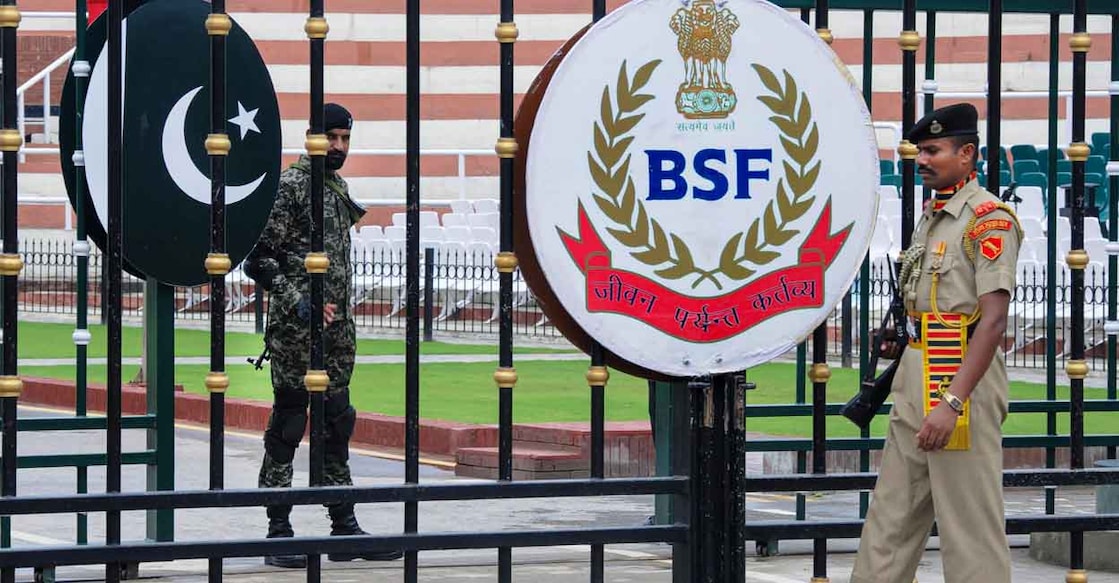
A day earlier, India announced a series of steps against Pakistan, including suspending the Indus Waters Treaty, expelling Pakistani military attachés, and shutting down the Attari land-transit post.
In response, Pakistan dismissed India’s move and warned that any disruption to its share of the river waters would be deemed an act of aggression.
"Any attempt to stop or divert the flow of water belonging to Pakistan as per the Indus Waters Treaty and the usurpation of the rights of lower riparian will be considered as an act of war," an official statement from Pakistan said.
The Indus Waters Treaty, signed in 1960 and mediated by the World Bank, has regulated water-sharing between India and Pakistan over the Indus river system and its tributaries.
The system comprises six main rivers: the Indus, Ravi, Beas, Sutlej, Jhelum, and Chenab. The Ravi, Beas, and Sutlej are classified as eastern rivers, while the Indus, Jhelum, and Chenab fall under the western rivers category. The Kabul river, a right-bank tributary of the Indus, does not flow through Indian territory.
At the time of Partition, the division of the Indus Basin left India as the upper riparian state and Pakistan as the lower riparian. Punjab's irrigation infrastructure in Pakistan relied heavily on two key works—Madhopur on the Ravi and Ferozepur on the Sutlej—that ended up within Indian borders after demarcation.
This led to a prolonged dispute over irrigation rights until a settlement was reached under the World Bank's mediation. As per the 1960 treaty, India was given exclusive control over the eastern rivers—Sutlej, Beas, and Ravi—amounting to an average annual flow of about 33 million acre-feet (MAF).
Pakistan was granted rights over the western rivers—Indus, Jhelum, and Chenab—collectively averaging about 135 MAF in annual flow. However, India retained limited usage rights on these rivers for domestic use, non-consumptive needs, agriculture, and hydroelectric projects.
(With PTI Inputs)
 Add as a preferred source on Google