

SC spares sentence in POCSO case, says victim didn’t see act as crime, later married accused
Mail This Article
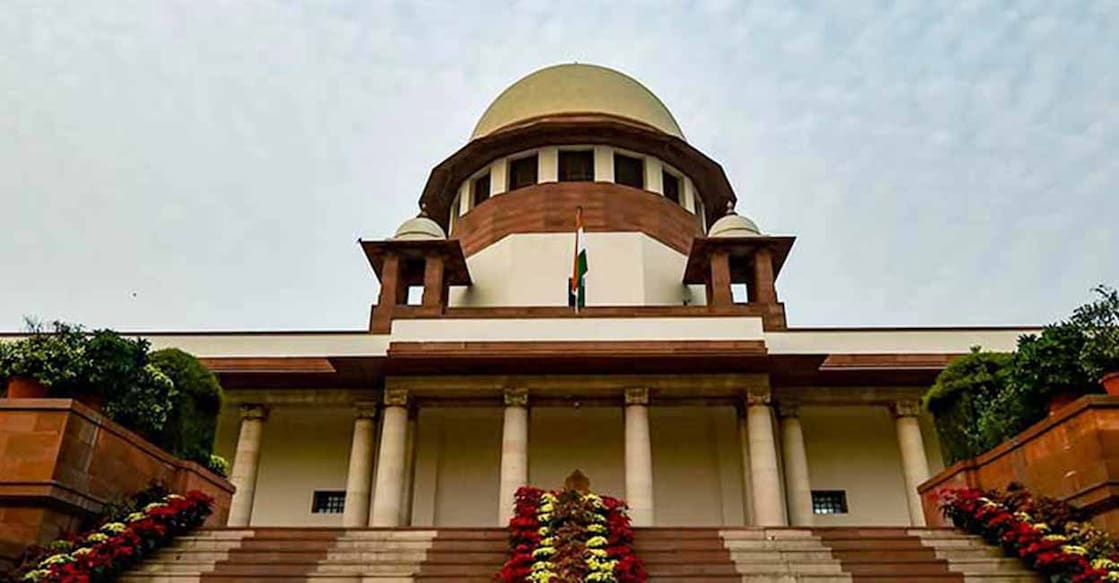
New Delhi: In a significant judgment, the Supreme Court on Friday chose not to impose a sentence on a man convicted under the Protection of Children from Sexual Offences (POCSO) Act after noting that the victim—now his wife—did not view the act as a crime and had suffered more due to the legal and social fallout than from the incident itself.
A bench comprising Justice Abhay S Oka and Justice Ujjal Bhuyan exercised its extraordinary powers under Article 142 of the Constitution to deliver complete justice in the case. The convict, after the incident, had married the victim (now an adult), and the couple currently lives together with their child.
“The facts of this case are an eye-opener for everyone. It highlights the lacunae in the legal system,” the bench observed. The court cited a report by an expert committee which concluded that while the act was legally an offence, the victim herself did not consider it as such. Instead, it was the involvement of the police, the legal process, and the effort to protect the accused that caused her trauma.
“She had no opportunity to make an informed choice earlier,” said the bench, “as the society judged her, the legal system failed her, and her own family abandoned her.”
Justice Oka further noted that the victim had grown emotionally attached to the accused and had become “very possessive about her small family.” This emotional bond and the circumstances led the court to refrain from imposing a sentence despite upholding the conviction.
Background of the case
The matter stemmed from a suo motu case taken up by the Supreme Court in 2024 following controversial observations made by the Calcutta High court while acquitting a 25-year-old man convicted under the POCSO Act. The High court had made contentious remarks on adolescent sexuality, which were strongly criticised.
On August 20, 2024, the apex court set aside the High court verdict, restored the conviction under Section 6 of the POCSO Act and Sections 376(3) and 376(2)(n) of the IPC, and issued sharp criticism of the High court's commentary. It also issued guidelines on judgment writing and directed compliance with Section 19(6) of the POCSO Act and Sections 30 to 43 of the Juvenile Justice Act.
Before deciding on sentencing, the court had appointed a three-member expert committee—including a clinical psychologist, a social scientist, and a child welfare officer—to evaluate the victim’s circumstances and help her make informed choices. The court had also directed both the Central and State governments to ensure educational and financial support for the victim and her child.
On April 3, 2025, after hearing from the expert panel and interacting with the victim, the bench acknowledged her need for financial assistance and recommended exploring vocational training or part-time work opportunities once she completed her Class 10 examinations.
Directions issued
- The court has issued multiple directions, including:
- Requiring the State Government to act on recommendations from the expert committee.
- Asking the Ministry of Women and Child Development to consider systemic reforms.
- Directing all States and Union Territories to convene meetings to ensure compliance with POCSO and JJ Act provisions and to frame necessary rules.
- Seeking consolidated compliance reports to be submitted to the Supreme Court through the Ministry.
(With LiveLaw inputs.)
 Add as a preferred source on Google