

'Friend' to foe? Trump tariffs on India seen as fallout of Modi’s Nobel snub, ignored calls
Mail This Article


The United States’ sudden decision to impose 50% tariffs on Indian exports is being widely read as fallout of a diplomatic snub - Prime Minister Narendra Modi’s refusal to back US President Donald Trump for the Nobel Peace Prize.
According to a New York Times report, Trump was deeply irked when New Delhi declined to acknowledge his alleged role in halting the recent India–Pakistan conflict. Pakistan, by contrast, swiftly nominated him for the prize.
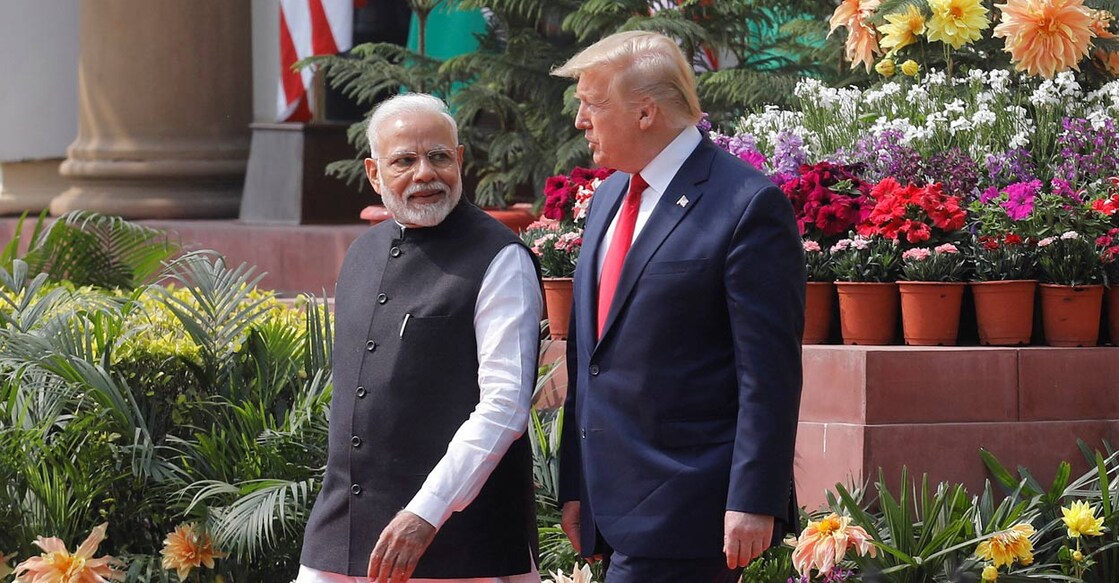
Just months ago, Modi and Trump had projected warm camaraderie with hugs, joint addresses and frequent references to each other as “friend.” Now, the two leaders are locked in a standoff resembling that of age-old rivals. Many officials and analysts believe the steep penalties on India are less about reducing trade deficits or cutting off funds for Russia’s war machine, and more about punishing New Delhi for not “falling in line.” They point out that China, the largest buyer of Russian crude, has been spared.
What happened during Operation Sindoor
On May 7, India launched Operation Sindoor following the April 22 terror attack in Pahalgam, Jammu and Kashmir, which killed 26 people. The operation involved precision strikes on nine terrorist sites in Pakistan aimed at dismantling the network behind cross-border attacks.
As fighting escalated, on May 10 Trump seized the spotlight by declaring a “FULL AND IMMEDIATE CEASEFIRE” on his social media platform Truth Social, moments before India’s foreign secretary was to issue the same statement. The timing undermined New Delhi’s long-held position that no third party should mediate in India–Pakistan conflicts.
Trump claimed he offered trade incentives for peace and threatened penalties if hostilities continued. India denied coming under US pressure, insisting the ceasefire was negotiated directly with Pakistan. Secretary of State Marco Rubio said he and Vice President JD Vance engaged both sides intensively, but India’s foreign ministry publicly downplayed Washington’s role.
The June call and Nobel row
Almost a month after the ceasefire, a bilateral Modi–Trump meeting at the G7 summit in Kananaskis, Canada was cancelled after Trump left early. Instead, the two leaders spoke briefly by phone on June 17 as Trump flew back to Washington.
During the 35-minute call, Trump boasted about ending the escalation and mentioned Pakistan’s decision to nominate him for the Nobel Peace Prize, hinting that Modi should follow suit. Modi pushed back, insisting the ceasefire was a direct India–Pakistan deal. Trump dismissed the objection, but Modi’s refusal to engage on the Nobel left a lasting strain. The two have not spoken since.
India after the call issued a statement stressing Modi’s rejection of mediation and highlighting Trump’s support for its fight against terrorism. The White House stayed silent about the conversation, though days later Trump lamented online: “I won’t get a Nobel Peace Prize for this, I won’t get a Nobel Peace Prize for stopping the war between India and Pakistan. No, I won’t get a Nobel Peace Prize no matter what I do.”
Meanwhile, Indian officials told The New York Times that Modi also declined Trump’s invitation to stop in Washington after the G7, fearing he would be pushed into a staged handshake with Pakistan’s army chief, who had also been invited to the White House.
Tariffs and broken trust
Talks on a partial trade deal soon stalled, with Indian officials wary that Trump might misrepresent agreements on social media. According to The New York Times, Trump tried several times to reach Modi in frustration over tariffs, but Modi did not respond. The White House denied such attempts.
In the following weeks, Trump imposed steep tariffs on Indian exports and paused trade negotiations after India resisted opening agricultural markets and cutting crude oil imports from Russia.
Other flashpoints
The tariffs added to existing irritants in the relationship. In February, Trump’s anti-immigrant rhetoric and planeloads of Indian deportees in shackles had created uproar in New Delhi just as Modi was leaving for Washington.
Yet during Modi’s official visit to Washington on February 13, the two leaders had projected warmth. They announced the COMPACT initiative to expand cooperation in defence, aerospace, AI and technology, reaffirmed a ten-year defence framework, and pledged to boost bilateral trade to $500 billion by 2030. While Trump had previously criticised Indian tariffs, both sides avoided confrontation and instead highlighted common goals.
However, relations quickly soured in the months that followed as India refused to align fully with Washington’s expectations - a defiance that culminated in tariffs, broken trust, and a bruised personal rapport between the two leaders.
 Add as a preferred source on Google