

Supreme Court orders states, UTs to frame rules for Sikh marriage registration in 4 months
Mail This Article


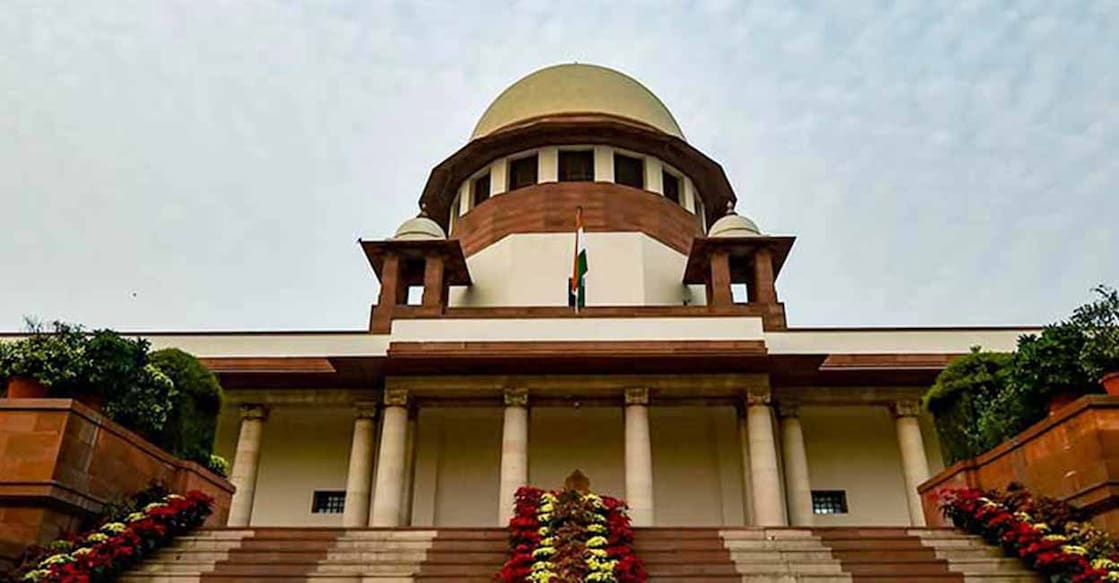
New Delhi: The Supreme Court on Thursday directed 17 states and seven Union Territories (UTs) to frame rules under the Anand Marriage Act, 1909, for the registration of Sikh marriages within four months. The court said decades of non-implementation had led to unequal treatment of Sikh citizens across the country.
A bench of Justices Vikram Nath and Sandeep Mehta stressed that failure to notify rules created a discriminatory situation where the ability to prove a marriage depended on where a Sikh couple lived. "When the law recognises Anand Karaj as a valid form of marriage yet leaves no machinery to register it, the promise is only half kept," the bench observed.
The Anand Marriage Act was amended in 2012 to provide for the registration of Sikh marriages. However, several states and UTs are yet to frame the rules required to operationalise the law. The court clarified that Section 6 of the Act makes it a statutory duty of states to notify such rules and rejected arguments that this was a matter of discretion.
Until the rules are in place, the court directed all states and UTs to register Anand Karaj marriages under existing frameworks such as the Special Marriage Act, with the option for couples to have the rite explicitly mentioned in their certificate.
The ruling came on a petition by Amanjot Singh Chadha, who highlighted the difficulties faced by Sikh couples due to patchy implementation across states.
The court also underlined that while non-registration does not invalidate a marriage, a certificate is essential for securing rights linked to inheritance, succession, maintenance, insurance and spousal benefits, especially for women and children.
Key directions issued by the bench include:
- All states and UTs yet to notify rules must do so within four months and publish them in their official gazettes.
- With immediate effect, Anand Karaj marriages should be accepted for registration under prevailing marriage laws, without discrimination.
- States that have already notified rules must issue clarificatory circulars within three months, making procedures and requirements publicly accessible.
- Each state and UT must designate a Secretary-level nodal officer within two months to oversee compliance.
- The Union government will act as the coordinating authority, circulate model rules within two months and submit a consolidated compliance report within six months.
- The respondents included the Union of India, 17 states including Uttar Pradesh, Gujarat, Karnataka, Maharashtra, Tamil Nadu and West Bengal, and seven UTs including Jammu & Kashmir, Ladakh, Chandigarh, Lakshadweep and Andaman & Nicobar Islands.
- The court also issued separate directions to Goa and Sikkim in view of their specific local laws.
(With LiveLaw inputs.)
 Add as a preferred source on Google