
Lok Sabha passes VB-G RAM G Bill amid Opposition protests
Mail This Article


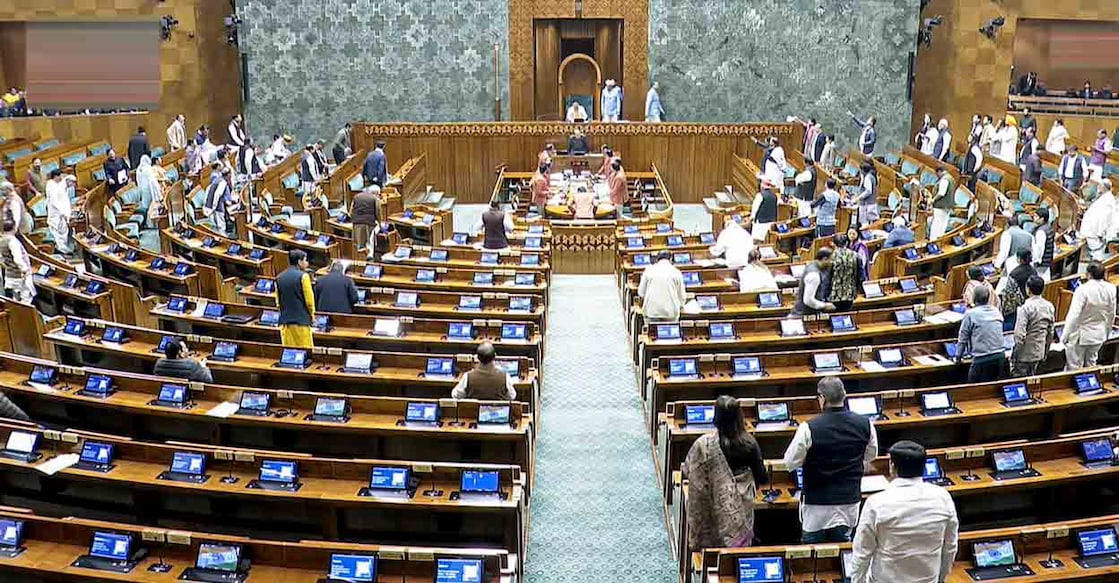
New Delhi: The Lok Sabha on Thursday passed a bill seeking to replace the 20-year-old Mahatma Gandhi National Rural Employment Guarantee Act (MGNREGA) with a new rural employment scheme guaranteeing 125 days of work annually, amid loud protests and walkouts by the Opposition.
The Viksit Bharat Guarantee for Rozgar and Ajeevika Mission (Gramin) Bill, or VB-G RAM G Bill, was passed by a voice vote after an eight-hour debate marked by repeated disruptions. Opposition members stormed the well of the House, raised slogans accusing the government of erasing Mahatma Gandhi’s legacy, and tore copies of the bill, flinging them towards the Chair. Following the passage of the bill, the Speaker adjourned the House for the day.
Replying to the debate, Rural Development Minister Shivraj Singh Chouhan defended the legislation, arguing that the Narendra Modi-led government was upholding Mahatma Gandhi’s ideals through its welfare initiatives. He accused the Congress of betraying Gandhi’s principles and said the NDA had carried them forward through schemes such as PM Awas Yojana, Ujjwala Yojana, Swachh Bharat Mission and Ayushman Bharat.
The Opposition strongly objected to the removal of Mahatma Gandhi’s name from the rural jobs programme, calling it an insult to the Father of the Nation and a dilution of the right to work. Soon after the bill was passed, opposition MPs staged a protest march inside the Parliament House complex, walking from the Gandhi statue at Prerna Sthal to Makar Dwar with banners reading ‘Mahatma Gandhi NREGA’.
Congress president Mallikarjun Kharge, senior leaders Sonia Gandhi and K C Venugopal, along with MPs from the DMK, IUML, Shiv Sena (UBT), RSP and other parties, participated in the protest. Kharge said the government had “systematically murdered the world’s largest employment scheme” and announced that the Opposition would take the fight “from Parliament to the streets”. He warned of a nationwide movement against the bill, alleging that it crushed the rural poor’s right to work.
Venugopal accused the government of undermining democratic values by dropping Mahatma Gandhi’s name from the scheme, while other opposition leaders echoed concerns that the new law would weaken key safeguards built into MGNREGA.
The government, however, maintained that the new legislation modernises rural employment and strengthens livelihood support. Under the VB-G RAM G Bill, every rural household with adult members willing to do unskilled manual work will be entitled to a statutory guarantee of 125 days of wage employment in a financial year. States will be required to frame schemes aligned with the new law within six months of its commencement.
The bill will now move to the Rajya Sabha for consideration, even as political confrontation over the future of rural employment intensifies.
 Add as a preferred source on Google