

Inside the Bishnoi gang: A crime empire run from behind bars
Mail This Article


Mumbai is back in the firing line. After a brief lull, gunshots have rung out again, this time targeting Bollywood actor Tiger Shroff. The Lawrence Bishnoi gang has been identified as the force behind the attack, putting its growing reach in the spotlight.
From behind bars, Lawrence Bishnoi runs a sprawling criminal network, with his brother Anmol Bishnoi helping coordinate operations. The gang is estimated to have around 700 shooters across 11 states. But how did a student politician from Punjab rise to become one of India’s most feared gangsters? How does his network continue to operate with its leader in prison? And why has the gang repeatedly targeted Bollywood personalities and others in Mumbai? Let’s trace the rise of the Lawrence Bishnoi gang and its growing grip on the city.
Inside the Lawrence Bishnoi gang’s leadership and network
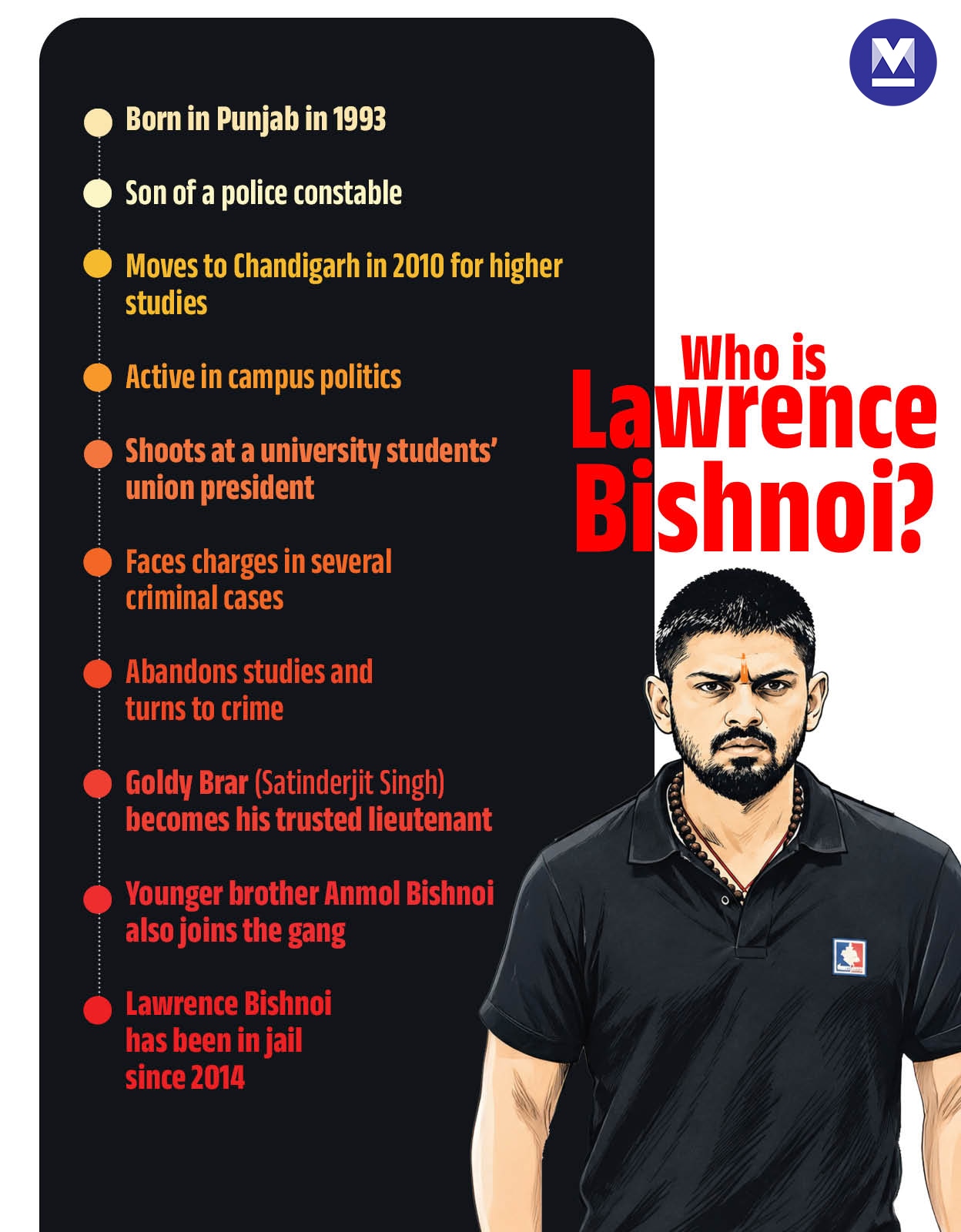
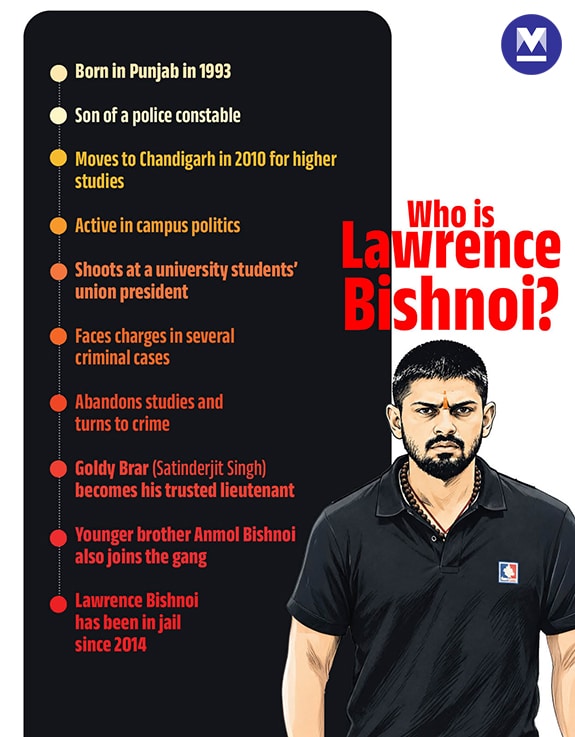
Born in Punjab in 1993 to a Haryana police constable, Lawrence Bishnoi moved to Chandigarh in 2010 for higher studies. While studying law at Panjab University, he became actively involved in student politics. His slide into crime began with a shooting targeting the president of the university students’ union. Cases involving attempted murder, trespassing, assault and robbery followed.
His college connections would later help him build a criminal network spanning Punjab, Haryana and Rajasthan. Among his associates was a former classmate, Satinderjit Singh, better known as Goldy Brar, who is now believed to be abroad. His younger brother, Anmol Bishnoi, also became involved in the gang’s activities.
Lawrence eventually abandoned his studies and gravitated towards organised crime. Accused in several criminal cases, he has been in prison since 2014 and is currently lodged in Sabarmati Central Jail in Gujarat. His incarceration, however, has done little to halt the gang’s activities. Investigators believe the network continues to operate through associates outside prison.
The blackbuck case that put Salman Khan in Bishnoi’s crosshairs
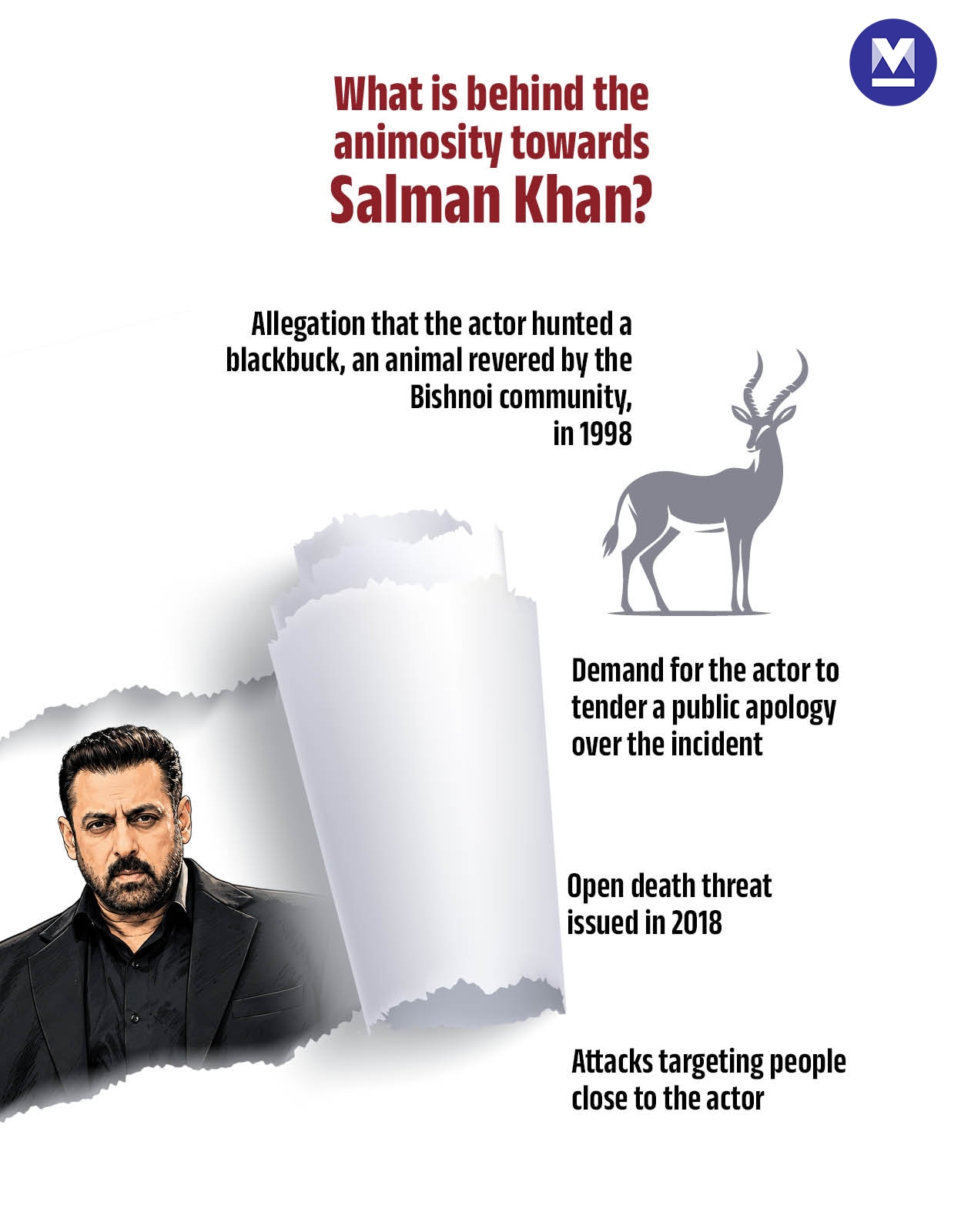
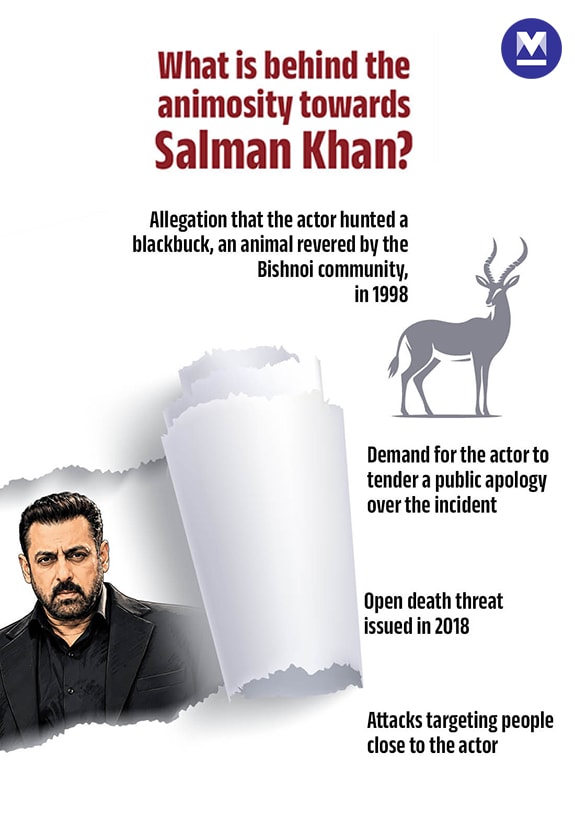
To understand the Bishnoi gang’s fixation on Salman Khan, one must go back to 1998, when a blackbuck hunting case triggered anger that continues to resonate within the Bishnoi community. Known for its reverence for wildlife, the community regards the blackbuck as sacred. Women in the community are believed to have even breastfed baby blackbucks. This deep-rooted reverence is central to the community’s hostility towards Salman.
During the shooting of the Bollywood film Hum Saath-Saath Hain in Rajasthan in 1998, Salman was accused of hunting and killing a blackbuck, triggering widespread anger among members of the Bishnoi community. The legal battle dragged on for years, but Salman was eventually acquitted, further fuelling resentment over the incident.
Lawrence Bishnoi later demanded a public apology from Salman and threatened to kill the actor if he refused. More than two decades after the blackbuck case, the actor and people close to him have continued to face threats and attacks linked to the gang.
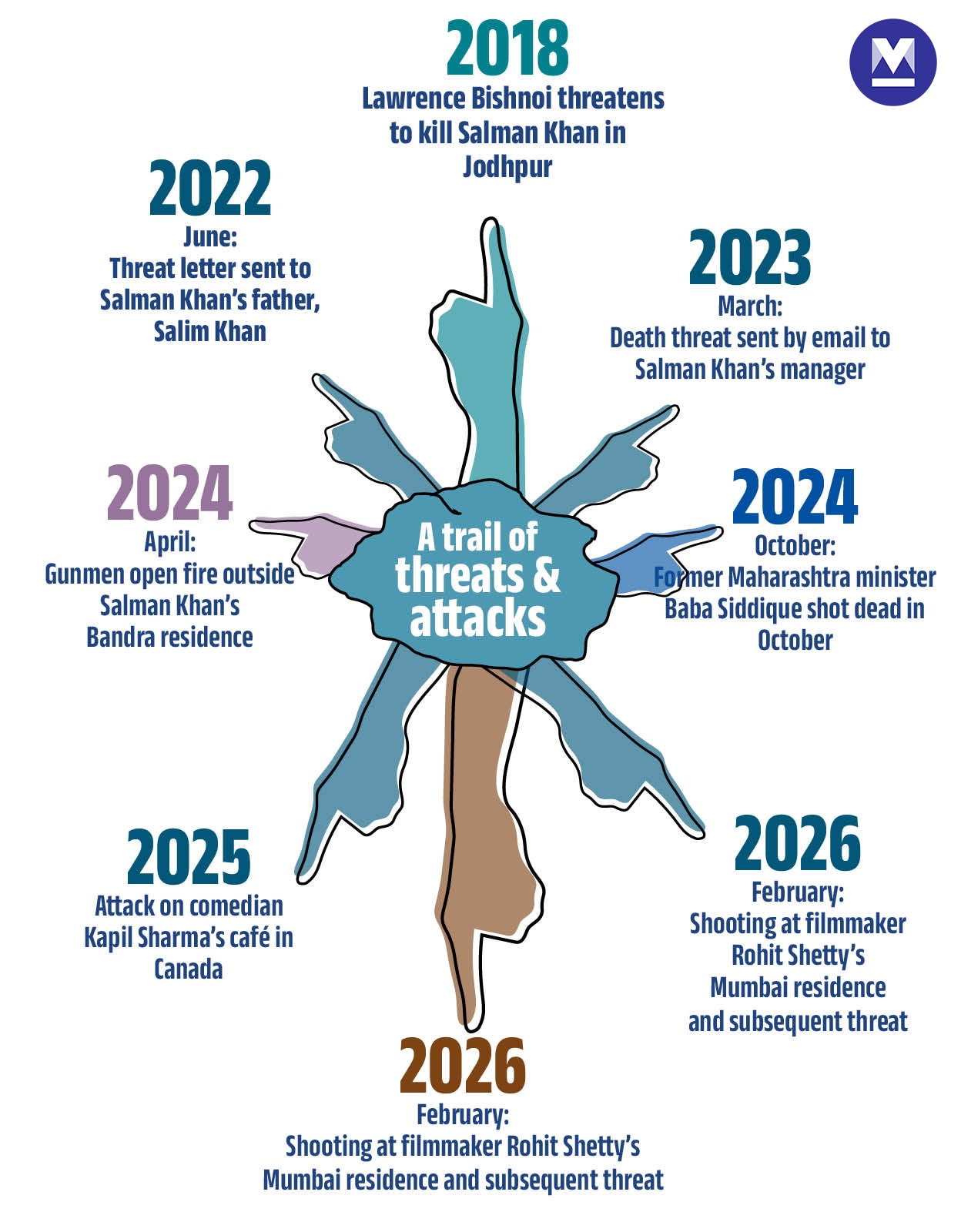
In 2018, Lawrence Bishnoi openly threatened to kill Salman Khan, declaring that the actor would be killed in Jodhpur. The threat was made when he was brought to court. In June 2022, Salman’s father, Salim Khan, received a threat letter while out on his morning walk near the Bandra bus stand in Mumbai. The letter warned that Salman would meet the same fate as Punjabi singer Sidhu Moose Wala, who had been shot dead in his car.
In March 2023, Salman’s manager received a death threat by email in the names of Bishnoi and Canada-based gangster Goldy Brar. The threats escalated into an attack on April 14, 2024, when two men on a motorcycle opened fire outside Salman’s Bandra residence. Anmol Bishnoi, Lawrence’s brother, later claimed responsibility for the shooting in a social media post. Several people were arrested in connection with the case.
The killing of Baba Siddique, a former Maharashtra minister and NCP leader close to the actor, in October 2024 further heightened concerns about the gang’s reach and its willingness to target people in Salman’s circle. The gang later said Siddique was targeted because of his ties to the actor. The shooting targeting Tiger Shroff is the latest development in this continuing series of threats and attacks linked to the gang.
From threats to attacks on associates
The gang’s targets have extended beyond Salman to people in his inner circle. Police found that gang members had conducted surveillance at the actor’s Panvel farmhouse and film-shooting locations.
The gang has also been linked to repeated shootings at comedian Kapil Sharma’s café in Canada. Lawrence Bishnoi’s gang and its Canada-based associate Goldy Dhillon claimed responsibility for the attacks on social media. What provoked the gang was Salman’s invitation to appear on Sharma’s comedy show.
In February 2026, gunmen on a motorcycle opened fire at filmmaker Rohit Shetty’s Mumbai residence. Shubham Lonkar and Harman Sandhu, both linked to the Bishnoi gang, claimed responsibility. Shetty later received an extortion threat demanding ₹20 crore in the gang’s name. In a 90-second audio message, the caller described the shooting as just a “trailer” and threatened to kill the filmmaker if he failed to pay. Security around Shetty was subsequently tightened.
The attack on Tiger Shroff marks the latest episode in this widening trail of violence. The actor was targeted because of his links to Salman, who remains under tight police protection amid continuing threats from the Bishnoi gang.
The murder of Sidhu Moose Wala
On May 29, 2022, Punjabi singer and political activist Sidhu Moose Wala was gunned down while travelling in his vehicle. The murder was orchestrated by Lawrence Bishnoi from jail and his Canada-based associate Goldy Brar, who claimed responsibility on social media soon after the killing. The Bishnoi gang suspected that Moose Wala’s manager had a role in the murder of Vicky Middukhera, one of its prominent members. Moose Wala’s alleged links with rival gangs further fuelled the animosity. The gang claimed the killing was revenge, with Goldy Brar taking responsibility on social media soon after.
Who is Goldy Brar?
Goldy Brar, whose real name is Satinder Singh, is the Bishnoi gang’s overseas operations chief. A native of Sri Muktsar Sahib in Punjab and the son of a police officer, he turned to crime and rose to become the trusted lieutenant of Lawrence Bishnoi. In 2017, he moved to Canada on a student visa.
From Canada and the United States, Brar oversees the gang’s extortion network, arms and drug trafficking and operations in India. Indian investigative agencies have also linked him to pro-Khalistan extremist groups. At India’s request, Interpol has issued a Red Notice against him. He has also featured on the FBI’s list of 10 most-wanted criminals. Brar has been designated a terrorist under the Unlawful Activities (Prevention) Act (UAPA).
Brar’s modus operandi sets him apart from conventional gangsters. He plans attacks in India from abroad and never visits the target sites. He communicates with operatives on the ground through encrypted platforms such as Signal, Telegram and Threema, as well as internet calls and virtual numbers. His network spans State borders, with shooters recruited in one State, weapons procured in another and attacks planned in a third. He has also been accused of luring unemployed people and young men into the gang with promises of money and weapons.
Attack, claim, threaten: Bishnoi gang’s playbook
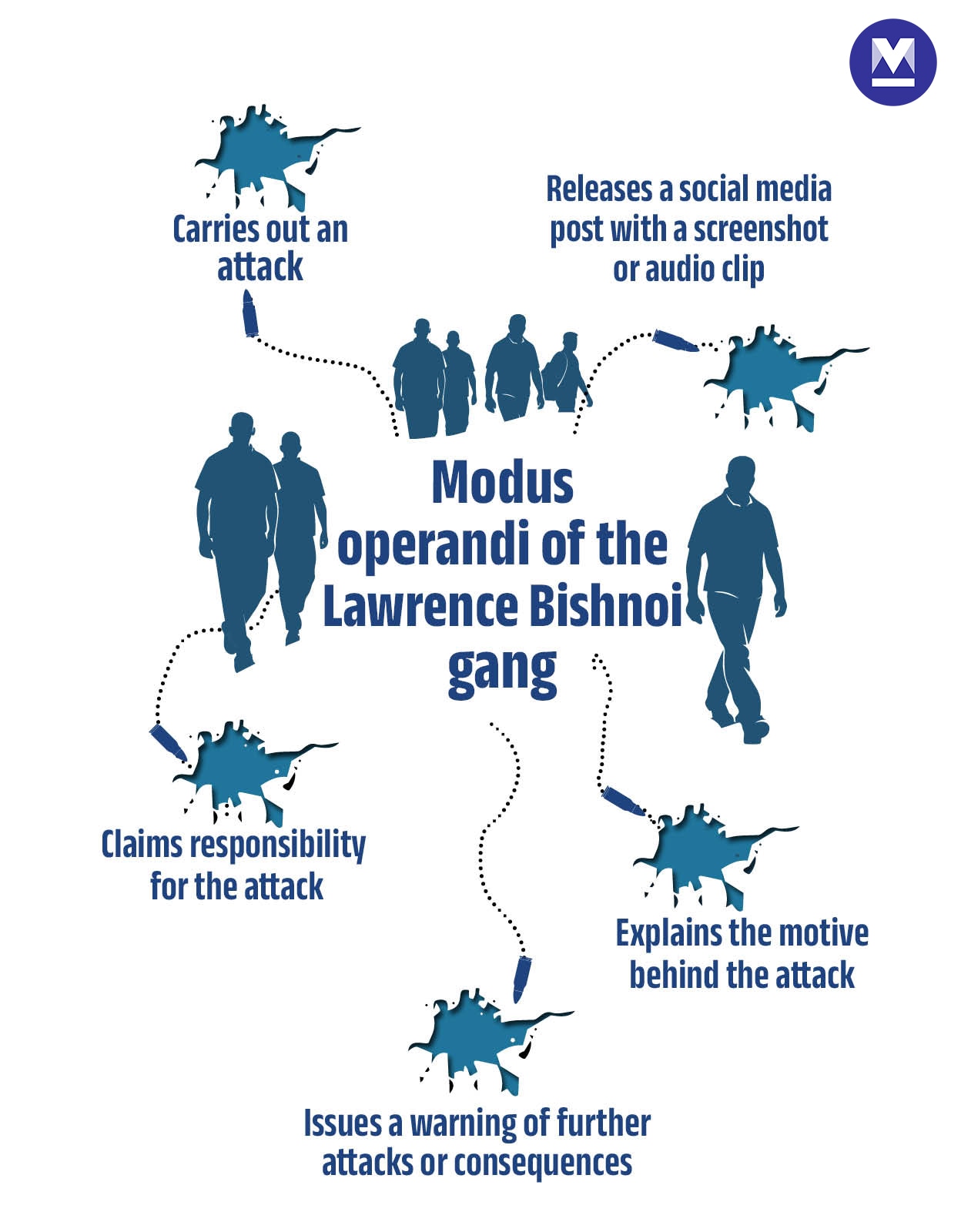
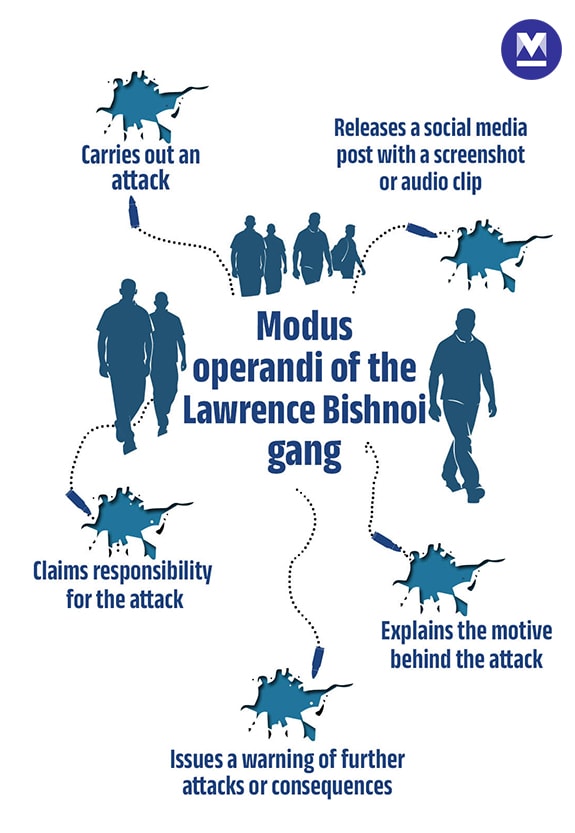
Attack, claim responsibility, issue a warning. That is the Bishnoi gang’s playbook. After each attack, posts, screenshots or audio clips surface on social media, claiming responsibility, spelling out the motive and threatening further action. After Baba Siddique’s murder, a post warned those helping Salman Khan and people close to him that they could be next.
Expanding overseas footprint
The Bishnoi gang’s reach extends beyond India, with Canada serving as a key base for its overseas operations. Goldy Brar and other gang members are believed to coordinate activities from there, drawing support from Sikh separatists and criminal networks. The FBI has found that the gang’s presence and operations have spread to countries including the United States.
The FBI has classified the Lawrence Bishnoi gang as an Organised Crime Group (OCG), a designation used for organised criminal syndicates. The gang extorts businessmen and prominent figures abroad to fund its criminal network and procure weapons in India and overseas. It is also known to target rivals and members of opposing groups, including those based outside India.
US prosecutors have alleged that Lawrence Bishnoi planned attacks from a Gujarat prison using prohibited mobile phones and Voice over Internet Protocol (VoIP) devices. Besides Lawrence, they have specifically named Goldy Brar and Rohit Godara as senior lieutenants who support key members and associates of the gang. US prosecutors have also referred to the gang’s role in the 2023 killing of Sikh separatist Hardeep Singh Nijjar.
An FBI detainee in the Tiger Shroff probe
Anil Pandit and Harman Sandhu, both linked to the Bishnoi gang, opened fire at Tiger Shroff. Pandit, 32, hails from Panipat in Haryana. He reportedly fled India in 2013, moving first to Thailand, then to Canada and the US. He is now based in California and is believed by Indian agencies to be linked to Goldy Brar.
Pandit has also been named in cases involving a shooting at a gym owner in West Delhi and an attack on a jewellery showroom in Pune. Harmanvir Singh, alias Harman Sandhu, was on the FBI’s wanted list. He is part of the network led by Ravinder Dhand, who works with the Bishnoi gang. Sandhu was taken into custody in California in July. Investigators are probing how his name surfaced in the Tiger Shroff attack case.
How the Bishnoi gang built its criminal empire
According to an NIA report, the Lawrence Bishnoi gang operates through a scattered network of jailed gangsters, overseas associates and local contract shooters. Its operations span Punjab, Haryana, Chandigarh, Rajasthan, Delhi, Uttar Pradesh, Madhya Pradesh, Gujarat, Maharashtra, Bihar and Jharkhand.
The NIA has found that proceeds from criminal activities are routed to support gang members abroad, including in Canada, the US, Thailand and Australia, and to fund pro-Khalistan elements. An NIA chargesheet filed in March 2023 noted the gang’s close links with pro-Khalistan organisations. The chargesheet also linked the network’s expansion to the 2015 Bargari protests and the 2016 Nabha jailbreak, which helped widen the Bishnoi gang’s reach.
The shadow network running Bishnoi’s empire
How does Lawrence Bishnoi orchestrate attacks with precision from behind bars? Reports point to a ‘shadow cabinet’ of aides operating from overseas safe havens and running the gang’s international network. The group reportedly includes Tyson Bishnoi, Anil Pandit, Hari Boxer, Harman Sandhu and Himanshu Sonipat. Its members handle recruitment and put out posts, including screenshots, on social media.
At the same time, a parallel team comprising Aasu Bishnoi, Shubham Lonkar and Randeep Malik oversees attack planning, funding and target selection. Operating from the US, Canada and Europe, the network recruits through platforms such as Signal, Instagram and WhatsApp. Anil Pandit serves as the gang’s social media face, circulating threats and manifestos through his account.
Running a crime empire from prison
Lawrence Bishnoi is lodged in Gujarat’s Sabarmati jail, while his brother Anmol Bishnoi is in Delhi’s Tihar jail. Yet, the network remains active, with the two using concealed smartphones and messaging apps to direct operations. Planning murders and other crimes from prison continues to pose a major challenge to law enforcement. Senior operatives, including Goldy Brar, run operations from abroad, from Canada and the US, further complicating efforts to dismantle the network.
The NIA, Delhi Police’s Special Cell, and the Punjab and Mumbai police are coordinating action against the gang. Authorities have seized properties linked to Lawrence Bishnoi and others and arrested several members. Interpol Red Notices and FBI investigations are also targeting the gang's associates based overseas.
