

Ethanol-powered future: What flex-fuel technology means for Indian motorists
Mail This Article


India's automobile sector is gearing up for a major shift. After E20 fuel, the Centre has now cleared the way for flex-fuel vehicles that can run entirely on ethanol. It has also given the go-ahead for alternative fuels such as B100 biodiesel and hydrogen-CNG. But can flex-fuel vehicles really cut air pollution? What sets them apart from conventional cars? And could petrol-powered vehicles eventually lose their dominance on Indian roads? Here's a closer look at the technology, its benefits and the challenges ahead.
What is ethanol?
Ethanol is produced by fermenting the sugars and starches found in crops such as sugarcane, maize and rice with the help of yeast. The resulting liquid is then distilled and purified to remove its water content, yielding alcohol with a purity level of 99.5%. For blending with petrol, ethanol must be completely free of moisture. The water is therefore removed during purification to produce anhydrous ethanol, which is then blended with petrol at refineries.
What are flex-fuel vehicles?
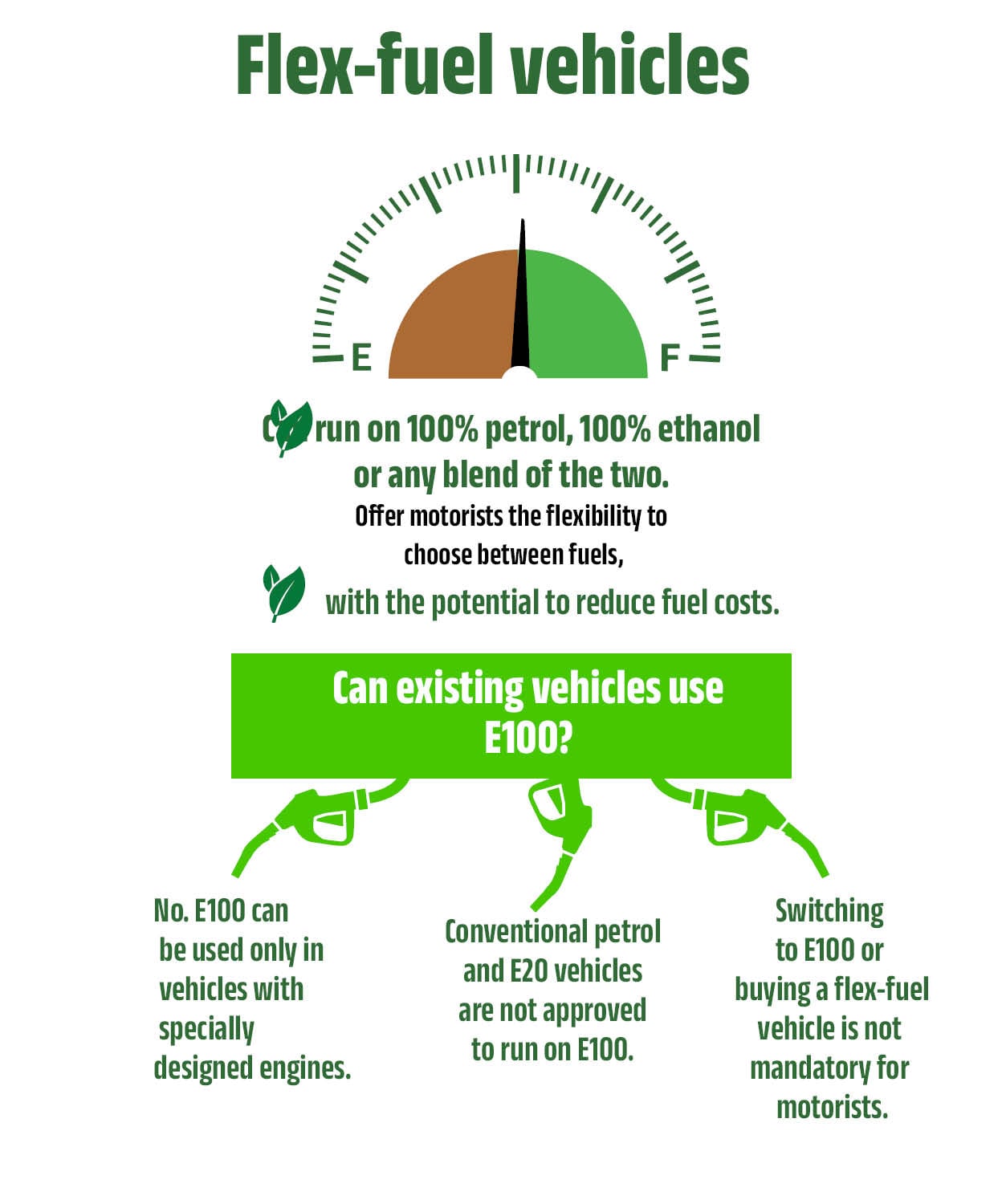
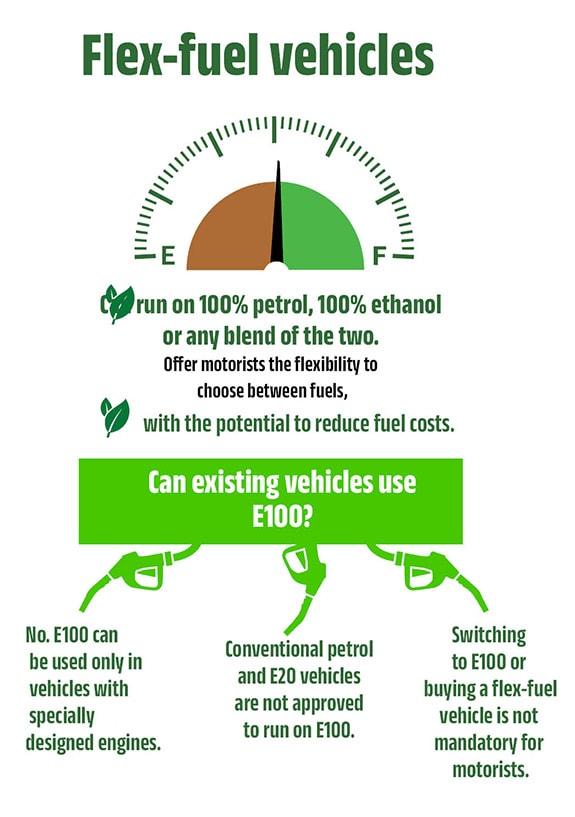
Unlike conventional vehicles, which are designed to run on a specific type of fuel, flex-fuel vehicles can operate on 100% petrol, 100% ethanol or any blend of the two in varying proportions. This flexibility allows motorists to switch between petrol and ethanol depending on availability and cost. Since ethanol can be cheaper than petrol, these vehicles could also help reduce fuel expenses. Greater use of ethanol could, in turn, reduce dependence on fossil fuels and lower vehicular emissions.
How do flex-fuel vehicles work?
At first glance, a flex-fuel car looks much like an ordinary petrol car. It has just one fuel tank, but its engine is designed to run on petrol, ethanol or any combination of the two. Unlike conventional petrol engines, which cannot use E100, flex-fuel engines can handle even 100% ethanol.
According to the US Department of Energy, the significance of flex-fuel technology lies in its ability to run on two fuels with very different origins: ethanol, produced by fermenting the sugars and starches found in plants, and petrol, refined from crude oil.
A fuel blend sensor automatically detects the proportions of petrol and ethanol in the tank and adjusts fuel delivery and spark timing in real time to match the blend. The vehicles also have specially designed fuel lines and engine components made from metals and plastics that can withstand ethanol and resist corrosion.
There is, however, a trade-off. Ethanol has a lower energy content than petrol, which means the engine must consume more fuel to deliver the same amount of power. This can affect mileage, with reports suggesting a drop of 25% to 35% compared with conventional petrol vehicles.
How is the Centre opening up the alternative-fuel market?
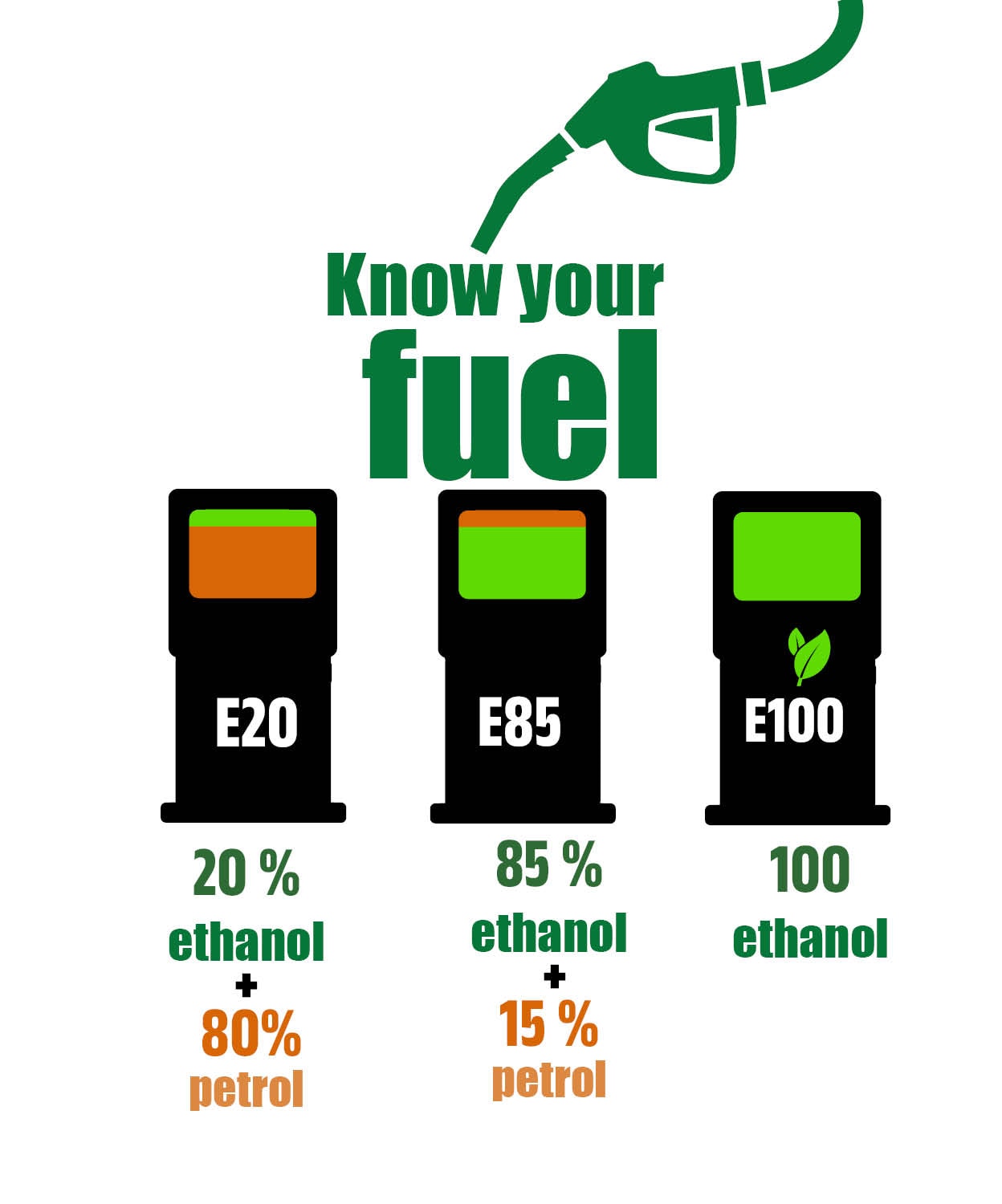
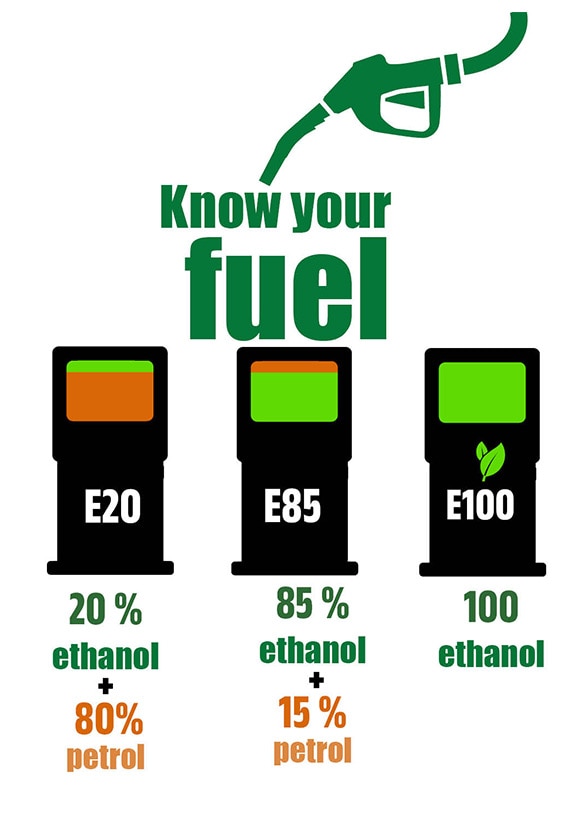
The Union Ministry of Road Transport and Highways has amended the Central Motor Vehicles Rules, 1989, to permit vehicles powered by E100 to ply on Indian roads. The amendment also allows E85, a fuel blend containing 85% ethanol and 15% petrol. However, this does not mean existing petrol or E20 vehicles can switch to E100 or E85.
Only vehicles specifically designed to run on these high-ethanol blends can use them. Owners of conventional petrol vehicles are not required to make the switch. The government has also approved other alternative fuels, including B100 biodiesel, produced from vegetable oils and animal fats, and hydrogen-CNG, a blend of compressed natural gas and hydrogen.
Which vehicles can run on E100?
E100 is meant exclusively for flex-fuel vehicles fitted with engines specifically designed by manufacturers to handle high concentrations of ethanol. To facilitate their introduction, the government has revised the emission standards under Rule 115 to include E100 alongside E85. The prescribed weight limit for vehicles covered by these standards has also been raised from 3,000kg to 3,500kg.
Maruti Suzuki unveiled the WagonR Flex Fuel in June, describing it as India's first flex-fuel car capable of running on anything from petrol to 100% ethanol. Toyota's Innova Hycross Hybrid Flex-Fuel prototype is another entrant in this category. The two-wheeler segment is also gearing up for the transition. Hero MotoCorp introduced flex-fuel versions of its Splendor Plus and HF Deluxe models in June this year.
Why can't all cars run on ethanol?
Ethanol is not compatible with every vehicle. It can corrode certain metals and damage plastic and rubber components. Conventional cars are designed to run on petrol, and their fuel tanks, fuel lines and seals are not built to withstand high concentrations of ethanol. Using E85 or E100 in such vehicles could cause these components to deteriorate, potentially resulting in fuel leaks and other damage.
Flex-fuel vehicles are built differently. They have special sensors that detect the proportion of petrol and ethanol in the fuel tank, while onboard computer systems automatically adjust fuel delivery and engine timing to suit the blend. Conventional petrol cars lack these specialised systems. Ethanol also has a lower energy content than petrol.
An engine therefore needs to burn more ethanol to produce the same amount of power. This calls for a fuel injection system capable of supplying a larger volume of fuel, something conventional cars may not be equipped to do.
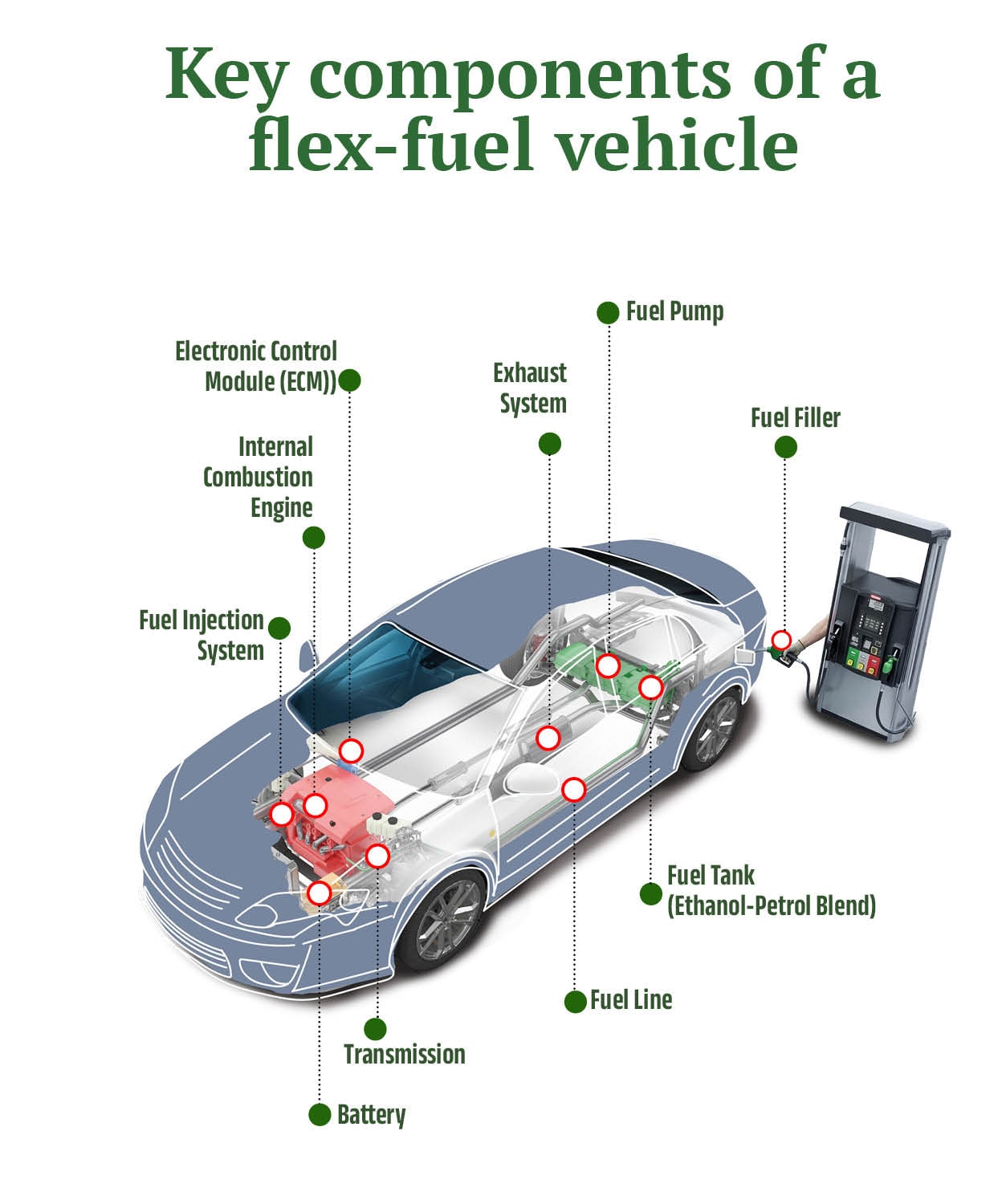
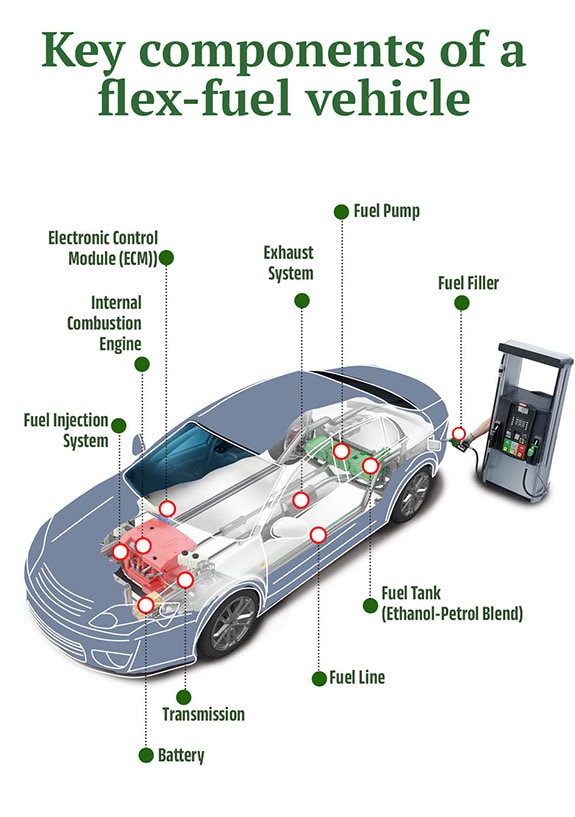
Another concern is ethanol's tendency to absorb moisture. This can accelerate corrosion in metals such as steel and aluminium and cause some rubber components to swell. The US National Renewable Energy Laboratory (NREL) points out that flex-fuel vehicles need specially designed fuel tanks, rubber seals and other components that come into contact with fuel to withstand ethanol without deteriorating.
These differences explain why conventional petrol and E20-compatible vehicles cannot simply switch to high-ethanol fuels such as E85 and E100.
What are the advantages of ethanol over petrol
One of ethanol's biggest advantages is its potential to reduce vehicular emissions. Its use as a fuel can lower emissions of carbon monoxide, hydrocarbons and other harmful pollutants, helping improve air quality.
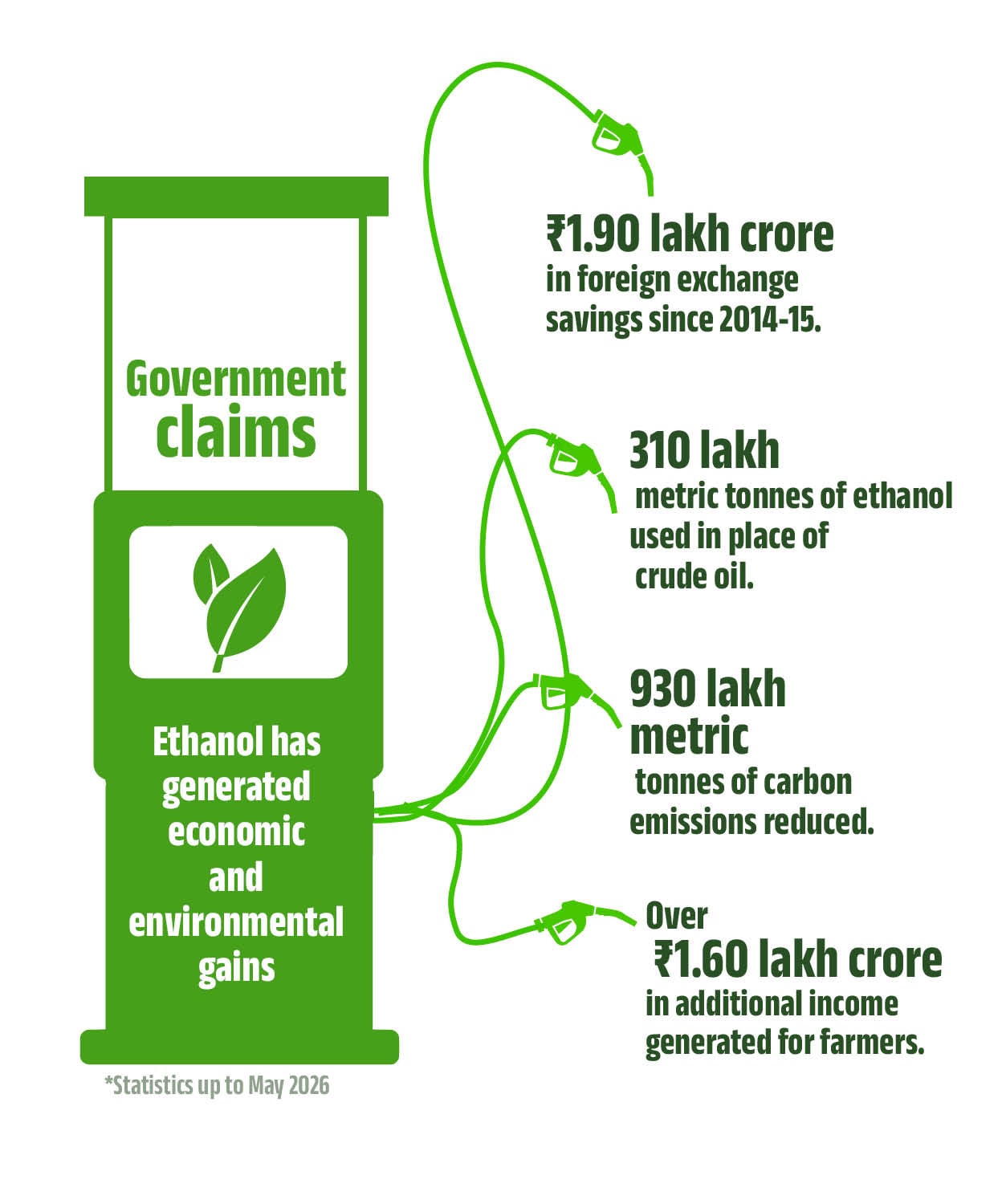
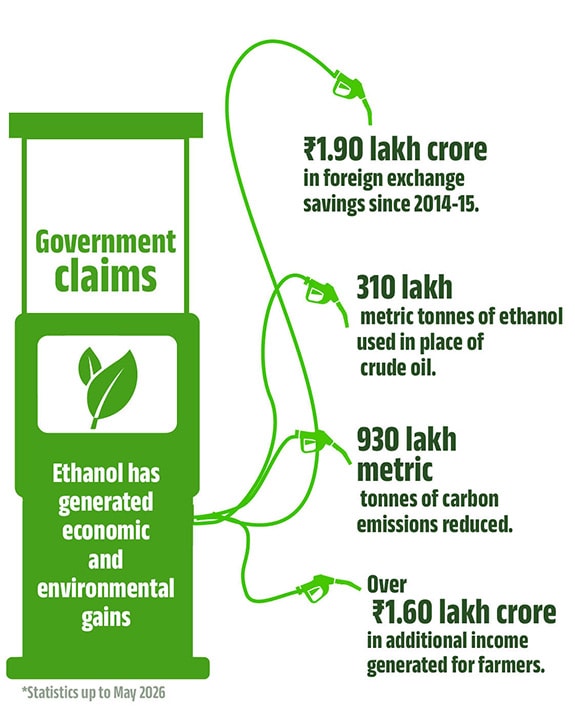
As a biofuel derived from agricultural crops, ethanol can also help reduce dependence on fossil fuels and lower net carbon emissions. Greater use of domestically produced ethanol could cut India's crude oil imports, save foreign exchange and reduce dependence on overseas energy supplies.
There is also a potential benefit for farmers. Since ethanol is produced from agricultural crops, increased demand for the fuel can create an additional market for farm produce and offer farmers another source of income.
How have flex-fuel vehicles fared globally?
Brazil offers a glimpse of how flex-fuel technology can take off when the right infrastructure is in place. According to the International Energy Agency, flex-fuel vehicles accounted for 85% of all new cars sold in the country in 2024. Ethanol is widely available at fuel stations across Brazil, both as a standalone fuel and blended with petrol, giving motorists the flexibility to choose between the two.
The US, too, has a sizeable flex-fuel fleet. According to the Department of Energy, more than 20.9 million flex-fuel vehicles were on American roads in 2022, while over 4,200 fuel stations across 44 states offered E85.
How ready is India for the shift?
India's transition to ethanol-blended petrol has not been without concerns. Motorists have reported mileage losses of nearly 30%, along with complaints of vehicle damage after using ethanol-blended fuel. The Centre, however, maintains that mileage depends on several factors, including driving habits, tyre pressure and vehicle maintenance.
It also says ethanol-blended petrol was introduced after consultations with automobile manufacturers. The government is now stepping up efforts to expand the availability of higher ethanol blends. In June 2026, the Union Ministry of Petroleum and Natural Gas began dispensing E85 at 48 public sector fuel outlets. The target is to extend its availability to 500 outlets by the end of this year and 5,000 by the end of 2027.
