

This Kerala temple in Kottayam opens first in India
Mail This Article


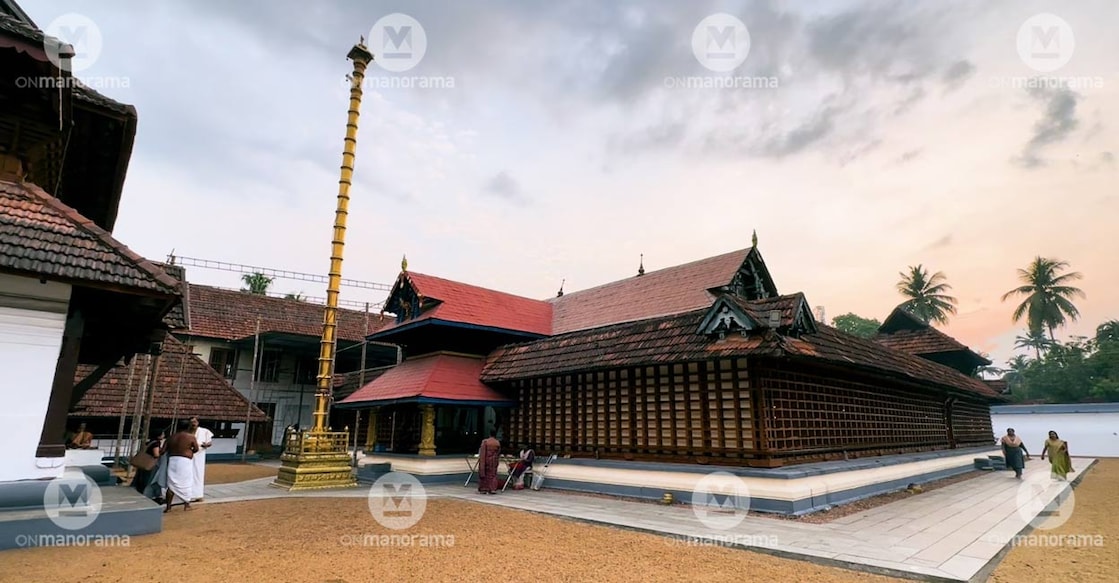
When Thiruvarppu, a small village in Kottayam, wakes up to the chimes from Sree Krishna Temple, not many know that they are close to a temple, which opens first in India.
According to Hari Namboothiri, the chief priest, the temple opens its doors by 2.30 am after the Palliyunarthal ritual at 2 am. "This early start is based on the belief that Lord Krishna cannot tolerate hunger. That's just one of the temple’s many unique traditions. The idol was consecrated in the temple by Padmapadar, the first disciple of Shankaracharyar of the Swamiyar Madom in Thiruvarppu," he said.
The history
"Legend has it that Padmapadar found the idol in a lake. It is believed that Draupadi once worshipped the idol of Lord Krishna at the Thiruvarppu temple. During the exile of the Pandavas, both the idol and the Akshaya Patra - the legendary vessel that never runs dry - were set adrift in the lake," said Namboothiri.

The name Varppu, which means ‘huge vessel’ in local parlance, is thought to be connected with this very Akshaya Patra mentioned in the Mahabharata epic. Padmapadar, who discovered the idol during his journey, followed it as it drifted across the lake. Eventually, the idol came to rest at Thiruvarppu, where he installed it in a temple originally built for Shasta, the story goes.
The idol was first placed at Valiya Madom in Thiruvarppu, as it had been discovered unexpectedly. As part of the initial offering, tender mango and coconut were placed before the deity. To commemorate this first nivedyam, the Irakki Pooja is performed yearly at Valyia Madom on the 10th day of the festival. Even today, tender mango and coconut continue to be offered here, symbolising the first offering made to the idol, says Namboothiri.
The poojas
It's said that the priest can carry an axe along with the key when he opens the temple in the morning because it’s believed that Lord Krishna cannot tolerate hunger. If there’s a delay, the priest can cut open the door using the axe if needed. However, considered a symbolic gesture, hardly ever seen in practice, this is a powerful reminder that the morning ritual is never delayed.
In earlier times, the direction of the sun's rays and the position of the stars were used to determine the precise time for pooja. Even today, all rituals are required to begin before sunrise.
After the Palliyunarthal ritual and the opening of the temple doors, the Abhishekam is completed by 3.30 am, followed by Usha Payasam—the most important vazhipadu (offering) at the temple. Only one person is allowed to make this offering each day, and bookings are made far in advance. Interestingly, slots have already been booked until 2034.
The poojas at Thiruvarppu are not based on standard clock time, but the sun's position and natural light. The second pooja, performed after Ushanaidyam, takes place roughly an hour before sunrise. The Pantheeradi Pooja is performed at the exact moment when sunlight touches the head of the elephant figurine behind the sanctum sanctorum in the temple. Similarly, the Athazha Pooja is performed precisely at sunset, and the temple doors must be closed within 1 hour and 12 minutes of the sun setting.
Open during eclipse
Thiruvarppu is one of the few temples that stay open during the eclipse, a practice uncommon in most Hindu temples. It is said that many years ago, the temple remained closed during a long solar eclipse. When the doors were opened, the ornament worn on the hip of the idol slipped and fell on the floor. During the devaprashnam (astrological calculation), it was found that eclipses hold no significance in this temple, as the Lord does not like rituals to be interrupted.
Since then, the temple has remained open even if an eclipse occurs during pooja time. However, strict rules apply to devotees: no one is allowed to enter or leave the temple premises during the eclipse.
 Add as a preferred source on Google