

Kerala to end legal battle with Guv over assent to bills in SC
Mail This Article


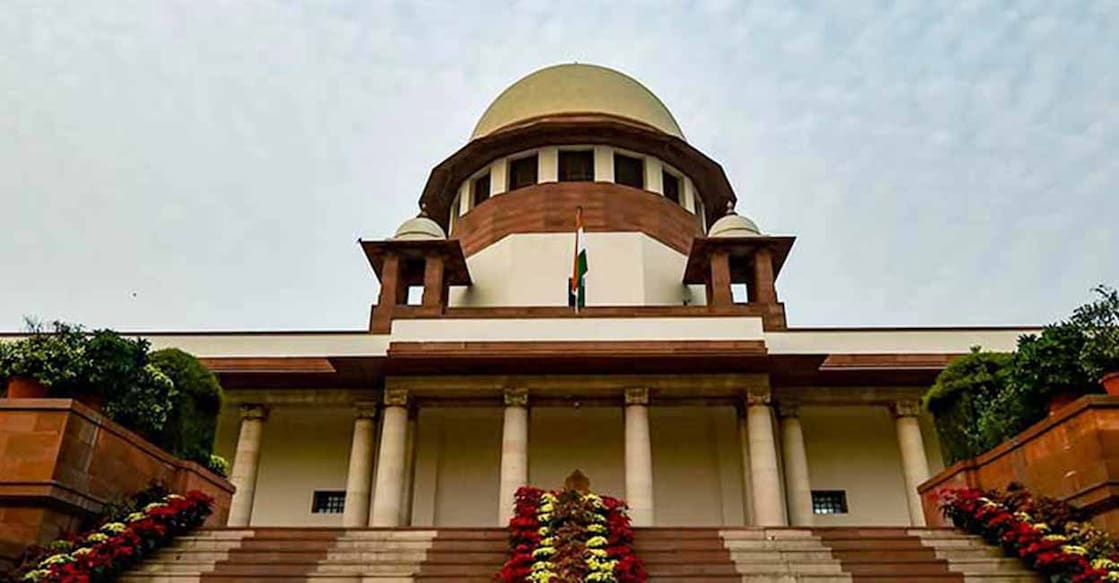
New Delhi: The Supreme Court on Friday allowed the Kerala government to withdraw its pleas against the Governor over delays in approving bills passed by the state assembly. Although the state government cited the apex court’s judgment in the Tamil Nadu Governor case as the reason, it is believed that a crucial meeting between Chief Minister Pinarayi Vijayan and Kerala Governor Rajendra Arlekar influenced the decision.
A bench comprising Justices PS Narasimha and AS Chandurkar passed the order after senior advocate KK Venugopal, representing the Kerala government, sought withdrawal of the plea, stating that the issue had become infructuous in light of the recent judgment in the Tamil Nadu Governor case. In a landmark ruling on April 8, 2025, the Supreme Court declared Tamil Nadu Governor RN Ravi’s refusal to assent to ten state bills as illegal and unconstitutional.
Meanwhile, Attorney General R Venkataramani and Solicitor General Tushar Mehta opposed the withdrawal and urged the bench to await the top court's decision on a Presidential reference under Article 143 of the Constitution concerning the grant of assent to bills, reported PTI.
On April 22, the Supreme Court stated it would examine whether its recent judgment—fixing timelines for granting assent to bills in response to Tamil Nadu’s plea—also applied to the issues raised by the Kerala government.
While hearing Tamil Nadu’s petition, the apex court on April 8 set aside the reservation of ten bills for Presidential consideration during a second round, deeming the act illegal and legally erroneous. For the first time, the bench also established a time limit for the President to decide on bills referred by the Governor, setting a three-month deadline from the date of receipt. Kerala sought similar directions in its petition.
Kerala Govt vs Former Governor Arif Mohammad Khan
In 2023, the Supreme Court expressed displeasure at then Kerala Governor Arif Mohammad Khan for "sitting" on bills passed by the state legislature for two years. Khan is now serving as the Governor of Bihar. On July 26 last year, the apex court agreed to consider the plea filed by the opposition-ruled Kerala government, which alleged a denial of assent to bills passed by the legislative assembly.
The Kerala government claimed that Khan had referred certain bills to President Droupadi Murmu, and they were still pending approval. Taking note of the pleas, the top court issued notices to the Union Ministry of Home Affairs and the office of the Kerala Governor.
The state argued that the Governor reserved seven bills—which he was required to deal with himself—for Presidential consideration. It further stated that none of these bills concerned Centre-state relations. The bills had been pending with the Governor for up to two years, and his inaction "subverted" the functioning of the state legislature, rendering its role "ineffective and otiose," the state added.
“The bills include public interest legislation meant for the public good, and even these have been rendered ineffective by the Governor not acting on them ‘as soon as possible,’ as required by the proviso to Article 200,” the plea stated.
The state government further said that the Home Ministry informed it that the President had withheld assent to four of the seven bills—University Laws (Amendment) (No. 2) Bill, 2021; Kerala Co-operative Societies (Amendment) Bill, 2022; University Laws (Amendment) Bill, 2022; and University Laws (Amendment) (No. 3) Bill, 2022.
The Constitution does not specify how much time the President can take to grant or withhold assent to a bill passed by a state legislature and referred for Presidential consideration.
Article 361 of the Constitution states that the President or Governor shall not be answerable to any court for the exercise and performance of the duties of their office, or for any act done or purported to be done in the exercise of those powers and duties.
 Add as a preferred source on Google