

A year after landslide, Wayanad relies on Hume centre's alerts, local bodies demand micro-level monitoring

Mail This Article


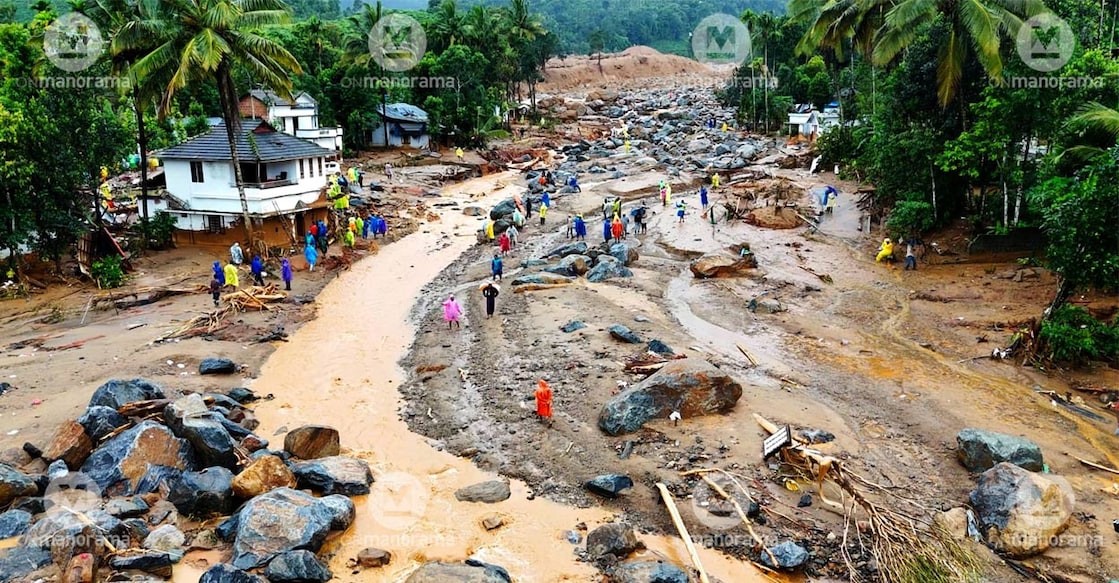
Kalpetta: A year after the deadly landslide in Wayanad, local bodies and the disaster management authorities continue to differ over the weather alert system. According to District Panchayat President Samshad Marakkar, who is also the vice chairman of the District Disaster Management Authority (DDMA), the KSDMA (Kerala state disaster management authority) not only failed to provide sufficient micro-level weather monitoring systems but also delayed the process, discouraging the initiative of the local bodies.
"The district panchayat was ready to allot up to ₹10 lakh for the project, and the three-tier panchayats also were ready to join. We had a holistic plan to install up to 2500 weather monitoring units, imparting training to all, and we also sought the technical support of KSDMA as we needed the backing of their expertise for state recognition for the project. One person from the KSDMA also attended our meetings and promised to bear the entire expense for purchasing the weather monitoring systems, saying that it would be tough for the cash-strapped panchayats to find funds for the project. We were happy but later, whenever we queried about the funds, the answer was negative," he said.
In 2024, a day before the landslide, CK Vishnudas, noted climatic expert and founder of 'Humes', had predicted the possibility of a landslide at Mundakkai. His reasoning was simple. The region had received 2981 mm of rainfall in June and July, of which 572 millimetres were received in two days, July 28 and July 29. The data was collected from a rain gauge unit at Puthumala, an ecologically vulnerable zone where 17 persons were killed in a landslide in 2019. The total rainfall received in the Mundakkai area in the two months was almost double that the region had received in the corresponding period last year (1390.8 mm, 2023). Despite giving alerts in the weather tracking WhatsApp group 'Wayanad Weather Forecast' and also alerting the key persons handling the scenario, there were no serious steps for evacuation, inviting widespread criticism from various quarters, post-disaster. KSDMA officials, however, refuted this, saying that volunteers were deployed to evacuate people from areas in Wayanad, anticipating extreme rainfall.
The established network of the Hume Centre for Ecology and Wildlife Biology, popularly known as 'Humes', is the lone system available so far, which has been strengthened and upgraded with the support of three-tier panchayats and agencies like NABARD (National Bank for Agriculture and Rural Development), since the catastrophe. Onmanorama, in its report on July 29, 2024, warned about a possible landslide and its cascading effect in the valleys.
Post landslide, 'Humes' has expanded its network of weather monitoring systems from 240 to around 500 units. Hi-tech weather tracking instruments, including the automated systems that create alerts on specific programmed intervals, were introduced.
CK Vishnudas, Director of 'Humes' told Onmanorama that there are zones that receive a rainfall of more than 5000 mm per year and also zones that receive less than 500 mm, which are close to the Karnataka border. "Each region needs separate strategies while planning for preemptive measures, evacuation, rehabilitation, and also land use patterns. We also fixed a rainfall threshold for each zone and give alerts to DDMA whenever the rainfall data crosses the limit in a particular time frame," he said. With daily and weekly analysis during monsoon, 'Humes' brings out maps and graphics highlighting the high-risk spots for alerting officials, members of local bodies, farmers, and the general public through the 430-member group.
According to Vishnudas, there should be a fair and equitable compensation package for the farming families who are ready to shift entirely from the red zones. In a reply furnished to RTI activist M T Thomas on November 1, 2024, Wayanad collectorate said that Hume centre was not one among the nodal agencies identified for issuing disaster alerts and warnings. Earlier, the authorities had said that it had not received any official information from the Hume centre on weather warnings on July 29, 2024.
 Add as a preferred source on Google