

MK Sanoo combined power of thought with beauty of language
Mail This Article


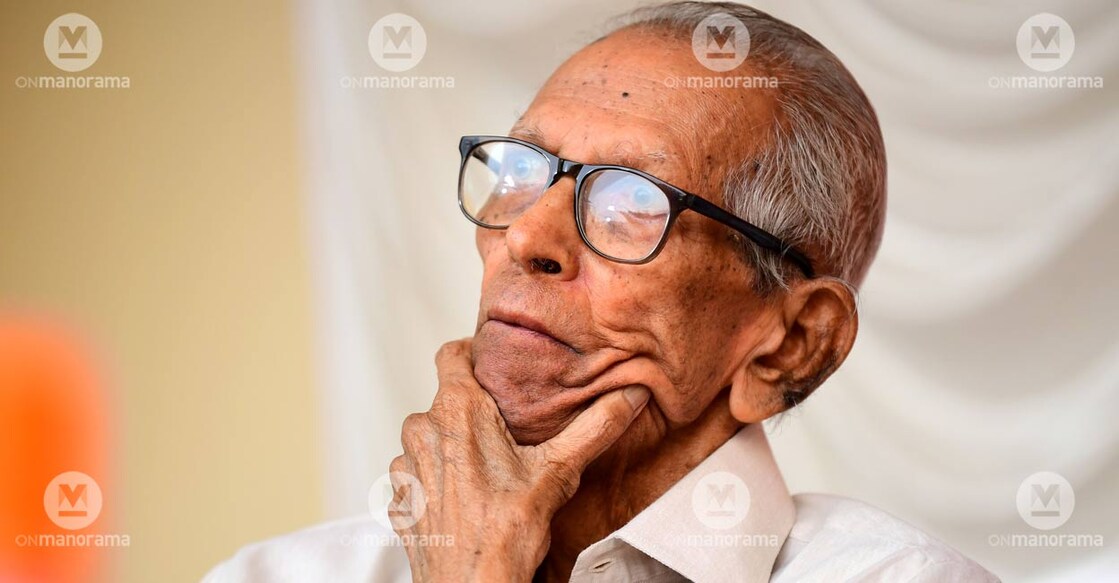
M K Sanoo, who passed away on Saturday, was a genius who opened new vistas in literary criticism by combining the power of thought with the beauty of language. Fondly addressed as ‘Sanoo Mash’, he was born to M C Kesavan and K P Bhavani of Mangalam Bhavanam, Thumboli in Alappuzha district of Kerala on October 27, 1928.
While in school, Sanoo quoted legendary Malayalam poet Kumaranasan in reply to his teacher’s question about his ambition in life: “The wise are those who make their life fruitful by living for others.” True to his word, Sanoo later became the guiding light to numerous others and also spread the message of love among them.
He was a literary critic and biographer who made Malayalam literary criticism accessible to the common people. Possessing an eye which always searched for elements leading to the advancement of humanity, Sanoo created a poetic body of work encompassing literature, society and culture. It included books, speeches and observations. All of which led to the creation of a ‘Sanoo sasthram’ (Sanoo science). In all, Sanoo authored around 500 diverse titles, including books and essays.
He created a new path in literary appreciation by combining the power of thought with the sweetness of language. Sanoo’s observations grew from being mere criticism to a spiritual level, leaving lovers of Malayalam literature spellbound. Sanoo was a guiding light, thought, inspiration and the language itself to the Malayali mind.
Early days
After earning a BSc in zoology from SD College, Alappuzha, he shifted his focus to literature. He pursued an MA in Malayalam from the University College, Thiruvananthapuram and became a teacher.
Sanoo had to face poverty while young, as his father had died early. In fact, he became a dominant literary personality after a childhood and youth immersed in penury. Initially working as a school teacher for four years, Sanu later taught in several government colleges across the state – from Brennen College, Thalassery to NSS College, Kollam. All these years, he passed on the greatness of Malayalam to his students.

Prolific author
Sanoo published his first book, ‘Anchu sasthra nayakanmar’ (Five leading scientists), in 1958. His literary criticism, ‘Kattum velichavum’ (Wind and light), was released in 1960. Sanoo has authored over 40 books covering criticism, analysis, children’s literature and biography. His major books on criticism include ‘Kavyathathwa pravesika’, ‘Asanthiyil ninnu santhiyilekku’, ‘Rajaveedhi’, ‘Avadharanam’, ‘Artharuchi’, ‘Unnathatmakkalude jeevaraktham’ and ‘Ayyappapanikkarum Ayyappapanikkarum.
Sanoo has received the Vayalar award, Kendra Sahithya Akademi award and Ezhuthachan award, among other honours.
His autobiography is titled ‘Karmagathi’. He has written 15 biographies, including 'Sree Narayanaguru Swamy', ‘Changapuzha Krishnapilla Nakshatrangalude snehabhajanam’, ‘Sahodaran Ayyappan’, ‘Basheer ekanthaveedhiyile avadhoothan’, ‘Dr P Palpu’, ‘M Govidan’, ‘Vyloppilli’, ‘Mrithyunjayam kavyahjeevitham’ and ‘P K Balakrishnan.’
After his retirement from the teaching profession in 1983, Sanu took over as the president of the Purogamana Sahithya Sangham in 1986 from Mahakavi Vyloppilli, who was the founding president and his teacher colleague.
Becomes MLA
In the Assembly elections held in 1987, Sanoo defeated Congress leader A L Jacob in the Ernakulam constituency as a Left-backed independent candidate. He also served as Kerala Sahithya Akademi president, director of the Sree Narayana Chair in Mahatma Gandhi University, chairman of Vayalar Ramavarma Trust, editor of ‘Kunkumam’ magazine, vice-chairman of Ernakulam Cancer Service Society and founder member of the ‘Mithram’ movement.
His wife is N Ratnamma, who is the daughter of former minister Vaikom Madhavan. Ranjith, Rekha, Geetha and Seetha are their children.
The demise of Sanoo ends a glorious chapter in Malayalam literature. A gentle face of criticism, he also made immense contributions to biographical literature in the language. His advice to the young generations was: “Our life has no meaning if it does not benefit others. We become what we are by the compassion in our minds.”
 Add as a preferred source on Google