

Can TP murder convict Kodi Suni's open booze session be seen in a compassionate light?
Mail This Article


What the police did for T P Chandrasekharan murder convict Kodi Suni, allowing him and his fellow inmates to get tipsy while escorting them to the Thalassery Additional District Court, can neither be denied nor defended.
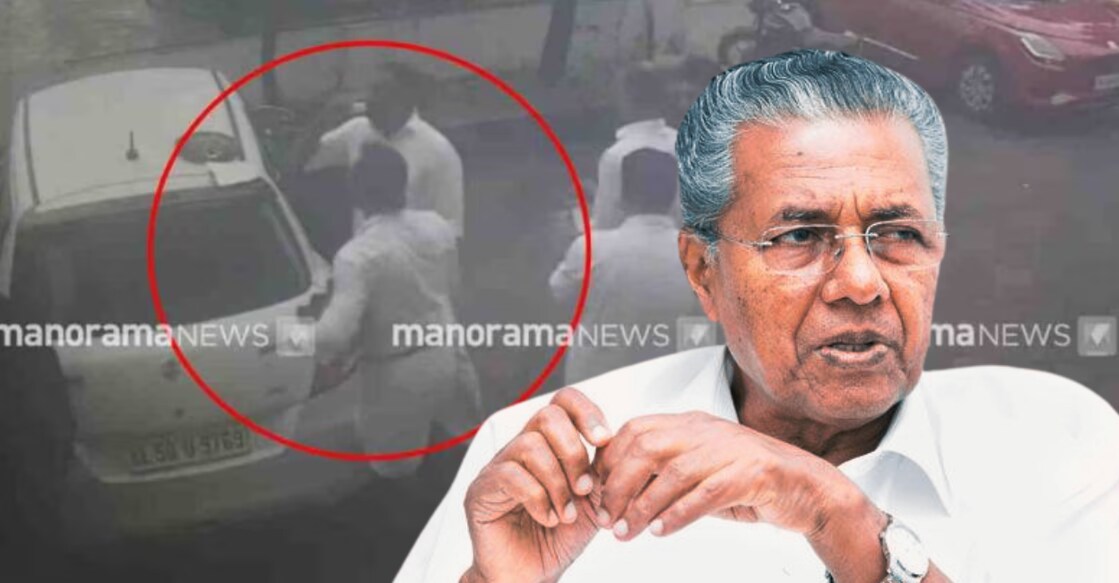
There are CCTV visuals of Kannur Central Jail inmates Suni, Mohammad Shafi and Shinoj downing liquor from a bottle placed inside a car parked outside a bar in Thalassery. After an internal enquiry, the three policemen who escorted Suni were suspended, too. Later, Suni, Shafi and Shinoj were also booked under sections 15(c) and 63 of the Kerala Abkari Act for consuming alcohol in public.
Therefore, Chief Minister Pinarayi Vijayan did not indulge in the futile act of either denying the incident or defending the policemen who allowed Suni and friends to have drinks in the open.
But the CM did something else in the Assembly on Tuesday. After saying that strict action had been taken, Pinarayi sought to persuade the Assembly to view incidents of such nature, of policemen accompanying convicts to courts, with a bit more compassion.
"We should not lose sight of one thing. Jail inmates, when summoned by the courts, have to be taken to far off places for court appearances. The policemen who escort them will naturally have to make arrangements for their food and tea," he said, and added: "When this is done, it cannot be called illegal." In Suni's case, it was a below one-hour journey from the Kannur Central Prison to the Thalassery court.
The CM then infused a bit of emotional charge into his words. "There was a time when action was taken if convicts had food during such court visits. Do you think it is a humane thing to do? Just because someone is a convict does not mean that he has been stripped of his human rights," he said.
No one in the Assembly had questioned the fundamental rights of prisoners. Muslim League MLA N Shamsudheen's question was direct. "Has any action been taken against police officers who had created the conditions for Suni and friends to get intoxicated along the way?"
The answer, too, could have been simple and direct. "Yes. Three policemen who went with the convicts were suspended after an internal enquiry." Instead Pinarayi seemed to suggest that there was an unseen merciful side to the incident. It was like a priest delivering a sermon on the tenderness of a husband-wife bond when asked why a member of his congregation had brutally assaulted his wife.
Pinarayi also said, to a question by Muslim League's P Ubaidulla, that political prisoners were not given any special benefits nor could they claim any extra rights in jail. Fact is, Suni was granted parole even though he had misbehaved and violated parole conditions.
He had secured a parole of 60 days in just seven months, the most a prisoner could have in a year. He was granted additional parole three days after he drank in public. He could have enjoyed it in full had it not been discovered that he had violated parole conditions by wandering away from his police station limits, even attempting to cross the Kerala border. Suni was also accused of assaulting the jail warden, who questioned his mobile use.
 Add as a preferred source on Google