

LDF government instigates Governor, seeks to amend University laws
Mail This Article


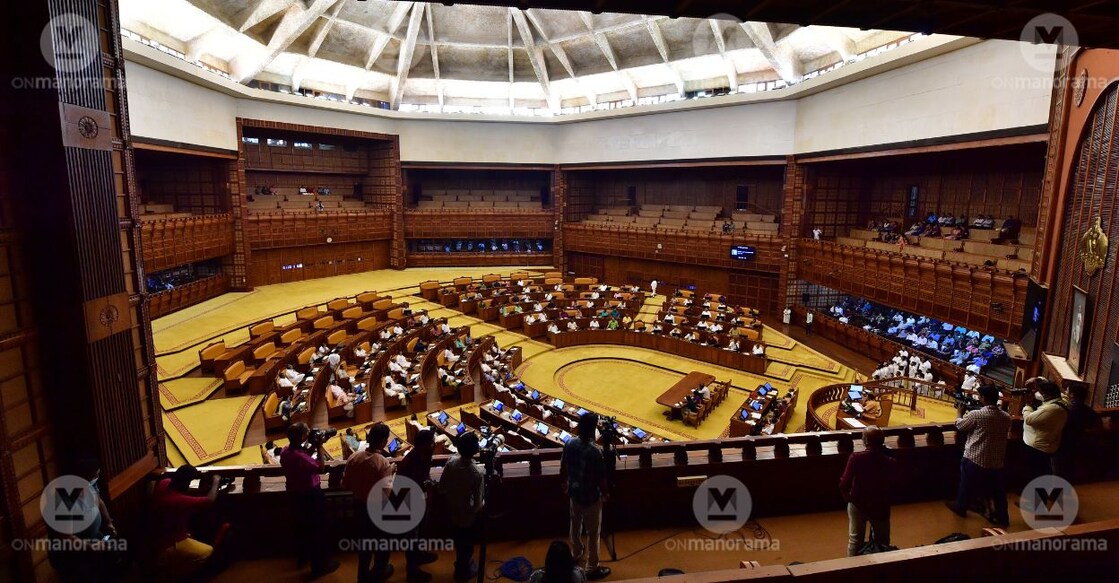
Amid the 'Sabarimala gold scandal'-induced chaos in the Assembly on Monday, higher education minister R Bindu introduced a key amendment crafted to provoke Governor Rajendra Arlekar. The amendment inserts a clause that will force a Vice-Chancellor to convene a Syndicate meeting within a week if one-third of the Syndicate members make such a request in writing.
The bill, The University Laws (Amendment)Bill, 2025, seems just an incitement tactic as it is not expected to get the Governor's assent.
Here is what the amendment says: "The Vice-Chancellor shall convene a meeting of the Syndicate at least once in two months, provided that the Vice-Chancellor shall convene a meeting of the Syndicate within seven days if one-third of the total number of its members request it in writing."
Evidently, the amendment is the government's response to the reluctance demonstrated by Kerala University VC Mohan Kunnummal to call a Syndicate meeting. The LDF government believes that the VC is acting at the behest of the Governor, who is the Chancellor of the University.
The Left-dominated Syndicate had been persistently demanding that the VC convene a Syndicate meeting to discuss the suspension of Kerala University registrar Anil Kumar. When it was held on September 2, the Syndicate refused to ratify the VC's appointment of Mini Dejo Kappen, the director (planning and development), as the registrar. However, the Left members claim that the VC then altered the minutes to make it appear as if her appointment had been endorsed. A Syndicate member had even registered a police case against the VC for forgery.
The VC had suspended Anil Kumar after he had allegedly attempted to cancel a programme at the University Senate Hall in June, which was to be attended by the Governor. The registrar had disapproved of the Bharat Mata portrait that was displayed at the function.
In retaliation, on July 2, the Left members used their majority in the Syndicate to defy the acting VC, Ciza Thomas, and revoke the VC's suspension. The issue still remains unresolved even after a series of court verdicts that were interpreted favourably by both sides. Anil Kumar arrives at his office daily for duty, and the VC behaves as if the registrar does not exist.
"To implement the reforms in the higher education sector, it is imperative for the various university authorities to function in a timely manner. However, certain vice chancellors seem reluctant to convene the Syndicate, the chief executive body of the University, on time," a combative minister said while tabling the Bill in the Assembly on Monday.
She said that as it stands, the Syndicate had to be convened every two months. "The Syndicate can also be called if the VC thinks it necessary," she said.
The new amendment will now force the VC to call the Syndicate if one-third of the Syndicate members make a request in writing. "The Syndicate cannot be allowed to function according to the whims of the VC. The Syndicate is the democratic body of a University. It is the Syndicate that is primarily responsible for moulding the University into an institution that meets the aspirations of the people, including students and their parents. The agenda of one person should not be allowed to impede its functioning," Bindu said.
The minister then indirectly accused the Chancellor of encouraging VCs to act beyond their brief. "There is a trend among VCs to submit to outside influence. At least on certain occasions, VCs have gone beyond their power and taken decisions," the minister said.
She also hinted at the Governor's alleged saffronisation agenda. "This is also an attempt to sneak in thoughts and beliefs that are unacceptable to the people of Kerala. In such situations, for the smooth functioning of Universities, it is inevitable that the Syndicate functions effectively and with freedom," she said.
 Add as a preferred source on Google