

Kollam beach shrinking rapidly, becomes increasingly dangerous
Mail This Article


Kollam: Once celebrated for its expansive white sands, Kollam Beach is no longer what it was five or ten years ago. The shoreline has steadily eroded, with nearly 20 metres of sand lost to the sea each year, making the beach increasingly dangerous. Areas where visitors once relaxed or entered the water safely have shrunk drastically. The large rope meant to mark the safe zone has moved closer to the road, leaving only about six metres of beach near the open stage and parking area.
Southern side rapidly disappearing
Kollam Beach, the district’s longest and busiest, stretches two kilometres in length and 150 metres in width—from the Galileo coastline in the north to Vedikkunnu Nethaji Nagar in the south. The Vedikkunnu stretch on the southern side, however, is rapidly vanishing. Here, the sea has encroached far more aggressively than in the northern section, and the beach no longer retains its original width along much of its two-kilometre stretch.
Imminent danger
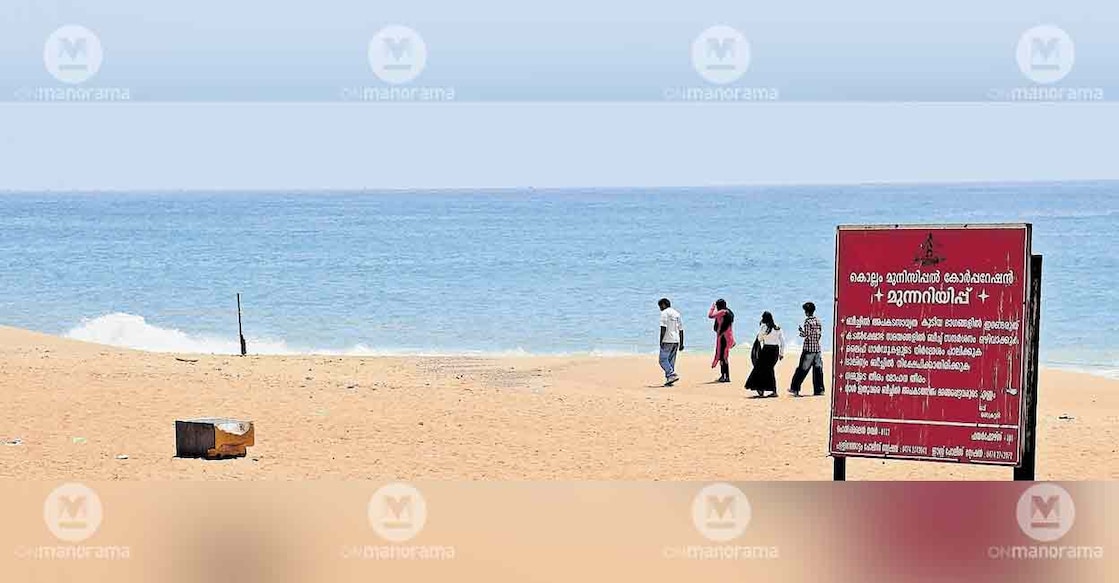
Kollam Beach is widely regarded as the most dangerous beach on Kerala’s eco-tourism map. A warning board at the entrance states: “51 lives have been lost here in the last 10 years.” In reality, the number of fatalities likely exceeds 100 when deaths since the board’s installation are counted. Thousands of visitors have been involved in accidents here.
The danger stems from the sudden caving-in of the shoreline and disappearing sand—a phenomenon common at Kollam. Classified as a deep beach, the sea reaches over three metres in depth just two metres from the shore, while the water at the very edge is around one-and-a-half metres deep. At calmer beaches, such pits lie farther from the shore, lessening the impact of waves. At Kollam, these deep pits are alarmingly close to the shoreline, causing waves to strike with deadly force. Visitors unaware of these hidden hazards often venture into the water and get trapped in pits left behind by sand that has been washed away, resulting in frequent drownings.
Can a rope really protect?
A rope stretching about one-and-a-half kilometres has been tied as a boundary to warn visitors. Although crossing it is prohibited, many ignore the restriction. The development of Bishop Jerome Road near the beach has expanded access, incorporating areas beyond the monitored zone.
Visitors now park along the road and enter the sea from these unmonitored sections, which lack restraining ropes. The pressing question remains: how can visitors—who treat Kollam Beach like a water theme park—be effectively restricted with only a rope and public awareness?
What’s causing the danger?
Opinions differ on why Kollam Beach is deteriorating. When the natural flow of waves to the shore is disrupted, the sea can intrude forcefully through alternate points. Fishermen blame coastal constructions, pointing to Kollam Port and the Thankassery breakwater as major contributors.
Experts, however, argue that the number of accidents has not increased since the port was developed. They maintain that most incidents historically occurred due to strong winds and sea incursions during monsoon seasons, rather than man-made structures.
 Add as a preferred source on Google