

'Welcoming PM SHRI suicidal for LDF': CPI mouthpiece slams Govt's move to sign MoU
Mail This Article


Thiruvananthapuram: The dissent in the LDF over signing up for PM SHRI (PM's School for Rising India) scheme has widened with the Kerala school teachers union openly expressing reservations. After five years of resistance to the implementation of the National Education Policy 2020, the CPM led LDF government has decided to sign an MoU with the Centre for joining PM SHRI, the centrally sponsored scheme devoted to the implementation of NEP 2020.
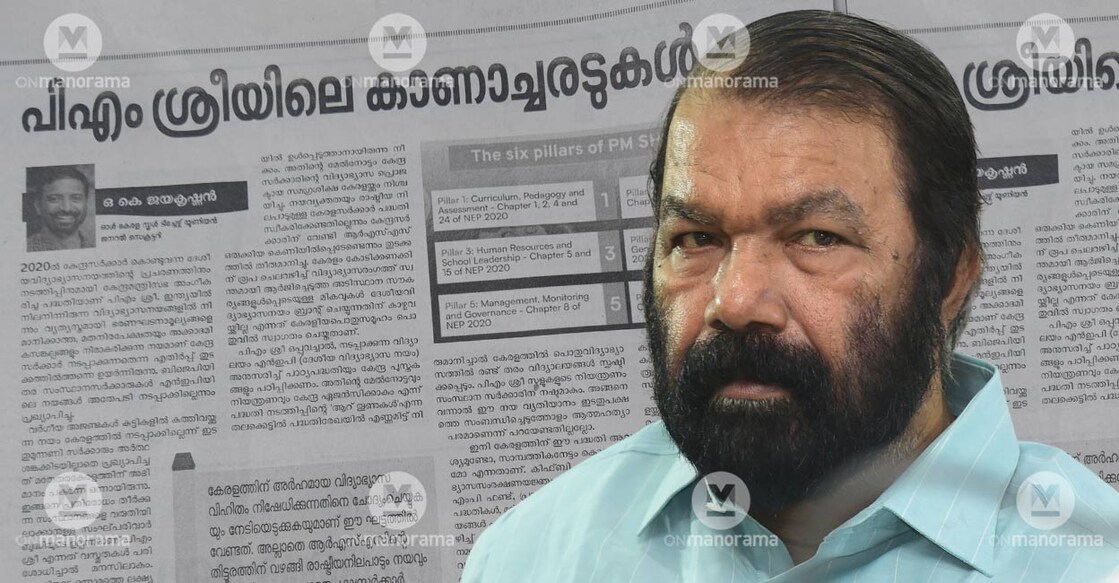
The CPI, a close ally of the CPM, has strongly opposed the move, claiming it to be an attempt for the ideological brainwashing of future generations. On Monday, CPI's mouthpiece Janayugam, published an editorial critique of the scheme authored by O K Jayakrishnan, General Secretary, All Kerala School Teachers Union. He has termed the move suicidal.
Minister for General Education V Sivankutty, while explaining the need to be a part of PM SHRI has said that it will help procure central funds for implementing education schemes in the state.
The article questions the need for such a move given the existing funds available to the State. It argues that the state could have tapped other fund sources from the KIIFB, the Public Education Protection Mission, MLA funds, MP funds, local‑government schemes, and other development initiatives which have supported the state's education infrastructure with a great degree of success.
Jayakrishnan also cites that the facilities that the scheme aims to provide like own buildings, secure environment, electricity, library, ramp for differently abled students and sports equipment are already present in the state's schools. He questions the need to compromise on the autonomy and control of the government schools to avail pre-existing facilities.
Further, he suggests that the move may not even be effective in bringing in much of funding as it commenced in 2023 leaving only one more year until its completion. "Kerala would only recieve the annual amount of ₹22 lakhs that each school is entitled to. From that 40 per cent must come from the state government itself," he notes.
The article also cites the example of the Tamil Nadu, which argued in the Supreme Court that the deprival of funds were a violation of the Right to Education Act. This resulted in the Court directing the Central Government to release the funds, Jayakrishnan points out.
 Add as a preferred source on Google