

Thechum Maychum: ‘Breadcrumb’ to ‘ghosting’, Gen Z relationships bared at Hortus
Mail This Article
Kochi: When sociologist and Disha founder-secretary Dinu Veyil recalled someone casually messaging him on a dating app, “Can I breadcrumb you for a while?”, the audience at Manorama Hortus 2025 burst into laughter. The line was humorous, slightly startling, and instantly relatable to anyone familiar with the new vocabulary surrounding modern dating. But for Veyil, it also revealed something deeper - how the Gen Z slang has quietly become part of everyday emotional exchanges. These expressions, he said, “create a language of their own, sometimes offering clarity, and sometimes being used, with all political correctness, to dump you after a point.”
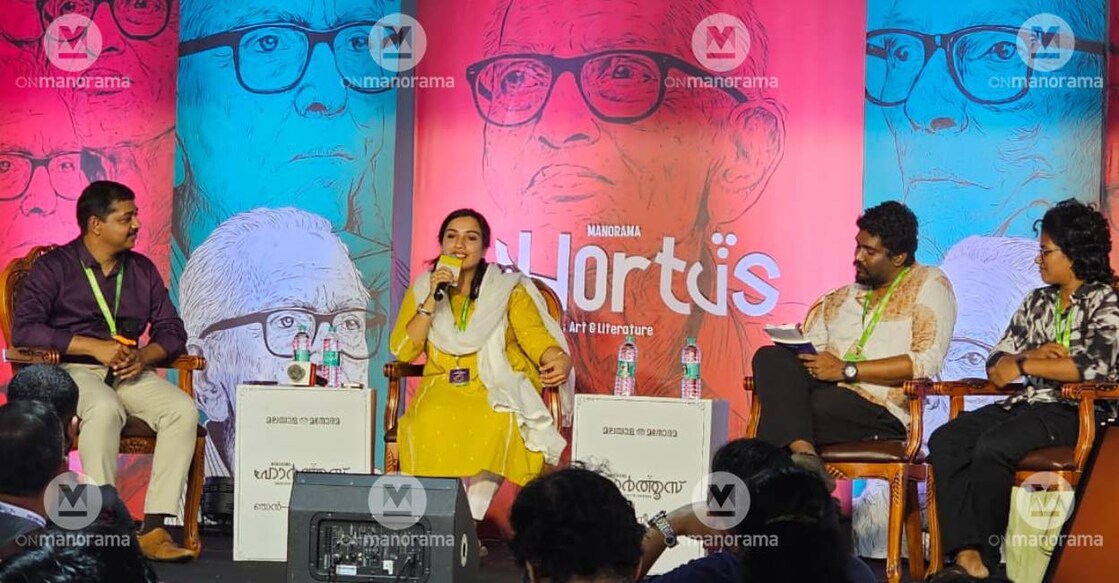
That small moment became the ideal doorway into the session “Thechum Maychum: New-Age Relationships,” which brought together voices from sociology, student politics and clinical psychology to examine how dating practices, cultural expectations and emotional boundaries are shifting.
Neeharika Beeja Pradosh, Convenor of the Democratic Students Association, opened by questioning the assumptions behind criticisms of modern relationships. “Whenever we talk about new-age relationships, we hear stories of heartbreaks and tragedies,” she said. “There are two ways to look at it - reactionary or progressive values.”
According to her, reactionary ideas idealise lifelong partnership, even extending to “choosing a partner till the end of their life or even after your partner’s death.”
“Such expectations emerge from 'brahminical and patriarchal values' that don’t appreciate people who step away from uncomfortable relationships. “They ask, ‘What are they doing?’ when someone moves on,” she said.
Pradosh pointed out that all relationship structures have complexities. “Even in platonic relationships or arranged marriages, there are problems, and we often see such traumas affecting even kids. So dismissing new-age relationships outright cannot be agreed with. As newer formats like situationships enter mainstream conversation, society needs the spirit to accept such relationships,” she said.
Veyil added a generational lens to this conversation. He observed that millennials often find themselves lost in the rapid evolution of dating terminology. “We even get alienated for not understanding the new-gen languages and words used in such spaces,” he said. He pointed out how older Malayalam slang like ‘Theppu, once widely used to describe someone abruptly dumping a partner, has now “been made an archival term.”
Yet, he acknowledged the role this new vocabulary plays in clearer conversations about behaviour. “When it comes to sexual violence or abuses in new-age relationships, certain words like breadcrumbing, benching, stalking, or situationship clearly say whether something is consensual or not.”
Still, he cautioned that these terms can be misused to soften disengagement. “The emotional labour for the person being dumped remains the same,” he said.
Despite technological and linguistic shifts, Veyil noted that cultural patterns persist. “Even Gen Z and Gen Alpha continue to choose their partner based on religion or caste on certain dating apps,” he said, indicating an enduring ‘cultural lag’.
Clinical psychologist Dr Henna Ayoob explored how relationship expectations have changed over time. “Humans learn to adapt easily to new changes, including in relationships,” she said. She added that earlier generations saw marriage as an institution to be protected at any cost, even if it required suffering in silence.
“They are culturally conditioned in such a way. In contrast, online discussions about red and green flags have made younger generations more aware of what they want from a relationship. But it also posed a crucial question - “When someone asks you, ‘Can I breadcrumb you,’ the issue is whether you are capable of such a relationship - or how it would affect you,” she said.
Pradosh also reflected on how previous generations have shaped today’s freedoms. “Millennials fought for things like growing their hair, wearing Bob Marley T-shirts, or even the ‘Kiss of Love’ protest’. These fights created the social space in which Gen Z now expresses its own values. So the progressive fights of this generation, too, should be accepted and supported,” she said.
The discussion also touched upon the emotional aftermath of breakups. Veyil highlighted a worrying trend in the rise of self-proclaimed “healing experts” on social media. “There are people on Instagram without any professional or psychological accreditation offering magical cures. Advice like ‘Are you in depression? Then you should try going to a stranger's camp and heal’ can be harmful,” he said.
Quoting Nelson Mandela, he added, “No one learns to hate when they are born, but the societal systems like parenting and education teach them. Likewise, there should be systems to teach love, too. Structured emotional intelligence training as a social need in the digital age,” Veyil said.
Dr Ayoob pointed to how popular culture can sometimes misrepresent emotional difficulty. Referring to the film 96, she noted that the protagonist Ram’s inability to move on from his first love is often celebrated as devotion. “It is actually a psychological issue that he could not get over his relationship. He should have taken help and moved on,” she said.
Moderated by Dr Sandheesh, clinical psychologist at District Hospital, Kozhencherry, the session offered a layered examination of how language, culture, technology and emotional readiness are shaping contemporary relationships, without prescribing what these relationships should be. Instead, it traced how individuals, across generations, are learning to form, negotiate and redefine intimacy in a rapidly changing social landscape.

 Add as a preferred source on Google