

Kochi canals choked with sewage; study recommends more treatment plants
Mail This Article


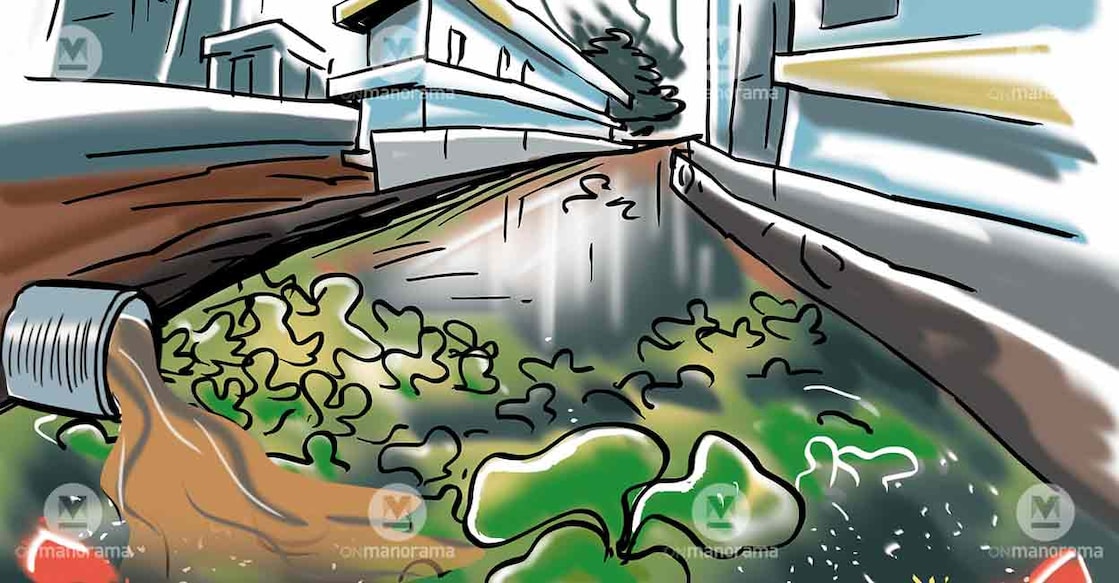
Kochi: Canals in Kochi city are bearing the brunt of unscientific and inadequate sewage treatment, with large volumes of untreated waste being discharged daily, severely polluting the water bodies.
An estimated 2.2 crore litres of sewage are released into the Edappally Canal every day, while around 41.99 lakh litres flow into the Thevara–Perandoor (TP) Canal. Sewage from eight divisions of the Kochi Corporation, along with 28 divisions in Thrikkakara, 26 in Kalamassery and five in Thripunithura, drains into the Edappally Canal. The TP Canal receives sewage from four divisions of the Kochi Corporation.
The extent of canal pollution was studied by the National Environmental Engineering Research Institute (NEERI), Nagpur, following directions from the National Green Tribunal. The study recommended a complete halt to the discharge of sewage into the canals to prevent further contamination.
The report stressed the need to identify all points through which sewage enters the canals and divert the waste to treatment facilities. It also noted that the Kochi Corporation had assured the establishment of sewage treatment plants (STPs) at Vennala, Muttar and Perandoor, in addition to the existing facility at Elamkulam, to treat sewage generated within the corporation limits.
Meanwhile, the report suggests installing diverse sewage treatment plants at various regions to prevent the pollution of the canals. It recommends starting STPs at Kochi (10.50 million litres), Thrikkakara (10.25 million litres), Kalamassery (8.40 million litres) and Thripunithura (2.10 million litres).
Trace amounts of aluminium, tin, nickel and zinc were found in the tests conducted in TP canal. Meanwhile, the presence of copper was found in the Edappally canal. However, toxic chemicals like arsenic and cadmium weren’t found in the canals. But the presence of coliform bacteria was confirmed in both Edappally and TP canals.
 Add as a preferred source on Google