

Internal inspection to assess structural integrity of Mullaperiyar dam begins
Mail This Article


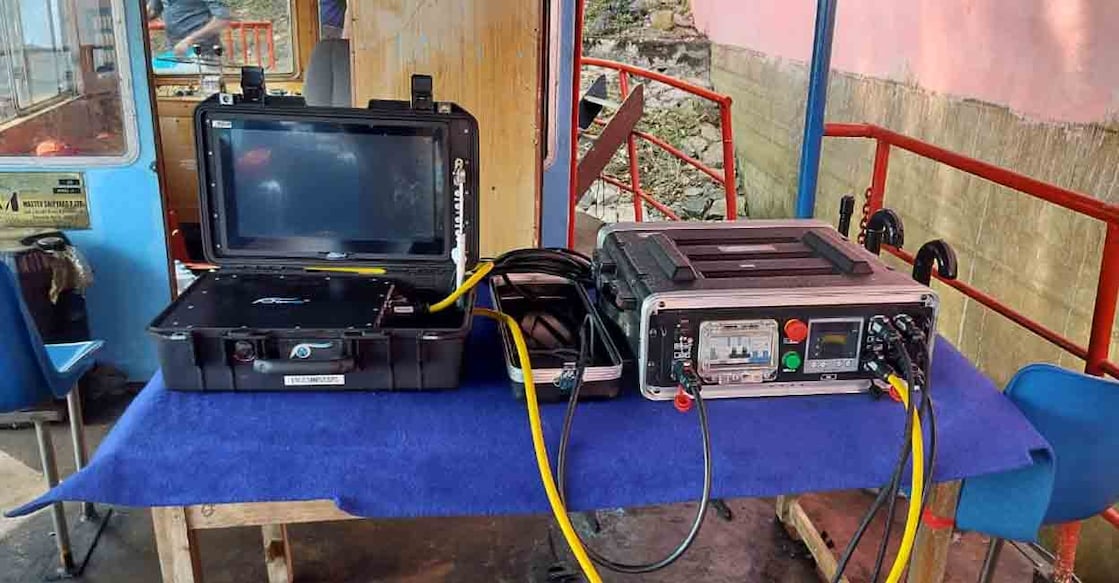
Kumily: A trial run of a Remotely Operated Vehicle (ROV) inspection to assess the structural integrity of the Mullaperiyar Dam has been successfully carried out inside the dam. The full inspection, which began on Tuesday, will continue for 12 days and is expected to generate crucial data that will be placed before the court and made public once the process is completed.
Officials said the State hopes the exercise will provide decisive findings on the dam’s structural condition.
Plans to conduct an ROV-based inspection were first proposed in March 2011 as part of studies on the dam’s strength, but the exercise was abandoned at the time due to technical issues with the equipment.
In the first phase, the 1,200-foot-long dam is being inspected by dividing it into 12 segments of 100 feet each, using specialised equipment sourced from France. Following this, inspections will be carried out in 50-foot-wide segments. In the final stage, the central portion of the dam will be divided into 10-foot sections, with detailed images captured using the ROV.
A previous study conducted by Kerala had found that below the 110-foot level, cement plastering had loosened and the surkhi mixture used in construction had eroded, exposing granite stones. Tamil Nadu had not accepted these findings.
The current inspection of the upstream face of the dam is being carried out in accordance with directions issued by the Supreme Court of India. Tamil Nadu agreed to the inspection after sustained pressure during a meeting held in Madurai, following a visit to the dam by the Empowered Committee on November 10.
The inspection is being conducted with the assistance of scientists P Senthil, C Vijay, Dr Joy Lingasamy, and lab assistant Deepak Kumar Sharma, who arrived from Delhi. The water level at the Mullaperiyar Dam currently stands at 133.80 feet.
 Add as a preferred source on Google