

Kochi mayor selection row: Deepthi wants VD Satheesan to explain her ouster, tells DCC President to ‘re-read KPCC circular’
Mail This Article


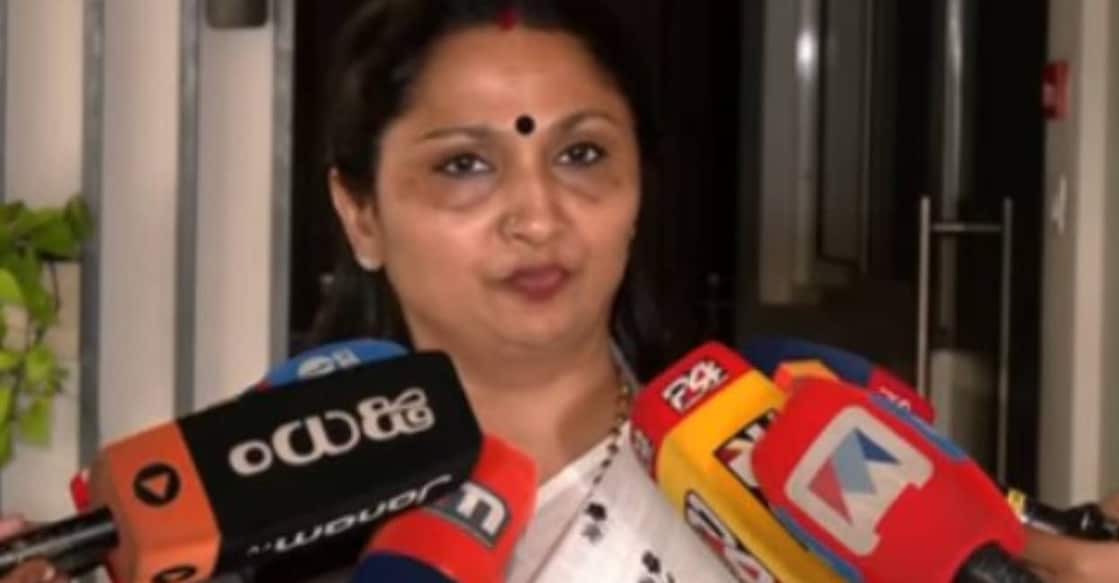
Kochi: The internal dissent simmering within the Congress over the Kochi Corporation mayoral selection has erupted into open confrontation. In a sharp escalation on Wednesday, KPCC General Secretary Deepthy Mary Varghese publicly dismantled the district leadership’s defence of the selection process and asked Opposition Leader VD Satheesan to explain why she was sidelined after leading the party’s election charge.
Addressing the media, Varghese dismissed the Ernakulam District Congress Committee (DCC) President Muhammed Shiyas’s claim that procedural norms were followed as a “poor reading” of the KPCC guidelines.
Varghese’s rebuttal to the district leadership was stinging. She argued that the selection of VK Minimol and Shiny Mathew as mayoral candidates was conducted in violation of the KPCC circular, which mandates a confidential consultation process overseen by a KPCC-appointed observer.
“Perhaps the circular needs to be read once more. How the selection should be done was clearly mentioned in the document. Let him [Shiyas] read it again properly,” she said.
She alleged that the “open consultation” method used by the leadership to seek the councillors’ opinion was coercive. Varghese also denied the reports that she did not have support from councillors in the parliamentary party meeting. “When the opinions of councillors, especially juniors and fresh faces, are sought in front of senior leaders, obviously there was pressure on them. If the councillors were given a chance to freely express their choice through a secret vote under the supervision of a KPCC-appointed observer, I am sure I would have received the biggest support,” she said.
Varghese also dragged the state leadership into the dispute, reminding the party that her role in the election was not self-appointed but mandated by the Opposition Leader VD Satheesan himself.
“Reclaiming Kochi Corporation from the LDF was a major task and the Opposition Leader was the one who entrusted me with leading the election work,” she said.
“I worked throughout the election period as per his direction. So, let him only say why this decision was taken post-election,” Varghese added.
While she congratulated the chosen candidates and pledged her cooperation as a “disciplined party worker,” her demand for accountability signals that the factional rift runs deeper than a local dispute.
Meanwhile, behind the procedural arguments lies a reported deadlock over tenure. Party sources indicated that Varghese was the frontrunner for the post but lost support when she allegedly refused to split the five-year mayoral term, demanding the full tenure for herself. This rigidity reportedly forced the leadership to opt for the term-sharing arrangement between Minimol and Mathew.
Varghese, however, categorically denied these reports and refuted claims that she was offered alternative posts to pacify her amid the row. “I have not demanded any such posts and nobody has approached with any,” she said.
The escalation prompted a cautious intervention from the AICC. General Secretary KC Venugopal validated Varghese’s standing as a leader he has known “since her KSU days in 1987” but emphasised party discipline.
“If she desired the mayoral post, it is quite natural. But the party’s decision is final. If she has any complaints it can be discussed,” Venugopal said.
DCC President Mohammed Shiyas remained defiant, dismissing the allegations of a crisis as “baseless” and the result of a “calculated misinformation campaign” by political rivals. He also brushed off attacks from senior leader Ajay Tharayil, who had accused him of autocracy and cited a “power group” conspiracy against Varghese.
“We followed the KPCC norms strictly. If Deepthi Mary Varghese has any complaints, those will be considered,” Shiyas said, attempting to close the chapter on a selection drama that threatens to mar the UDF’s big win in the civic body.
 Add as a preferred source on Google