

Sabarimala temple opens for makaravilakku festival, spot booking restructured
Mail This Article


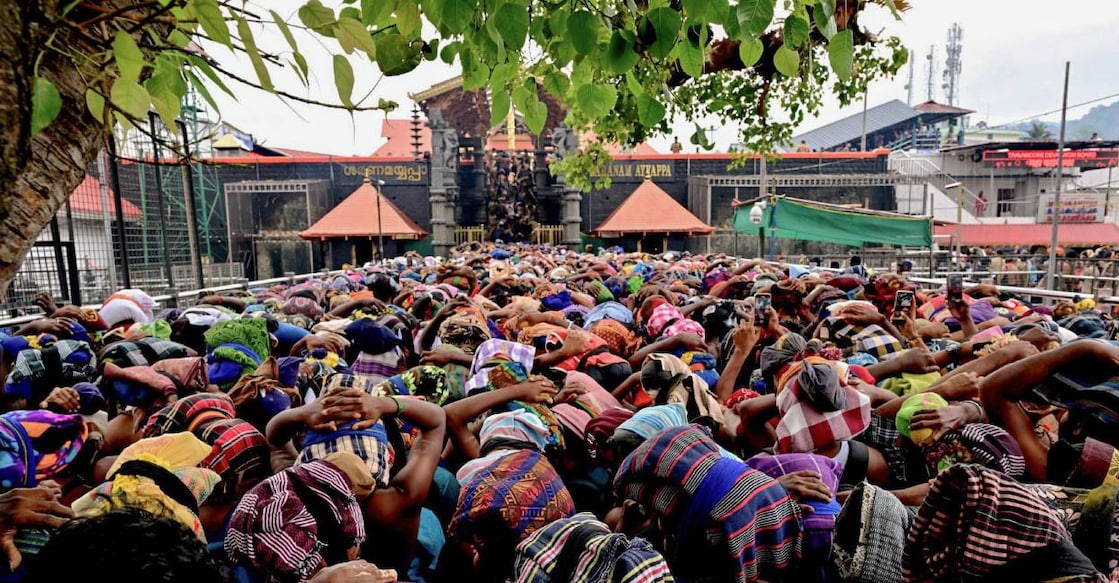
Pathanamthitta: The Sabarimala temple opened for the annual makaravilakku festival on Tuesday evening. The shrine was opened at 5 pm by melsanthi E D Prasad in the presence of Tantri Mahesh Mohanaru. The makaravilakku will be observed on January 14, 2026.
Poojas during the makaravilakku period will begin at 3 am on Wednesday. After the lighting of the sacred fire (azhi) at the Sannidhanam, devotees will be allowed to climb the Pathinettam Padi, the holy eighteen steps, for darshan.
Extensive arrangements have been put in place to receive Ayyappa devotees. From 11.30 am, pilgrims were allowed to proceed from Pampa. Devotees arriving from Marakkoottam are being organised into segments at the large queue shelter.
The temple reopened after a two-day break following the end of the mandala season. The shrine closed at 10 pm on December 27, following the conclusion of the 41-day mandala pooja period and the traditional rendering of Harivarasanam.
Spot booking
There is a heavy rush for spot booking, with 2,000 slots opened so far and another 2,000 set to be released shortly. Pilgrims will be allowed to proceed from Nilakkal strictly based on crowd levels. If congestion builds up at the Sannidhanam, devotees will be regulated at Nilakkal. However, no such situation has arisen so far, ADGP S Sreejith said.
The spot booking system has been restructured to ensure better crowd management. Slots will be released only when the rush is under control. Slots are not issued between 8 pm and midnight or during the afternoon hours.
This scheduling allows devotees to arrive by 3 am, complete darshan without prolonged waiting, and return smoothly. The same arrangement is followed in the afternoon as well. Officials said the calibrated release of time slots has helped reduce crowding and will continue to work effectively as long as pilgrims strictly adhere to their allotted timings.
Arrangements
One of the most significant annual events at Sabarimala, the makaravilakku festival draws lakhs of devotees from across the country. As part of the preparations, large-scale cleanliness drives have been carried out at Sabarimala and surrounding areas with the participation of various government departments and volunteers.
According to Travancore Devaswom Board figures, a total of 36,33,191 devotees visited the shrine from the opening of the mandala season until the closing of the sanctum sanctorum on December 27. Of these, 30,91,183 pilgrims reached Sabarimala through online booking, 4,12,075 through spot booking, and 1,29,933 via the Pulmedu route. In comparison, 32,49,756 devotees had visited the Sannidhanam during the same period last year. This season saw an increase of 3,83,435 pilgrims.
The state Health Department has put in place extensive medical and emergency arrangements for the makaravilakku festivities. Health officials said a reserve list of doctors has been prepared to handle emergencies, with medicines stocked at all hospitals and treatment centres in and around Sabarimala.
Ambulances and medical teams will be deployed at key locations, including Pampa Hilltop, Triveni Bridge, the Pampa KSRTC stand and Chalakayam. Mobile medical teams and ambulance services have also been arranged along the Thiruvabharanam procession route from Pandalam to Pampa and for the return journey.
The District Food Safety Department said it conducted 1,728 inspections at Nilakkal, Pampa and Sannidhanam during the recently concluded mandala festival to ensure food safety. District Assistant Food Safety Commissioner Sujith Perera said strict inspections would continue during the makaravilakku festival.
At present, 2,300 police personnel are deployed at the Sannidhanam. More officers will be deployed for makaravilakku darshan. A total of 4,000 personnel have been stationed across Nilakkal, Pampa and the Sannidhanam. During the makaravilakku period, this number will be increased to 5,000.
 Add as a preferred source on Google