

Norms relaxed for SIR in Kerala, close relatives can receive hearing notices on behalf of voters
Mail This Article


Thiruvananthapuram: As part of the Special Intensive Revision (SIR) of the electoral rolls in Kerala, the presence of voters at their homes will no longer be mandatory to receive hearing notices.
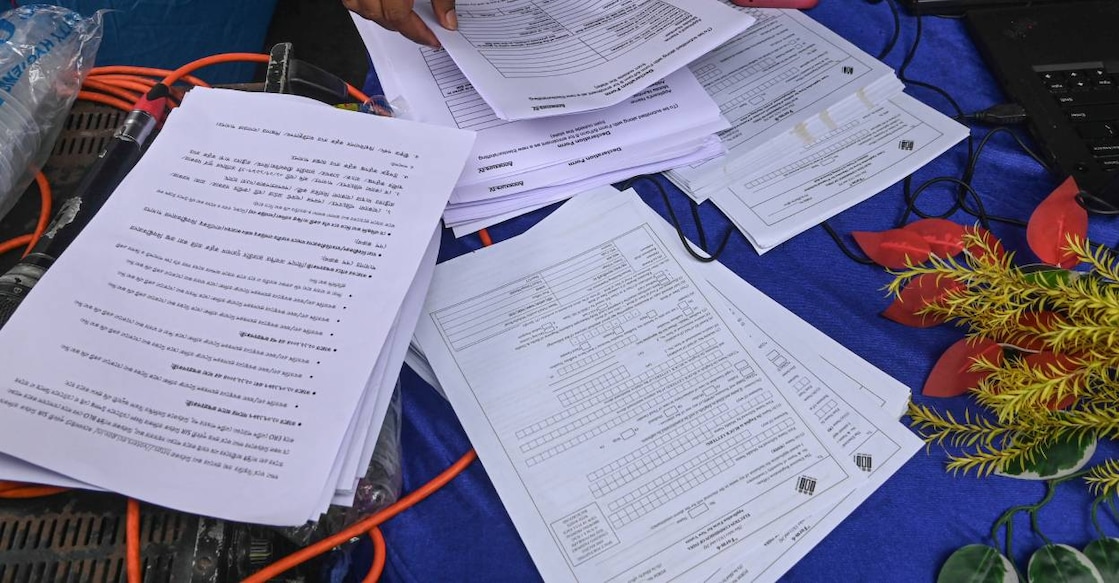
When a Booth Level Officer (BLO) delivers a notice, parents or close family members may receive it on behalf of the voter. After handing over the copy, the BLO will obtain the family member's signature and upload their photograph, along with the original notice, through the mobile application developed by the Election Commission of India.
The move is aimed at preventing a large number of voters from being excluded from the rolls.
Family members may also attend hearings on behalf of voters who are bedridden, very elderly, or students residing outside the state. However, they must carry the required documents, and the BLO present at the hearing venue should be able to identify them. This system has already been implemented in several Assembly constituencies.
Notices are being issued to 19.32 lakh people whose enumeration forms could not be matched with the SIR data collected in 2002. So far, more than two lakh notices have been distributed.
Rush for residence certificates
With the commencement of SIR hearings, applications for residence certificates have surged. These certificates, issued by local self-government institutions, are recognised as proof of residence. Applications can be submitted through the K-SMART platform with a fee of ₹10. Although the Chief Minister’s Office announced that the fee would be waived during this period, the waiver has not yet come into effect.
No link between SIR and NRC, reiterates ECI
The Election Commission of India (ECI) has told the Supreme Court that the SIR process will not lead to the preparation of a National Register of Citizens (NRC). Appearing for the Commission, Adv Rakesh Dwivedi argued that the petitioners were creating unnecessary alarm by equating SIR with NRC.
He pointed out that the NRC had been conducted only in Assam, where a special revision of the electoral rolls is currently underway. Under Article 324 of the Constitution, the Election Commission has full authority over the preparation of electoral rolls, he said.
Article 102 of the Constitution provides for the disqualification of an MP if he or she is not an Indian citizen or has voluntarily acquired foreign citizenship. In such cases, the President acts on the advice of the Election Commission. Citizenship is also mandatory for judges and other key constitutional positions, Dwivedi submitted.
Meanwhile, Trinamool Congress MP Derek O’Brien has approached the Supreme Court alleging irregularities in the SIR process in West Bengal.
 Add as a preferred source on Google