

'Kandararu Rajeevaru gave tacit consent for removal of valuables from Sabarimala temple'; SIT to probe tantri's financial transactions with Potty
Mail This Article


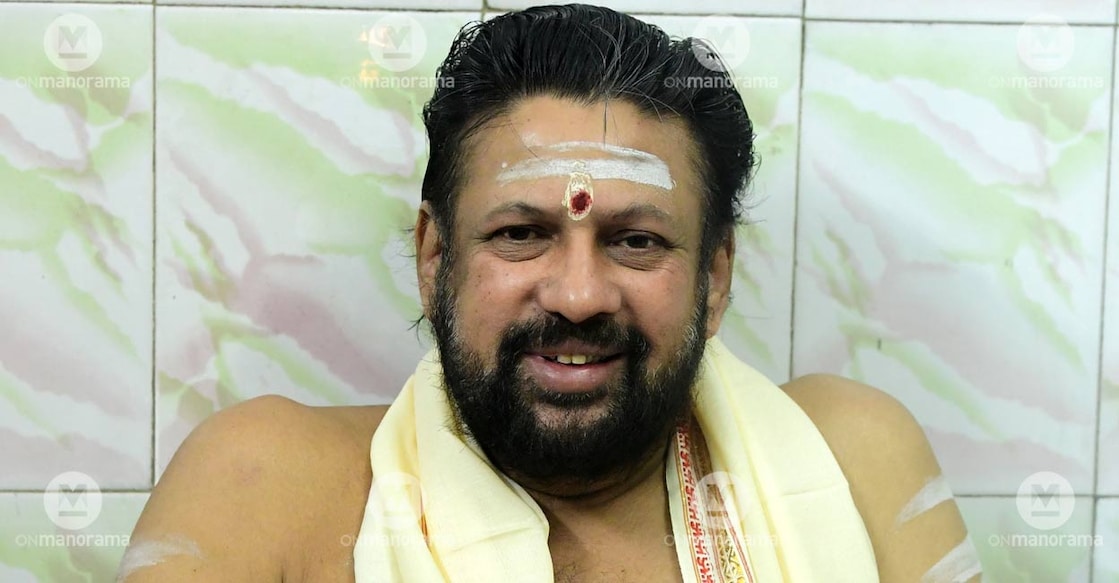
Thiruvananthapuram: Kandararu Rajeevaru, tantri (chief priest) of the Sabarimala sanctum sanctorum, had knowingly permitted the unauthorised removal of temple valuables, violated ritual practices, and gave criminal tacit consent as part of a larger conspiracy, according to the remand report filed by the Kerala High Court-appointed Special Investigation Team (SIT) probing the Sabarimala gold theft case.
Rajeevaru (66), a native of Alappuzha and the 13th accused in the case, was initially summoned for questioning, following which his arrest was formally recorded at the Crime Branch office in Enjakkal, Thiruvananthapuram, on Thursday. He was then presented before the Vigilance Court in Kollam, which remanded him to 14-day judicial custody. The probe team has sought his custody and will also inspect his financial transaction details with Unnikrishnan Potty, the first accused.
He has been booked under Sections 403 (dishonest misappropriation of property), 406 (criminal breach of trust), 409 (criminal breach of trust by a person in a position of trust), 466 (forgery of public records), 467 (forgery of valuable security), and 120B read with 34 (criminal conspiracy and common intention) of the Indian Penal Code (IPC), along with Sections 13(1)(a) and 13(2) of the Prevention of Corruption Act, 1988 (as amended in 2018).
According to the remand report, Rajeevaru knowingly allowed the removal of gold-plated copper plates fixed on the sanctum doorway and prabhamandala for repair. These sacred items were taken out on May 18, 2019, and handed over to, Unnikrishnan Potty, without obtaining 'divine sanction' or following prescribed Tantric procedures.
The SIT also noted that Rajeevaru failed to report the serious ritual violation to the Travancore Devaswom Board or take any steps to prevent the handover of temple valuables. “By his inaction, the accused gave criminal tacit consent,” the report said.
As per the Travancore Devaswom Manual (Volume II, Chapter IX, SI No. 23(4)) and the Sub Group Manual (Chapter X, St. No. 26), repairs to valuable temple properties must be carried out within temple premises and should not be taken outside. The report stressed that Rajeevaru, a long-serving Tantri, was fully aware of these provisions.
Rajeevaru belongs to the Thazhmon Madam, which traditionally holds the hereditary Tantric rights of the Sabarimala temple under the Travancore Devaswom Board. He had earlier served as an assistant to previous generations of Tantris and was the Tantri during 1998–99, when the Bengaluru-based UB Group carried out gold-plating works at the sanctum sanctorum.
The SIT said Rajeevaru was fully aware that the gold-plated copper plates — depicting the Dashavatara, zodiac symbols, upper lintel elements, and two prabhamandala plates bearing Shiva and Vyali figures — had been installed by the UB Group. He again held the post of Tantri during 2018–19 and, as chief priest, was duty-bound to protect the sanctity and spiritual value of the temple. The Travancore Devaswom Manual (Volume I, Part 4) also places the Tantri under the Devaswom Board's rules and control, the remand report added.
Despite these responsibilities, the report said, Rajeevaru allowed the removal of the sacred plates under Devaswom Board proceedings dated March 20, 2019, without ensuring adherence to ritual norms.
The SIT further noted that Rajeevaru was present at the Sabarimala Sannidhanam from May 14 to May 19, 2019, during the Edavam monthly pooja. On May 18 — the day the plates were removed — he officiated the Usha, Ucha and Athazha poojas. The following day, he conducted routine rituals despite knowing that the sanctum doorway had been stripped of the plates, leaving only stone supports.
Even when the temple reopened for the Mithunam monthly pooja on June 15, 2019, the plates had not been returned, yet Rajeevaru continued to be present. The plates were finally brought back and reinstalled on June 18, 2019, in his presence, the report said.
Rajeevaru was taken into custody after being kept under surveillance for a considerable period. Investigators said he had introduced Unnikrishnan Potty to other accused in the case, and that his long-standing association with Potty was corroborated by call data records.
 Add as a preferred source on Google