

Three decades later, memories guide a journey along the Bharathapuzha
Mail This Article


Tirur: From the highlands of a mountain in the Western Ghats, a stream of water rushes down to the Vandal Reservoir. Small canals carry it onward, feeding the Upper Aliyar and Lower Aliyar reservoirs. The flow continues, evolving into a small river called the Kannadipuzha. Along the way, it joins with two more streams, the Kalpathippuzha and Gayathripuzha. Together, these waters form the mighty river now called the Bharathapuzha.
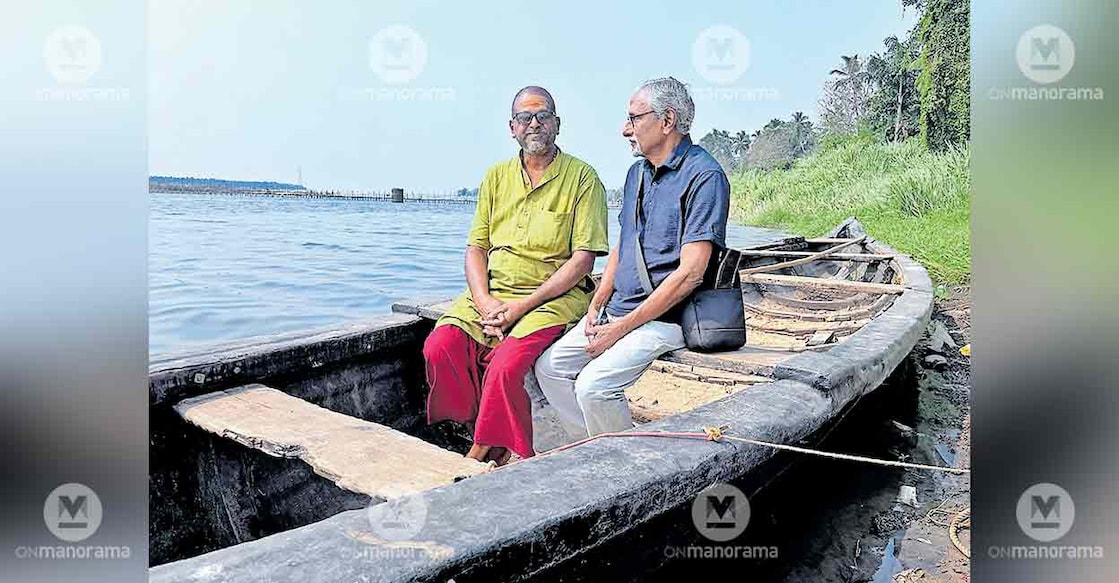
With his hands skimming the ripples of the river, Govindankutty Kartha sat on a country boat, lost in memories of the past. Beside him sat Ramesh Korappath, his longtime disciple, following once more the winding path of the river they had explored together more than three decades ago.
It was on March 4, 1993, that Kartha, then an English teacher at NSS College, along with thirty students, including Ramesh, decided to traverse the Bharathapuzha. Their goal was to trace the river’s origins, understand its ecosystem and inspire its conservation. The journey was called the `Nila Cultural Expedition.' They traced the river to its source at Kadanpara and Attapetti in the Anamalai hills of Tamil Nadu, where its waters tumbled into the Vandal Dam and then followed its winding course through streams and small rivers, eventually joining the Bharathapuzha.
Since it was March, water levels were low. The group walked along the riverbed wherever possible and waded through shallow stretches. At night, they rested in local villages, relying on the hospitality of residents. Before nightfall, they would light thirty bamboo torches to hold sessions explaining the day’s observations, often with villagers participating. Cultural programmes and discussions were also held along the way, which made the journey as much about learning and exchange as about exploration.
The expedition, which began at Vandal Dam, eventually reached Padinjarekkara, where the Bharathapuzha empties into the Arabian Sea. The journey was also supported with ₹2,000 by Malayala Manorama, which also published updates, helping families track the progress of their children.
Years later, Kartha and Ramesh returned to the river, accompanied by a few friends. “We wanted to see the Nila once again and relive the memories of our journey along its banks,” says Ramesh.
Discussions on the river’s name, how the Aarani River came to be called Bharathapuzha, extended to literary and cultural reflections, from Thunchan and Kunchan to MT and to traditional classical arts such as Kathakali and Koothu. They also emphasised the urgent need for conservation as they made their way along the river’s banks.
Professor Kartha, an 80-year-old from Alappuzha, still resides in Ottappalam, while Ramesh serves as the acharya (priest) of Aivor Madom.
 Add as a preferred source on Google