

Why Kerala court rapped prosecutor & cop for lapse in infant’s murder probe, moral policing

Mail This Article


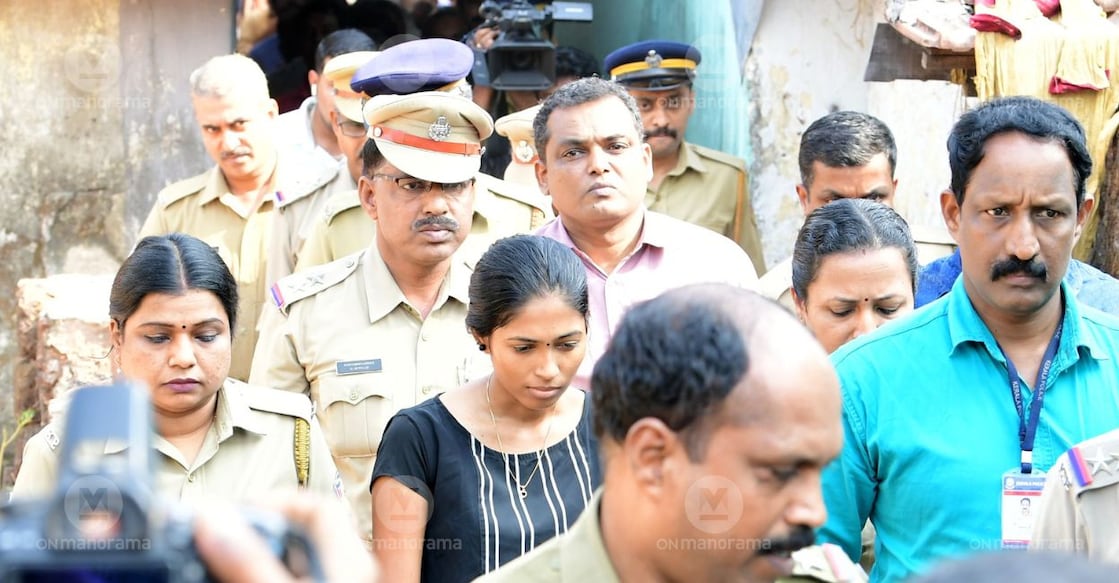
The prosecutor and the investigating officer have come in for serious censure from the court in the Thayyil murder case, in which the convict Saranya was sentenced to life imprisonment for killing her infant son in Kerala's Kannur district. Additional District and Sessions Judge, Taliparamba, Prasanth K N, rapped the SHO, Kannur City Police, who probed the case for playing moral police during the investigation.
The prosecution case was that Saranya Valsaraj, the first accused, killed her 1.5-year-old son Viyan by throwing him into the sea from the seawall in 2020. She conspired with her lover Nidhin P S, the second accused in the case, to get rid of the child so that they could live together, according to the prosecution. The court found Nithin not guilty and sentenced Saranya to life imprisonment and slapped a penalty of ₹1 lakh.
According to the autopsy, the child died of blunt injury sustained to the head caused by throwing the baby on the granite stone from a height of 5 feet.

In the order, the Judge lists out flaws on the part of the prosecutor U Ramesan and the police officer. Despite the seriousness of a child murder case, the investigating officer has conducted the probe in a very casual manner, ignoring vital points. Likewise, the public prosecutor conducted the trial in a negligible manner, while neglecting the elementary principles of a criminal trial, the Judge recorded in the verdict.
The court came down heavily on the prosecution for adducing evidence to Saranya's alleged bad character. The court termed it irrelevant under the Evidence Act. "The previous bad character of the accused is not relevant. Unfortunately, the police investigation was conducted as moral policing," the Judge noted.
The order shows that the police went to great lengths to collect evidence on the extramarital relationship of Saranya. The court wondered over the purpose of such evidence in the case. "The prosecution and the police just tried to outline the relationship between a married woman and an unmarried man with the colour of an extramarital relationship. A relationship between a married woman and an unmarried man is treated only as an extramarital illicit affair, which is a concept of patriarchy, and a classic example of moral policing," the Judge observed.

While the prosecution tried to establish motive behind the crime by proving the conspiracy angle between Nidhin and Saranya, it was evident that there was no communication between them during the commission of the offence or immediately before or after the crime, said Advocate Mahesh Varma, counsel of the second accused. The court concluded that in the absence of such communication, the chance of abetment and conspiracy can be negated.
The entire case rested on circumstantial evidence and last seen theory. It was proven that the child was with the mother just a few hours before the death. She had breastfed the baby three hours before the crime.
During the probe, the police had recovered a notebook of Saranya and on the last page there was a line which read 'I hate you Viyan'. The court said that it was not sent for handwriting expert to confirm the handwriting of Saranya, which would have been a strong indication of motive. During the trial, the prosecution did not attempt to identify the handwriting either.
According to the court, even the elementary questions of the chief examination in a murder trial were not put to the witnesses by the prosecutor except with the repeated interference by the court. The proper examination of witnesses, the marking of the vital documents, and the material objects were not properly done by the prosecutor, the order noted.
The court slammed the police saying that the investigation reflected a lack of professionalism and sensitivity expected in the investigation of a grave offence like murder. "He appears to have acted in a casual and mechanical manner, resulting in serious lapses in the case," the Judge recorded, referring to the SHO.
The court was also severe on the public prosecutor. The conduct of the investigating officer and the public prosecutor calls for serious administrative scrutiny, the court said. "Despite the gravity of the offence, the public prosecutor failed to present their case in a coherent and systematic manner and made no effective attempt to explain the deficiencies in the investigation at the relevant stage," the order said.
 Add as a preferred source on Google