

Mail This Article


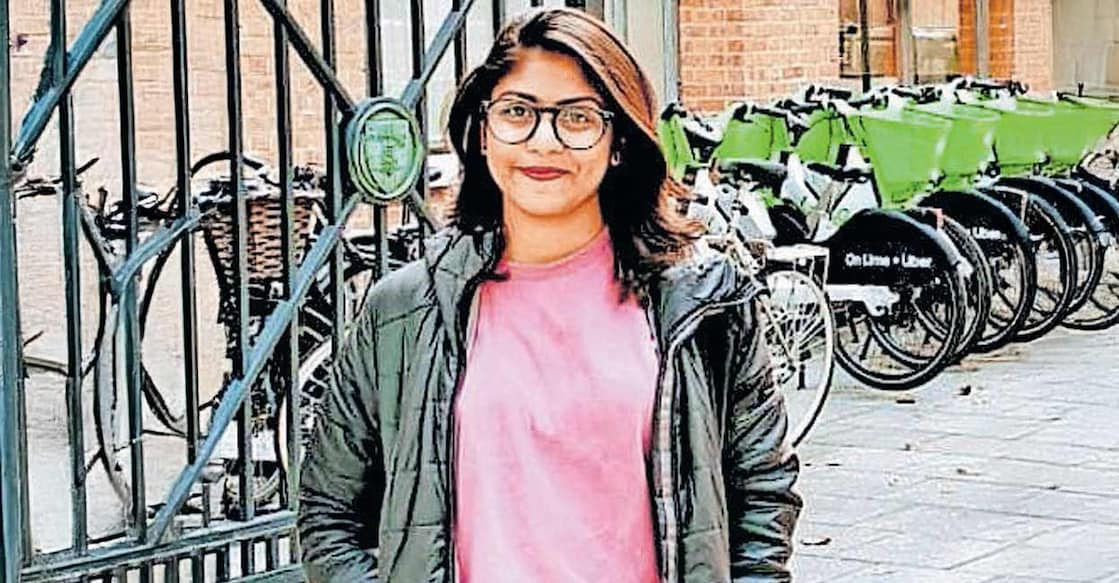
When Smitha Susan Varghese finished her schooling, she stood at a crossroads that felt straight out of a Robert Frost poem. On one hand, she had the well-trodden family path of medicine, championed by her parents - Dr Varghese P Punnoose, Principal and Psychiatry Professor at Kottayam Medical College, and Dr Sherin Joseph, Medical Superintendent and Gynaecologist at Parumala Hospital. On the other hand lay her true calling: the world of literature. Backed by her family's complete support, Smitha chose the road less travelled. And that has made all the difference.
The Kottayam native has now secured a fully funded PhD admission with a prestigious scholarship at Emory University in Atlanta, USA. Joining the Department of Religion at the Laney Graduate School, Smitha will focus her research on South Asian religions, examining their socio-cultural and political dimensions, as well as how Middle Eastern and Western colonial influences shaped Malayalam translations.
From biology to comparative literature
Smitha studied science with biology during her Plus Two at Lourdes Public School, but her lifelong love for reading made her realise that her future belonged in the humanities. Pursuing this passion, she earned her BA Honours in English Literature and an MA in Comparative Literature from the English and Foreign Languages University (EFLU) in Hyderabad. She then went on to complete another Master's degree at the University of London, where her research once again focused on the intersection of religion and literature. Having honed her academic interest, her next step was to find global universities and faculty members aligned with her research goals. This search led her to positive responses from both the University of Texas and Emory University.
Navigating the highly competitive PhD landscape
The scholarship at Emory University is highly lucrative, valued at approximately ₹1 crore per year. This comprehensive package covers tuition fees, health insurance, and a monthly stipend for five years. The application portal for such programmes typically opens annually between August and December. Prospective applicants must submit personal statements, academic records, a statement of purpose (SOP), and writing samples. Shortlisted candidates then go through rigorous rounds of interviews. Securing a humanities PhD at premier global institutions is exceptionally competitive, with acceptance rates often hovering between just five and seven per cent.
Crucial advice for aspiring scholars
Smitha believes that many Indian students miss out on these opportunities because of a flawed approach. "Most students simply search Google for the top ten global universities and apply to all of them. Instead, they should seek out faculty members who share their exact research interests," she explains. Her advice is to search for academic papers related to one's chosen topic, find the professors who authored them, and reach out to them directly. "In most cases, you will get a response," Smitha says, adding that rejections are rarely about a student's lack of merit, but rather a lack of alignment with a mentor or institution. Smitha, whose sister Dr Sneha Susan Varghese works as a consultant psychiatrist in Australia, notes that global opportunities in the humanities are immense if approached systematically.
The power of community support
During her academic journey, Smitha found invaluable guidance through "Comparatives in Conversation" (CIC), a vibrant community of teachers, students, and researchers in comparative literature and the humanities. Designed to inspire and guide young scholars, CIC hosts monthly online lectures by prominent professors from top universities around the world and helps clarify complex admission procedures, making the daunting journey to a global PhD far more manageable.
