

How an Udupi entrepreneur turned his struggling paddy fields into a blooming lotus paradise
Mail This Article


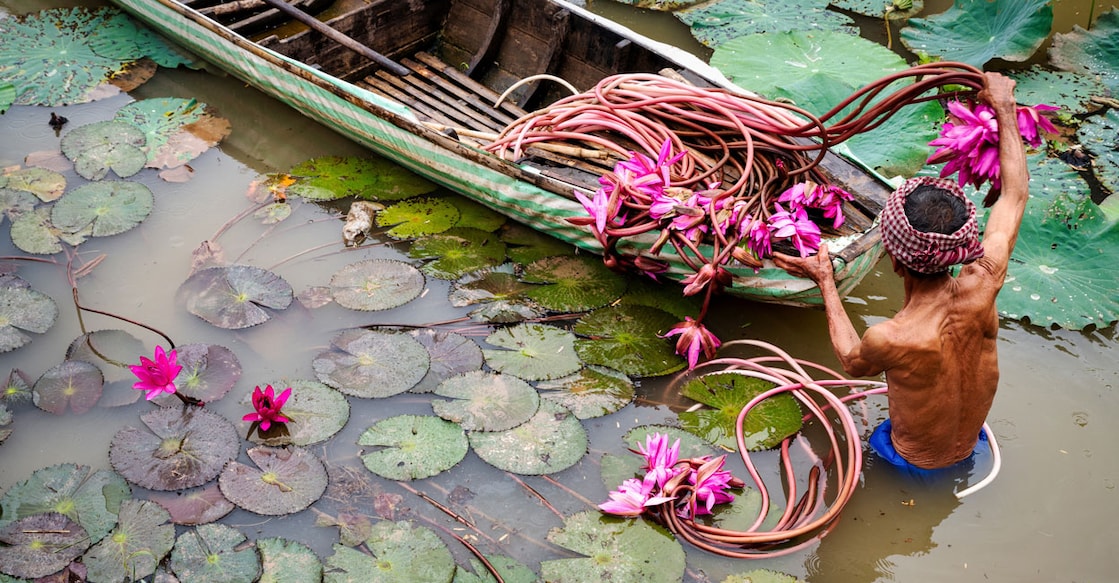
Farmers in coastal Karnataka face heavy odds, including escalating production costs, acute labour shortages, and erratic weather patterns. For many, traditional paddy cultivation has shifted from a staple livelihood to a loss-making venture. However, one progressive farmer-entrepreneur from Udupi has turned these challenges into a blooming success story by switching from rice to commercial lotus cultivation.
Manohar Shetty, Managing Director of the prominent Sai Radha Group and a native of Uliyargoli in Kapu taluk, once cultivated paddy across 15 to 20 acres. Confronted by persistent crop losses driven by unpredictable monsoons and high labour costs, he realised he needed a sustainable alternative. Instead of abandoning his land, he began researching successful agricultural ventures across other regions of Karnataka.

After reading about flourishing lotus farms in Mandya, Mysuru, and Ramanagara, Shetty spent three months rigorously studying the agro-climatic demands and market potential of floriculture. Armed with this knowledge, he initiated a small trial on his property. Following highly encouraging results, he transformed three acres of his low-lying fields into dedicated lotus ponds.
Going organic with premium varieties
The three-acre farm in Kapu is run entirely on organic principles. Shetty selected three premium varieties well-suited to the coastal climate: Pink Cloud, White Peony, and Bucha. Field preparation involves thorough ploughing, organic manuring, and maintaining knee-deep water levels before planting the rhizomes. The first harvest begins around 90 days after planting. To protect the crop from pests, Shetty avoids synthetic chemicals entirely, relying instead on natural solutions like neem oil and neem-based emulsions.
Meeting temple demands for steady profits
For the past two months, the farm has yielded a steady harvest of 400 to 500 lotus flowers daily. With premium-quality blooms selling at an average rate of ₹15 each, the venture generates a consistent monthly income of around ₹1 lakh. The secret to this steady revenue is the high demand from prominent regional shrines, including the famous Kollur Mookambika Temple, Uchila Temple, and Kapu Temple. Furthermore, local florists and traders from Udupi and Kapu purchase the flowers directly from the farm, eliminating middleman commissions and boosting profits.
The untapped potential of lotus farming
Beyond fresh cut flowers, Shetty highlights the immense potential of value-added products derived from different parts of the lotus plant. For instance, lotus stems are increasingly sought after for extracting natural fibres for textiles, while the nutrient-dense roots are used for premium pickles. Additionally, lotus seeds have a thriving market in health foods and traditional medicine, and the blossoms themselves are valued in cosmetic and perfumery industries.
Empowering local farmers
Believing that over 200 acres of marshy land across Kapu, Uliyargoli, and Pangala are ideal for this low-maintenance crop, Shetty wants to lead a floriculture movement. He is actively encouraging other local farmers to adopt lotus cultivation, offering them technical guidance, high-quality planting material, and market linkage support to help secure a sustainable livelihood.
