

Mail This Article


In medical emergencies, every second counts. While conventional four-wheeled ambulances often find themselves trapped in dense traffic congestion or struggling to navigate narrow, rugged pathways, a pioneering two-wheeled solution has emerged to redefine emergency response. Believers Church Medical College Hospital in Thiruvalla, Kerala, has introduced the world's first Augmented Reality (AR) 5G-enabled bike ambulance, marking a revolutionary leap in emergency healthcare delivery.

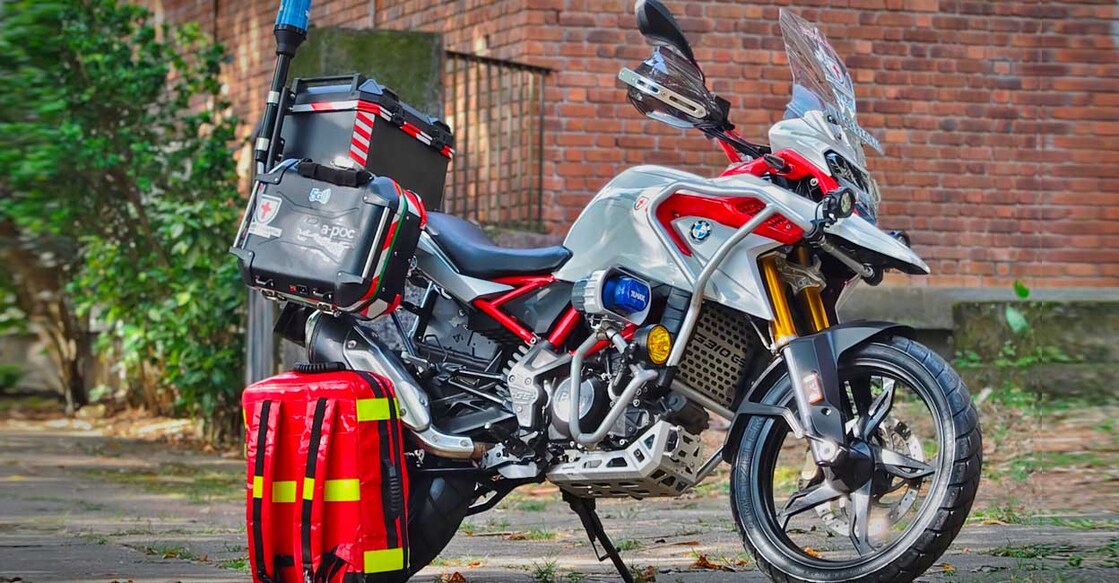
Built on a robust BMW motorcycle, this innovative vehicle is essentially a high-tech mini-ICU on wheels. Its design allows it to zip through heavy traffic and traverse challenging terrains that would halt larger vehicles, ensuring that medical aid reaches the patient within those crucial initial minutes.
A fully equipped mini-ICU on two wheels
The BMW bike ambulance is fully equipped with life-saving medical gear to help first responders stabilise patients immediately. It carries an oxygen cylinder, a defibrillator, ventilator support, and a comprehensive kit of essential emergency medicines. This ensures that critical care begins the moment the responder arrives, long before a standard ambulance can navigate the traffic.
Augmented reality and 5G connectivity
What truly sets this bike ambulance apart is its integration of state-of-the-art AR smart headbands and high-speed 5G connectivity. The first responder at the scene wears AR smart glasses, which stream real-time high-definition video of the patient to senior emergency specialists stationed back at the hospital. Using the ultra-reliable, low-latency 5G network, these specialist doctors can assess the patient's condition remotely and guide the first responder step-by-step through complex medical procedures on-site.
Maximising the golden hour
This cutting-edge system is strategically designed to optimise pre-hospital care during the "golden hour"—the critical first hour after a traumatic injury or medical emergency when prompt treatment offers the highest chance of survival. Perhaps the most remarkable aspect of this initiative is that this life-saving rapid response service is being offered to the public entirely free of charge. By overcoming urban traffic bottlenecks, this model presents a highly replicable blueprint for rapid emergency medical intervention across developing regions.
