

Thrissur family trapped in own home by illegally parked trucks
Mail This Article


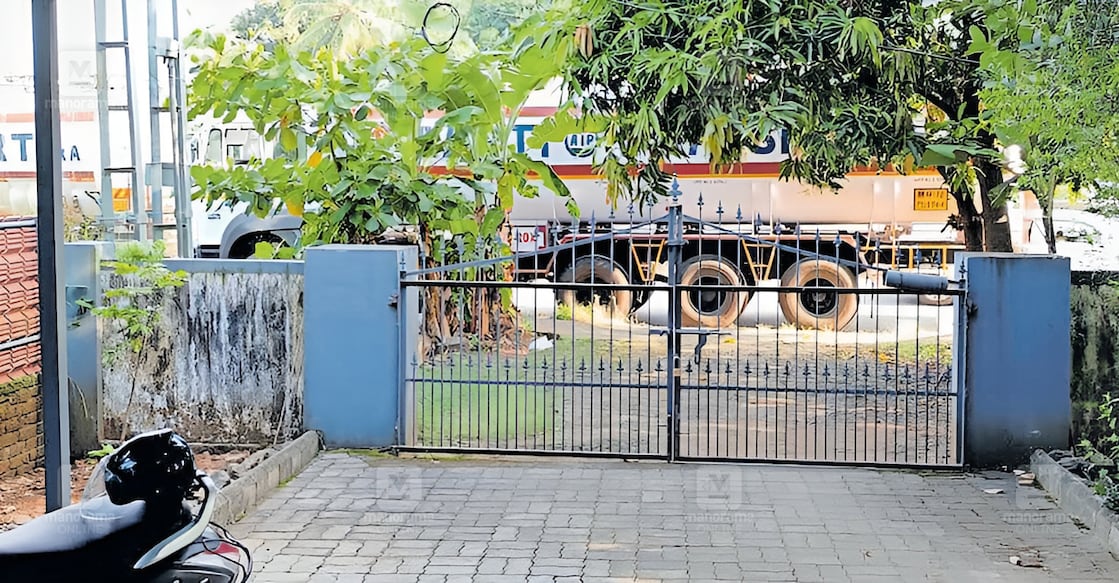
"House arrest would have been far better than this," laments a family in Thrissur, who have found themselves literally trapped inside their own home. Sebastian and his wife, Shiny, residents of Mullakkara in Mannuthy, along with their children, are enduring an unimaginable ordeal as massive container trucks and tankers regularly block their front gate, turning their property entrance into an unauthorised parking lot.
These heavy vehicles, many from interstate routes, are parked right across the gate, sometimes left abandoned for up to a week. The spot has seemingly become a makeshift transition point for truck drivers changing shifts, leaving the family stranded with no way to get their own vehicles in or out.
According to Shiny, this bizarre and stressful situation began about six months ago following the opening of a petrol pump nearby. Initially, heavy vehicles stopped briefly to refuel, which seemed harmless. However, it quickly escalated into a full-blown crisis when long-haul trucks started parking overnight directly in front of their home.
At first, the family assumed the drivers were just catching some sleep in their cabins before resuming their journeys in the morning. But the reality turned out to be far worse. Drivers now regularly park their massive rigs, lock them up, and leave the area. The vehicles remain parked there until the next shift driver arrives, which often takes several days.
This ongoing nuisance has completely disrupted the family's daily life. There are days when the children get ready for school, only to find the exit completely sealed off by a giant steel wall of a container. On such occasions, they have no choice but to climb past the truck and walk to school.
The situation is equally frustrating when the family returns home. Finding their gate blocked, they are regularly forced to park their own vehicle on the side of the busy national highway and walk the remaining distance to their house. The family is now seeking urgent intervention from the local authorities to resolve this hazard before an emergency occurs.
