

At Thrissur’s Elephant clinic, gentle giants line up for a health check
Mail This Article


Thrissur: In a city where elephants are part of everyday conversations, and the roar of the Pooram festivities is never too far from memory, a different kind of elephant gathering unfolded at Thekkinkadu Maidan on Friday.
There were no caparisons, percussion ensembles or festival crowds. Instead, the giant visitors arrived in trucks, one after another, to wait their turn for something far less festive but far more important, a health check.
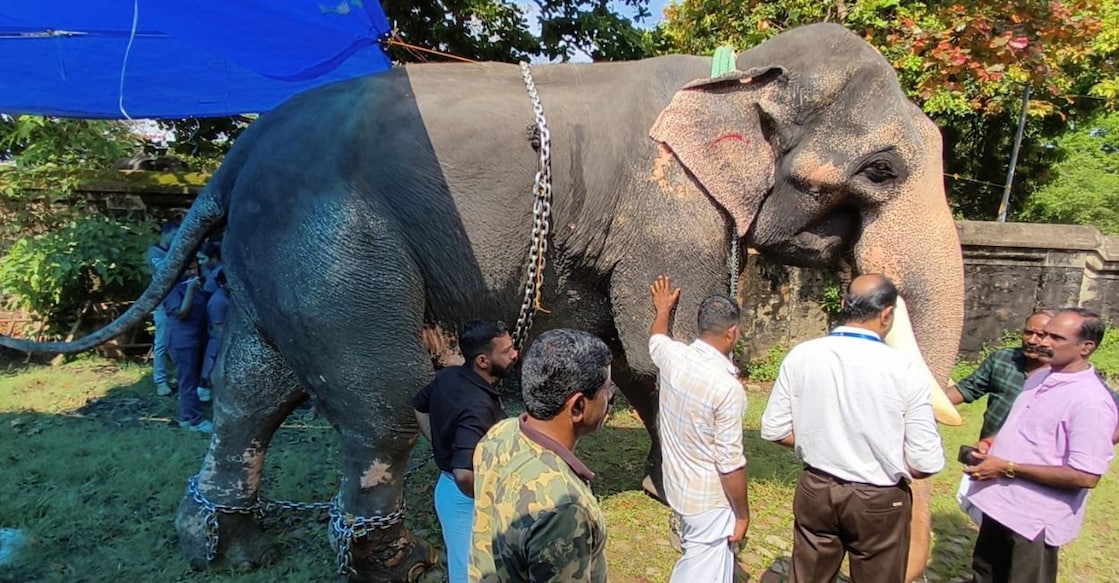
The grounds of Vadakkumnathan Temple, usually associated with the grandeur of Thrissur Pooram, briefly took on the air of an elephant hospital. A temporary shed set up in front of the temple’s Oottupura became a makeshift clinic, where veterinarians collected blood, urine and dung samples from the captive elephants under their care.
Some elephants stood patiently before the doctors, while others cooperated with examinations from a sitting or lying position. For the veterinary team, every sample could offer valuable clues about the health of these much-loved animals.
The examinations were conducted under the leadership of Dr T S Rajeev, director of Elephant Studies at Kerala Veterinary and Animal Sciences University; Dr Shyam Venugopal, former professor of surgery at the university; and Dr Usharani, former chief veterinary officer of the Animal Husbandry Department.

The collected samples will be analysed at the veterinary university to build a clearer picture of each elephant’s health.
Blood tests can help assess blood counts, serum parameters and glucose levels, while also detecting signs of bacterial infection. Liver function and creatinine levels will also be evaluated, said Dr Rajeev.
Beyond the needles, samples and test results, the camp carries a larger message: keeping captive elephants healthy requires regular monitoring, timely diagnosis and sustained care.
A health card for every elephant
Concerns over inadequate care have been raised in discussions about the recent deaths of captive elephants in Kerala. Against this backdrop, the Kerala Elephant Owners Federation has begun organising 'Gaja Medical Camps' across three regions of the state.
The aim is to move beyond one-time examinations and create a more systematic record of each elephant’s health.
“Details from the examinations will be recorded in health cards and handed over to the owners,” said K Mahesh, secretary of the Kerala Elephant Owners Federation.
The Thrissur camp was organised as part of the initiative’s northern region programme. Similar camps are scheduled to be held in Kottayam and Kollam later this month, federation representatives said.
The health cards are expected to help maintain individual medical records, making it easier to track test results and monitor changes in an elephant’s condition over time.
For animals whose lives often revolve around public appearances, festivals and long journeys, such records can be an important step towards more consistent veterinary supervision.
At Thekkinkadu Maidan, the elephants came without the elaborate decorations that usually make them the centre of attention. Their visit was quieter, their purpose more practical.
Yet, in a city that has long celebrated its elephants, the day offered a reminder that caring for these magnificent animals begins not in the festival arena, but with their health, one examination, one sample and one record at a time.
