

Why Kerala is seeing a surge in deadly lightning strikes, and how to stay safe

Mail This Article


With the North-East monsoon set to hit Kerala, weather officials have issued severe thunderstorm alerts across several districts. Southern Kerala is expected to experience intense downpours accompanied by frequent atmospheric discharges. Understanding how lightning forms, why certain regions face elevated risks, and how to protect yourself can mean the difference between life and death during these seasonal electrical storms.
What creates thunder and lightning?
Lightning begins when warm, moist air ascends rapidly into the atmosphere, forming towering storm clouds. Intense updrafts inside these clouds move water droplets and ice crystals past each other, creating electrostatic charges. Negative charges gather at the base of the cloud while positive charges build up on the earth below. When the electric potential difference overcomes atmospheric insulation, a massive spark connects cloud to ground within milliseconds.
This electric discharge heats the surrounding air instantaneously to around 30,000°C, roughly five times hotter than the surface of the Sun. The rapid thermal expansion and immediate contraction of the air create explosive sound waves, which we hear as thunder. Because light travels far faster than sound, we always see the lightning flash before the thunder clap reaches our ears.
The main types of lightning strikes
Atmospheric scientists classify lightning into five distinct categories depending on its path and origin:
Cloud-to-ground lightning: This occurs when electrical charges discharge from the cloud base to the ground. It is the most hazardous form for humans, animals, and infrastructure. In rare instances, massive positive charges from the top of the cloud discharge straight to earth, producing exceptionally strong 'positive lightning'.
Cloud-to-air lightning: Electrical discharges pass from the cloud into surrounding open air without hitting the ground, posing no direct threat to people or buildings below.
Ground-to-cloud lightning: This discharge originates at the top of extremely tall structures, transmission towers, or mountain peaks and travels upward into the cloud layer.
Intra-cloud lightning: Accounting for nearly 80 per cent of all lightning strikes, this occurs within a single cloud between opposing charges. It does not hit the earth. Two common forms are sheet lightning, where the sky illuminates behind cloud cover, and heat lightning, which illuminates entire clouds during warm periods.
Inter-cloud lightning: This takes place between two separate clouds as opposite electrical charges neutralise across the atmosphere.
How lightning strikes humans and animals
Direct strikes are surprisingly rare. Instead, lightning harms living beings through five distinct pathways:
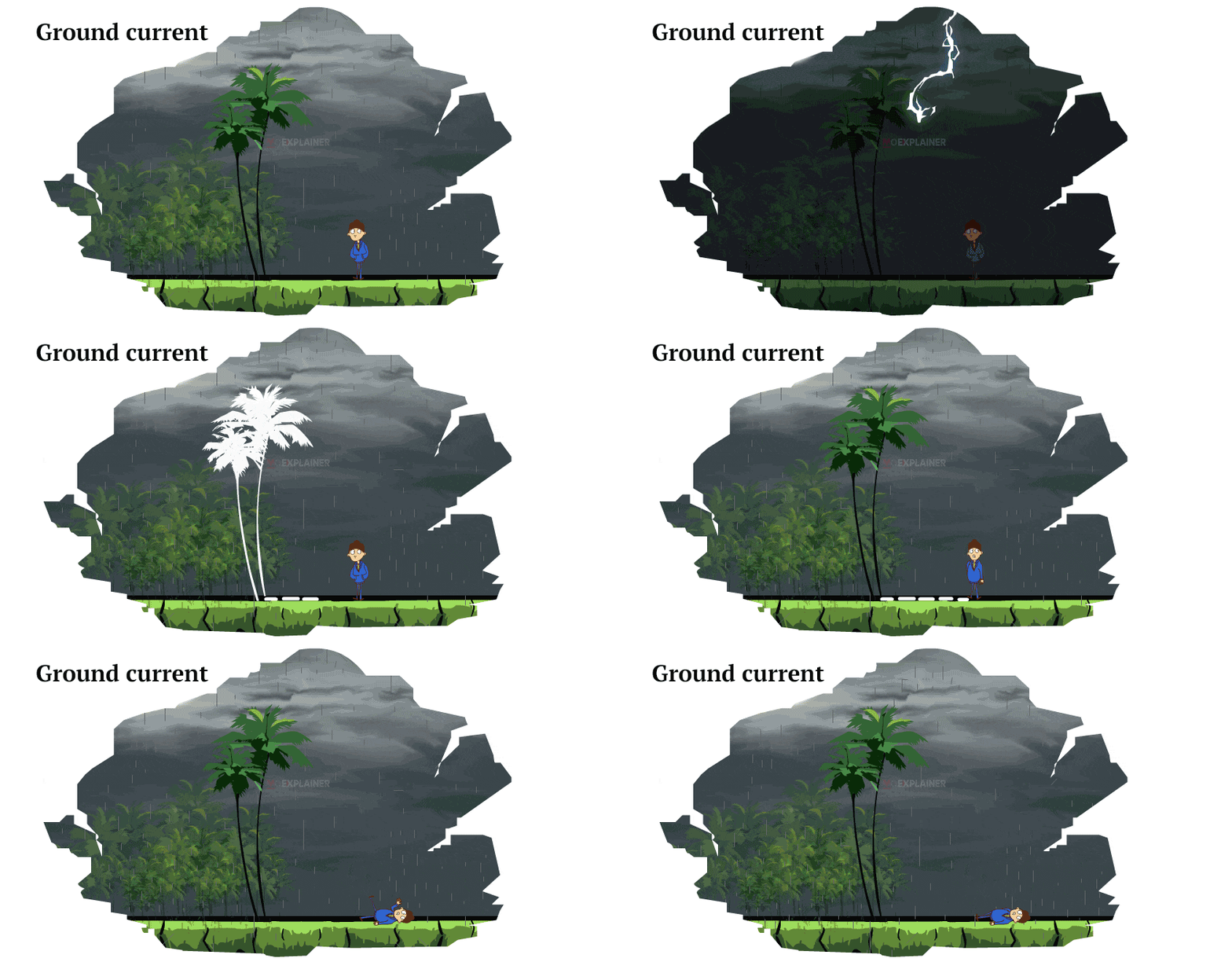
Ground current: This is responsible for the vast majority of lightning injuries and fatalities. When lightning hits a tree or the soil, the electrical energy spreads outwards across the ground surface in all directions. Anyone standing nearby is instantly exposed to severe voltage gradients.

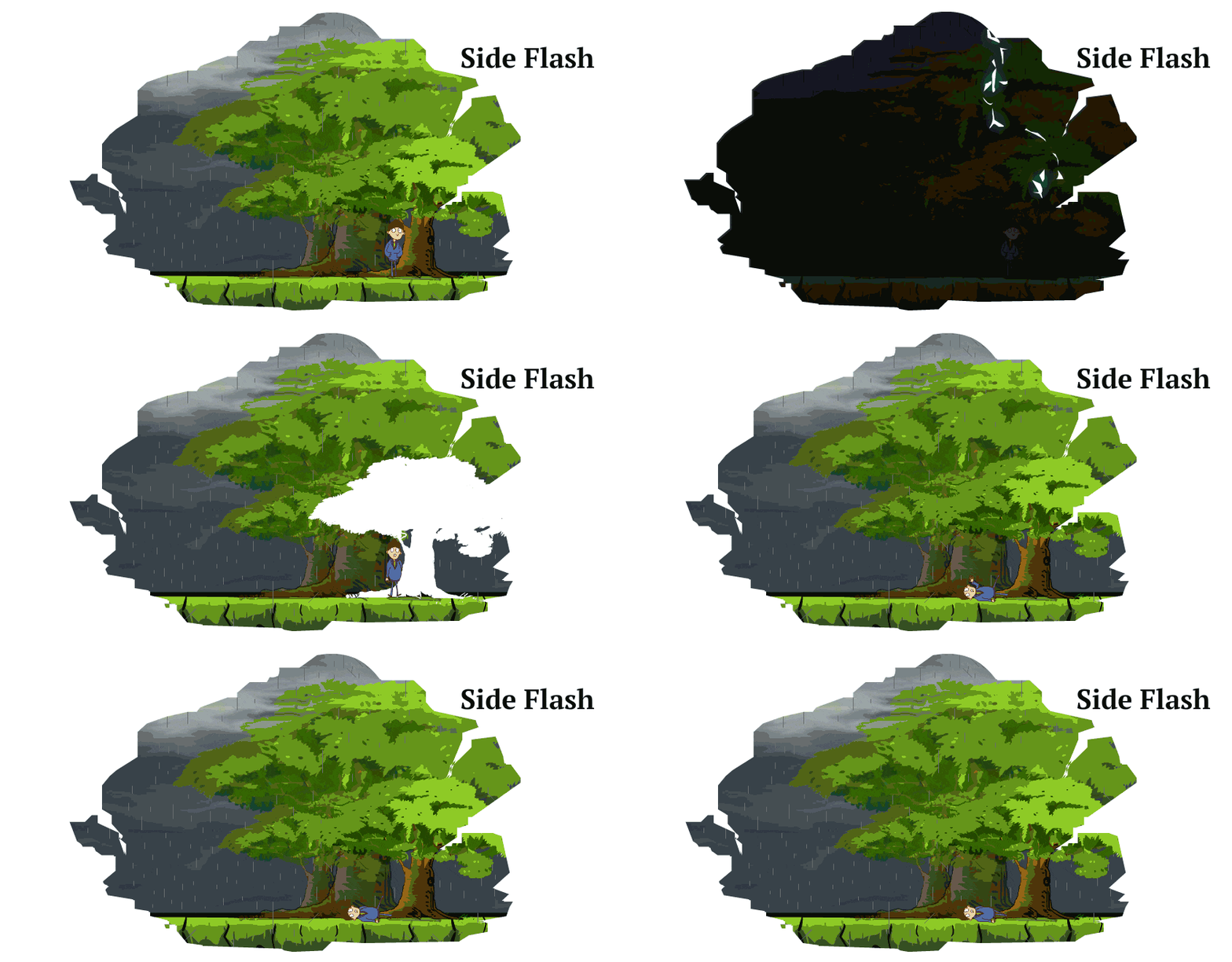
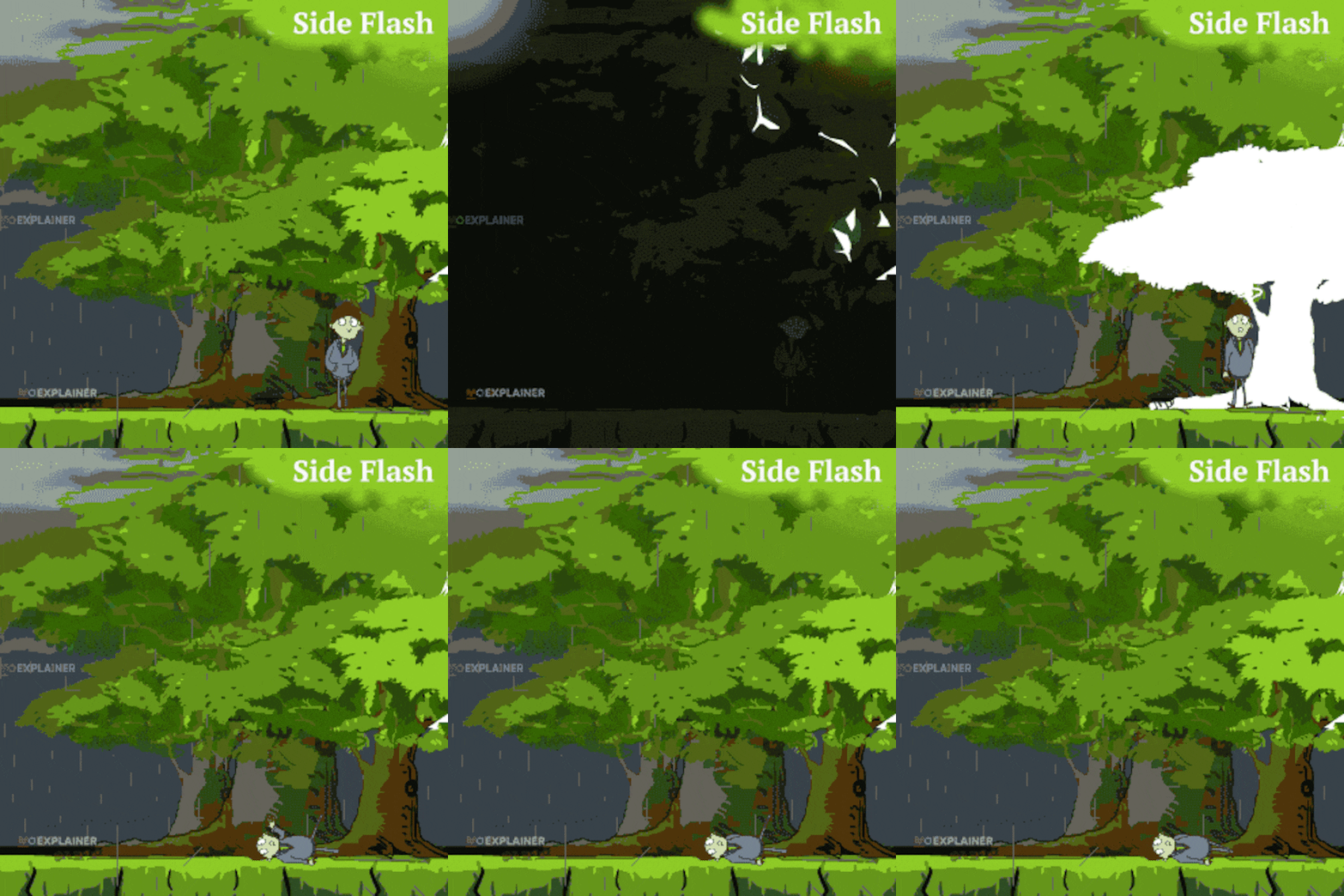
Side flash: This happens when lightning strikes an elevated object, such as a tree, and a portion of the current jumps or 'flashes' sideways onto a person taking shelter nearby.
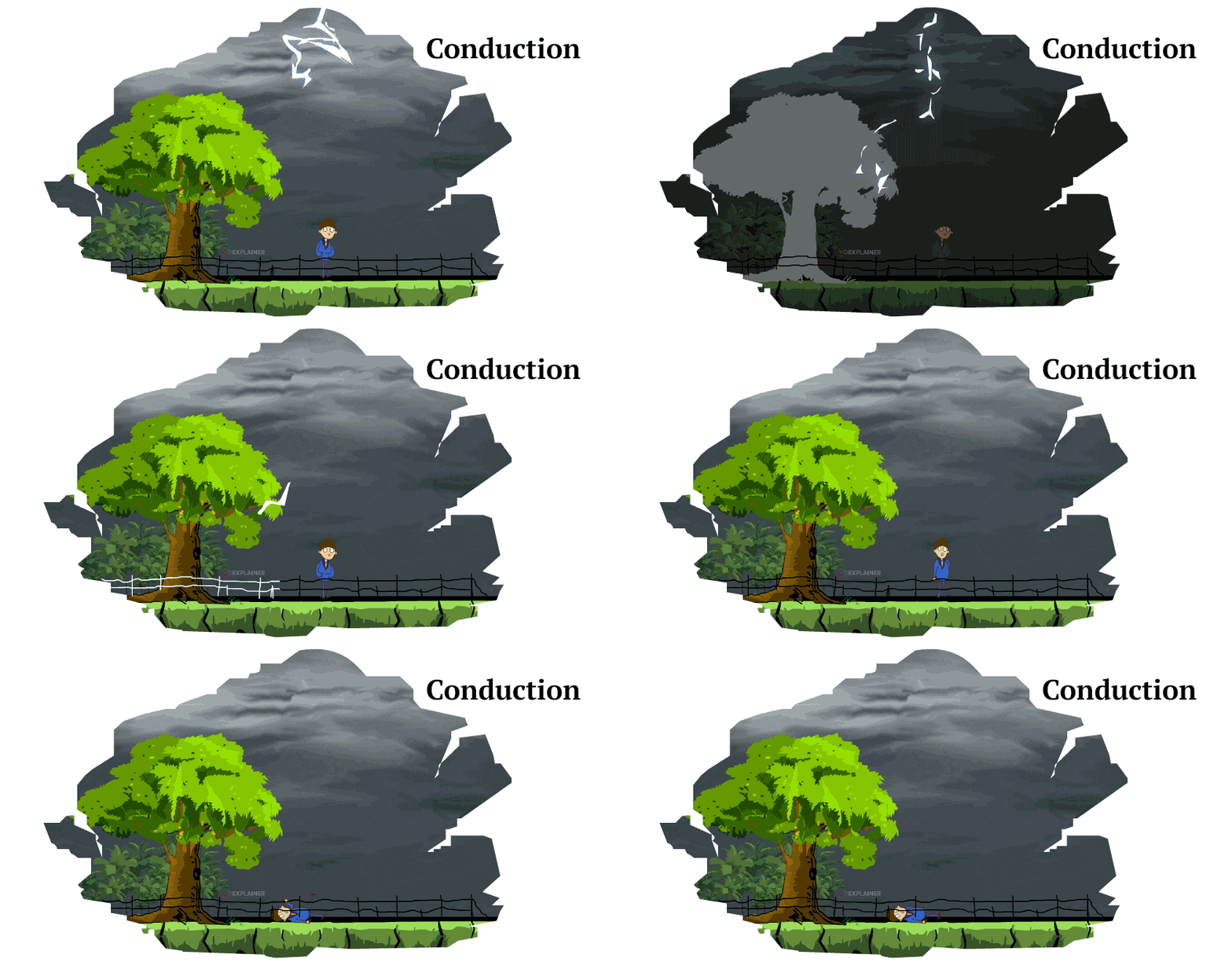
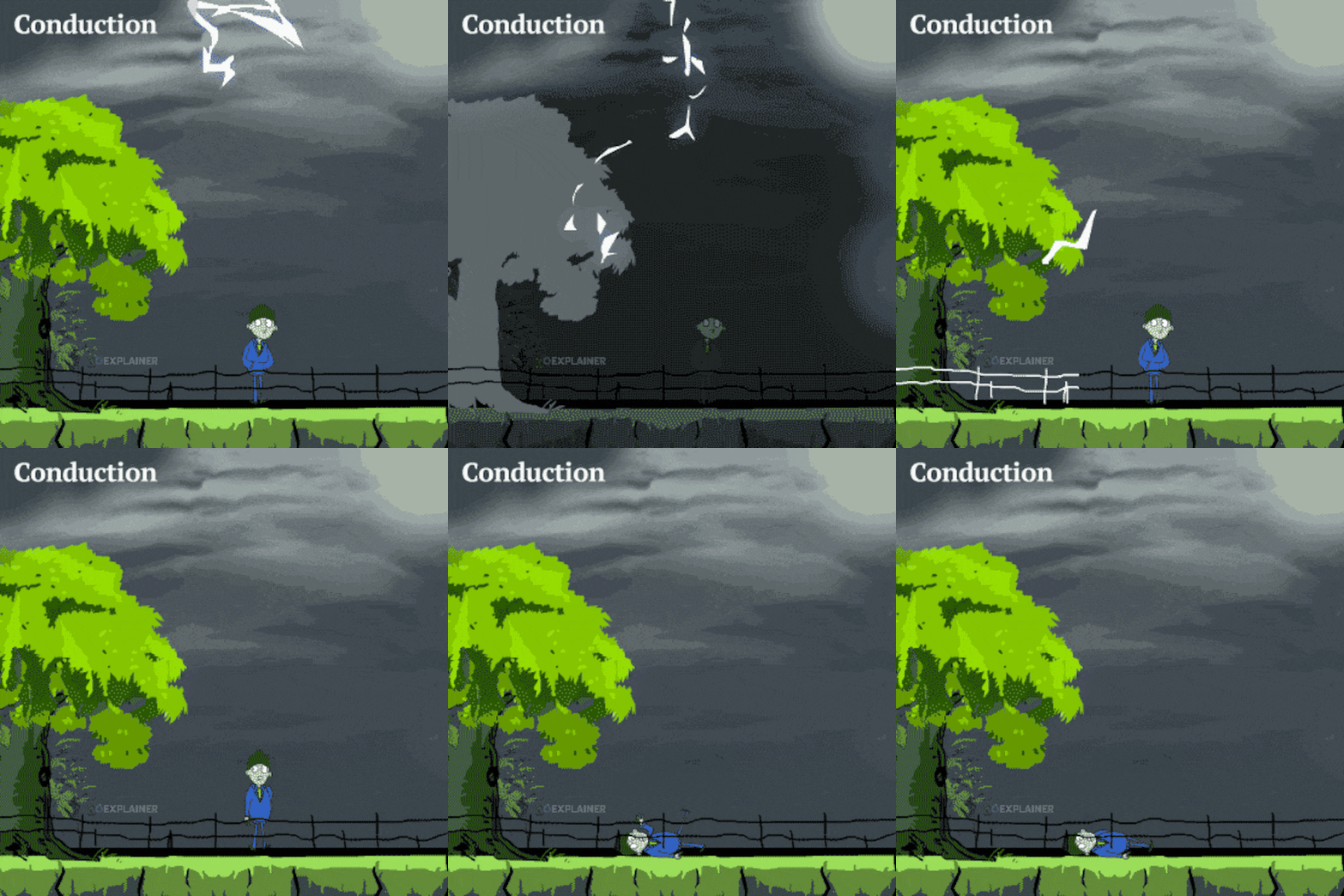
Conduction: Electrical current travels along metallic objects, fences, plumbing pipes, or wiring systems into homes, potentially injuring anyone holding a landline handset or touching connected appliances.
Streamers: As a main lightning stroke descends, positive ground charges stream upwards from tall objects and people to meet it. Even if the main stroke lands elsewhere, these upward streamers can cause injury.


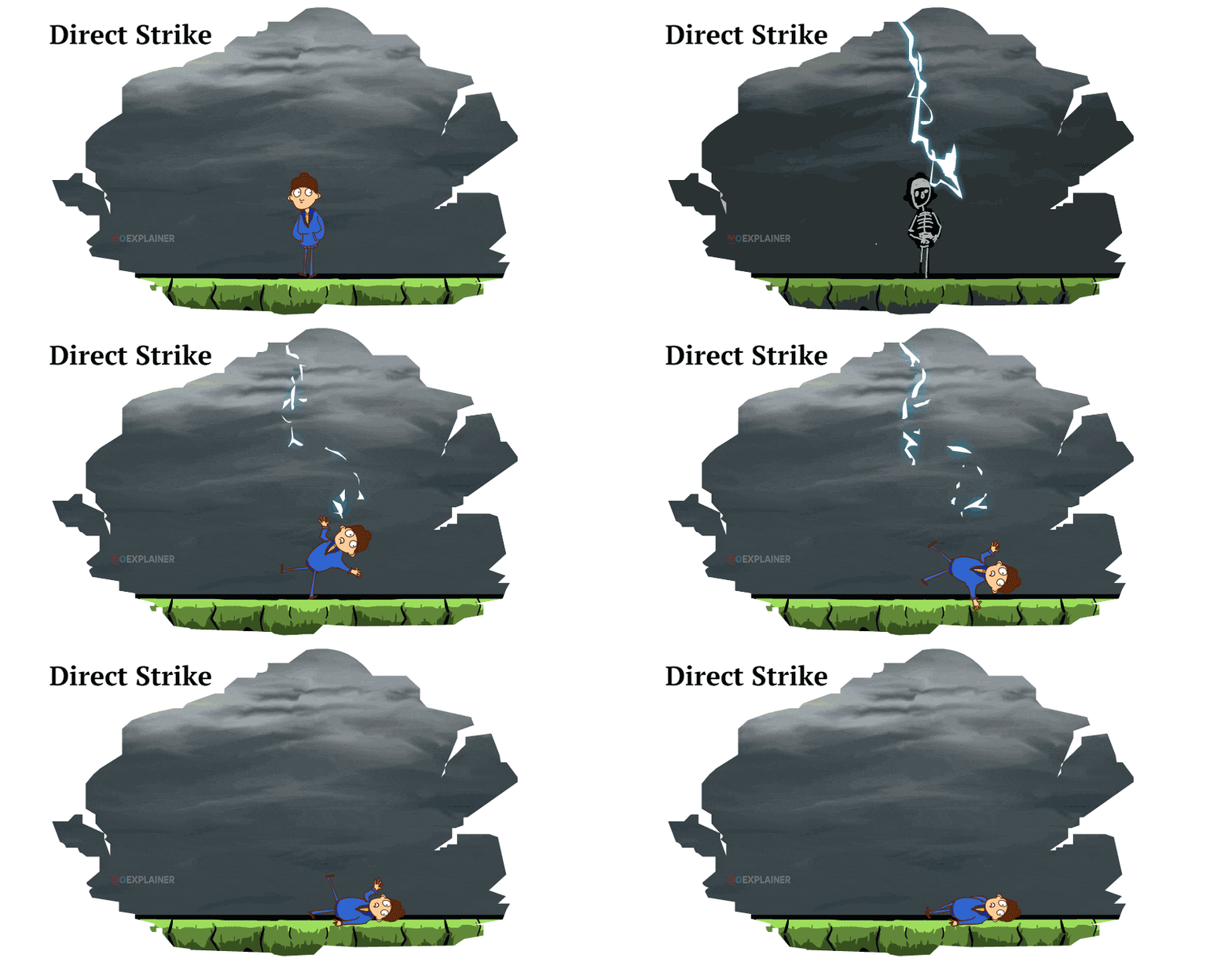
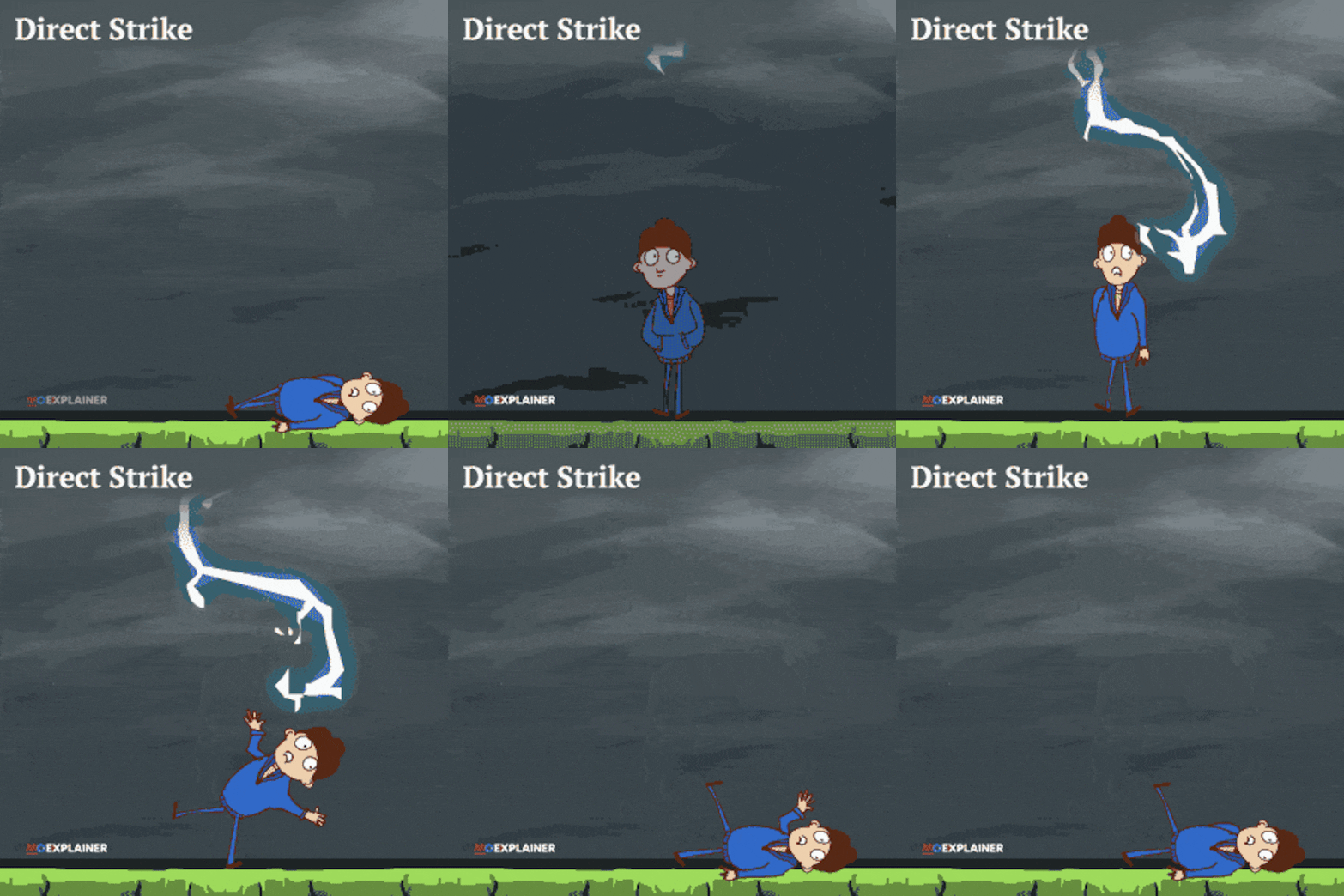
Direct strike: The lightning stroke connects directly with a person or animal in an open space, carrying full voltage directly through the body.
Why animals face extreme danger from ground current
Quadrupeds such as cows, goats, and horses are especially vulnerable to ground currents due to their body structure. Because their front and rear legs are far apart, a significant potential difference develops across their body as ground current passes beneath them. Electricity enters through one set of hooves, passes through vital organs including the heart and central nervous system, and exits through the other set, making ground strikes lethal to entire herds standing in open fields or under trees.
Is climate change driving more lightning in Kerala?
Pre-monsoon and post-monsoon periods in Kerala naturally bring convection storms. High daytime temperatures cause warm air to rise rapidly, meeting cooler upper atmospheric air. This intense convection creates cumulonimbus storm clouds loaded with electrical charges. According to atmospheric researcher Rajeevan Erikulam, intense localised convection creates severe localised thunderstorms accompanied by high lightning density. Satellite monitoring from the European Union's EUMETSAT network regularly records massive lightning tracks across Kerala spanning 4 to 10 kilometres in length.
Cumulonimbus clouds: Nature’s violent storms
Cumulonimbus clouds generate sudden violent downpours, strong gale-force winds, hail, and localised flash flooding. As raindrops fall through dry air layers, rapid evaporation and ice melting cool the downdraft air intensely. This dense, cold air crashes toward the earth at high velocity, creating sudden destructive wind squalls at ground level.
CUSAT study identifies Kottayam as Kerala’s lightning hotspot
A comprehensive scientific investigation conducted by Prof S Abhilash, EK Krishnakumar, CS Abhiram Nirmal, and Prabhat H Kurup from the Advanced Centre for Atmospheric Radar Research (ACARR) at Cochin University of Science and Technology (CUSAT) highlighted critical high-risk zones across Kerala. The study revealed that Kottayam is the state's primary lightning hotspot, along with contiguous areas in Ernakulam, Idukki, and Pathanamthitta along the Western Ghats foothills.
Although total seasonal rainfall in these foothill zones might be lower than along the northern coastline, unique topography and atmospheric conditions trigger intense cloud electrification, making the Idukki-Kottayam border highly prone to lightning-induced natural disasters, flash floods, and landslides.
Vital safety precautions: The 'lightning crouch' and indoor rules
When thunderstorm warnings are issued, adopting simple safety steps can prevent tragedy:
Seek shelter immediately: Move inside a sturdy, enclosed building at the first sound of thunder. Close all windows and doors.
Avoid conductors indoors: Stay away from glass windows, exterior walls, and plugged-in electrical appliances. Do not touch metal taps or use plumbing, as electricity can travel through pipes.
Use mobile phones, not landlines: Corded landline phones can transmit lightning surges; wireless mobile phones are safe to use.
The 'lightning crouch' for open spaces: If caught outdoors far from shelter, squat down immediately with your feet close together, drop your head between your knees, and cover your ears. Do not lie flat on the ground, as this increases your surface contact with dangerous ground currents.
Group safety: If travelling in a group outdoors, spread out at least 100 feet (30 metres) apart to ensure a single strike does not affect everyone.
Avoid tall trees and fields: Never shelter under isolated tall trees or open sheds. Do not hold metal objects like umbrellas or golf clubs.
Are vehicles safe during a storm?
Yes, fully enclosed metal-topped vehicles like cars and buses provide good shelter during lightning storms. The metal frame acts as a Faraday cage, directing the electrical charge safely around the outside of the vehicle into the ground. Keep all windows rolled up tight and avoid touching internal metal components. Open vehicles like bicycles, motorcycles, and open tractors offer zero protection and must be abandoned immediately for safe buildings.
First aid: Touching a lightning victim is safe
A common and dangerous myth is that touching a lightning strike victim will shock the rescuer. Unlike domestic electrical shocks where a victim might remain attached to a live power source, lightning passes through the body in a fraction of a second. The human body does not retain electrical charge.
It is completely safe to touch and assist a lightning victim immediately. The primary cause of death in lightning victims is cardiac or respiratory arrest. Administer CPR straight away if the person is unconscious or not breathing normally, and arrange urgent transport to the nearest medical facility without delay.
